








Choose Your Fabrics Wisely
The single biggest mistake in monsoon packing is bringing the wrong fabrics. Leave your beloved cotton kurtas and denim jeans at home. Cotton is highly absorbent; it takes ages to dry, feels heavy when wet, and can even start to smell musty in humid conditions.
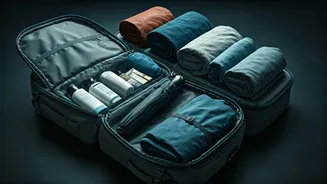
Instead, build your travel wardrobe around synthetic and semi-synthetic materials. Fabrics like polyester, nylon, and rayon are your best friends. They are lightweight, wrinkle-resistant, and, most importantly, they dry incredibly fast. A polyester t-shirt or a pair of quick-dry trekking pants can go from soaked to wearable in just a few hours in a ventilated hotel room, meaning you can pack fewer items overall.
Rethink Your Rain Gear
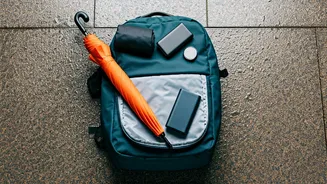
An umbrella is a given, but it’s often not enough in a proper downpour, especially if it’s windy. A heavy, bulky raincoat, however, defeats the purpose of travelling light. The solution lies in modern, lightweight outerwear. Look for a packable waterproof windcheater or a long poncho. A good windcheater can be folded into a tiny pouch and offers protection from both rain and wind without the bulk. A poncho is even better for city exploration, as it can easily cover both you and your backpack, keeping everything dry. Choose something breathable to avoid feeling sticky and sweaty in the humidity.
Prioritise Practical Footwear
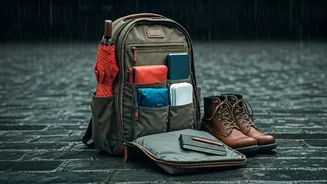
Wet feet are not just uncomfortable; they can lead to skin infections. This is not the time for your fancy leather sandals or suede shoes, which can be ruined by water. Canvas sneakers will become heavy, soggy messes. The ideal monsoon footwear is made from rubber or EVA foam. Think classic rubber floaters, Crocs-style clogs, or waterproof sandals with good grip. They are easy to clean, dry in an instant, and won’t get damaged by mud or water. Pack one solid pair for walking around. For your hotel or drier indoor settings, a pair of simple flip-flops is all you need.
Protect Your Electronics
Water and gadgets do not mix. Your phone, camera, power bank, and laptop are your most vulnerable items. The easiest and cheapest defence is a set of high-quality zip-lock bags. You can double-bag your phone and other small electronics for extra security. For more robust protection, consider investing in a small 'dry bag'. These are roll-top waterproof bags used by kayakers and are completely submersible, offering total peace of mind for your valuables. Another pro tip: throw a few silica gel packets (the kind you find in new shoe boxes) into your electronics bag to absorb any ambient moisture and prevent condensation.
Pack a Strategic Hygiene Kit
Humidity and dampness create a breeding ground for germs and fungi. Your monsoon toiletry bag needs a few extra items. First, an alcohol-based hand sanitiser is non-negotiable. Second, pack a good antifungal or prickly heat powder. Applying it to your feet and other areas prone to sweat can help prevent common skin issues. A strong mosquito repellent is also essential, as stagnant water leads to an increase in mosquito populations. Finally, consider carrying a small, super-absorbent microfibre towel instead of a regular cotton one. It dries much faster and takes up less space.
Embrace the Waterproof Bag
Even if your backpack claims to be 'water-resistant', a sustained downpour will eventually seep through the zippers and seams. Don't risk it. The simplest solution is a dedicated rain cover for your backpack. Most outdoor brands sell them, and they are lightweight and effective. An even better approach is to use a waterproof backpack as your main luggage. While more of an investment, they provide complete protection. For day trips, a smaller waterproof cross-body bag or a 'dry bag' is perfect for keeping your wallet, phone, and keys secure while you explore.