





An Unexpected Ocean World
For a long time, Enceladus was just another of Saturn's dozens of moons—a tiny, 500-kilometer-wide ball of ice. But that picture changed dramatically thanks to NASA's Cassini mission, which orbited Saturn from 2004 to 2017. Cassini discovered enormous
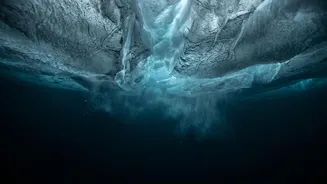
plumes of water vapor and ice particles erupting from long fractures near the moon's south pole, a region dubbed the "tiger stripes." This wasn't just a frozen, inactive world. Gravity measurements and analysis of the moon's slight wobble as it orbits Saturn confirmed what the plumes suggested: Enceladus hides a vast, global ocean of liquid saltwater beneath its ice shell, which is estimated to be 30 to 40 kilometers thick. This discovery instantly elevated Enceladus to a top-tier target for astrobiology.
The Ingredients for Life
A liquid water ocean is a crucial first step for habitability, but it's not the only one. Life as we know it needs three key things: liquid water, essential chemical ingredients, and an energy source. Data from Cassini's flights directly through the plumes showed that Enceladus seems to have all three. The water is salty and contains a rich inventory of organic compounds, the carbon-based molecules that are the building blocks of life. These include molecules like hydrogen cyanide, which is key to the formation of amino acids. Furthermore, there is strong evidence for hydrothermal vents on the ocean floor, where water interacts with the moon's rocky core. On Earth, such vents are hotspots for life, creating chemical energy that organisms can feed on, independent of sunlight.
The Challenge: Peering Under the Ice
The greatest opportunity Enceladus offers is also its greatest challenge. The ocean is tantalizingly close, yet it is sealed beneath kilometers of solid ice. Drilling through that shell is technologically unfeasible for the foreseeable future. So how do you scan an ocean you can't reach? The answer lies in the very plumes that revealed the ocean's existence. These geysers offer a free sample of the ocean's contents, spewing them hundreds of kilometers into space where a spacecraft can collect and analyze them without ever needing to land or drill. Future missions are being designed around this unique advantage, creating a new class of planetary exploration technology.
The Orbilander: A Two-Part Mission
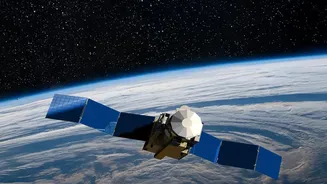
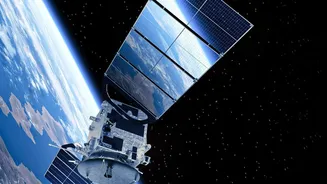
The leading concept for a return to Enceladus is a flagship mission called the Enceladus Orbilander. As the name suggests, it is ingeniously designed to be both an orbiter and a lander in one. The spacecraft would first spend about a year and a half orbiting Enceladus, repeatedly flying through the plumes to analyze the composition of the vapor and ice grains with a sophisticated suite of instruments. This orbital phase would also allow mission planners to map the surface in high resolution and identify a safe and scientifically interesting landing spot. After its orbital tour, the spacecraft would execute a powered descent and land near the tiger stripes, beginning a two-year surface mission to analyze the plume material that falls back to the ground like snow and monitor the moon for seismic activity.
The Future of the Search
The Enceladus Orbilander is proposed for a launch in the late 2030s, with an arrival in the Saturn system in the mid-2040s and a landing in the early 2050s. It represents the top priority for NASA's planetary science community for a mission to the outer solar system's ocean worlds. The European Space Agency (ESA) is also planning a mission to Enceladus, solidifying the global scientific consensus on the moon's importance. Other, more conceptual ideas are also being explored, such as the LEAP (Legged Exploration Across the Plume) concept—a small, agile jumping robot that could bound across the surface and leap directly through the geysers. These ambitious projects highlight a shift in space exploration, moving beyond simply finding water to developing the technology to actively search for signs of life within it.