



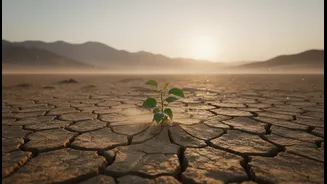


The Slow Creep of Salty Farmland
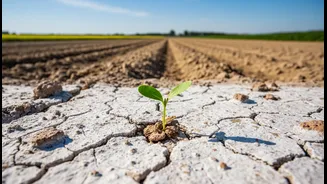
Imagine trying to grow your favourite vegetables, but the soil is slowly poisoning them. That’s the reality for farmers dealing with soil salinization. It’s a global issue where soluble salts build up in the top layer of soil to levels that are toxic
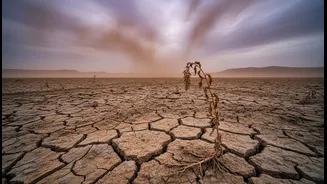
for most crops. In India, approximately 6.73 million hectares are already affected. This happens for several reasons: rising sea levels contaminating coastal groundwater, irrigation with slightly salty water that leaves residues behind after evaporation, and even the overuse of certain chemical fertilizers. The result is stunted growth, damaged roots, and drastically lower crop yields. For many plants, high salt levels create a state of 'physiological drought'—even if there’s water in the ground, the plant can’t absorb it properly, causing it to wilt and eventually die. The economic toll is immense, with global losses from salt-induced land degradation estimated at billions of dollars annually.
Meet the Microbial First Responders
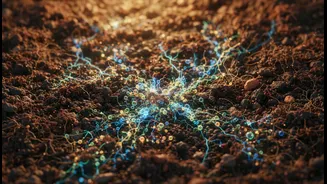
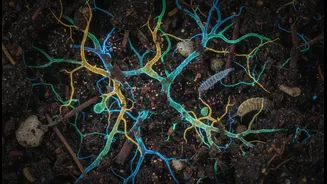
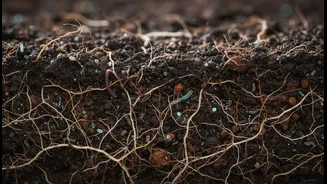
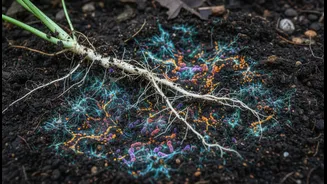
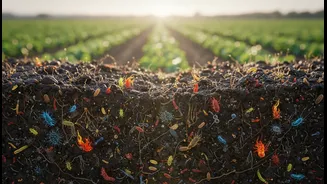
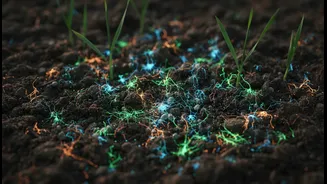
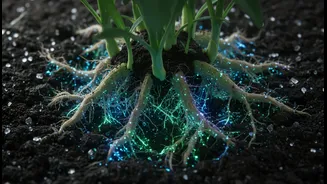
When the soil gets tough, the tough get microscopic. Scientists have discovered that plants don’t face this salty battle alone. They actively recruit help from a class of beneficial bacteria living in the soil around their roots, known as Plant Growth-Promoting Rhizobacteria (PGPR). In high-salt conditions, certain types of bacteria, like those from the Pseudomonas family, have been found to gather around stressed plant roots. These aren't just any bacteria; they are often 'halotolerant,' meaning they are naturally adapted to survive in salty environments. Think of them as microbial specialists that thrive where others fail. Researchers noticed that while high salinity can reduce overall microbial diversity, it actually favours these salt-tolerant species that form crucial partnerships with plants, helping to bolster soil fertility and plant health in the process. This discovery has shifted focus towards harnessing these natural alliances as a sustainable solution.
How the Microbe-Plant Partnership Works
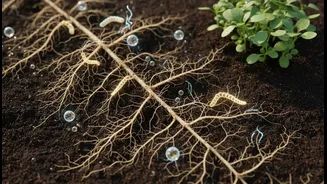
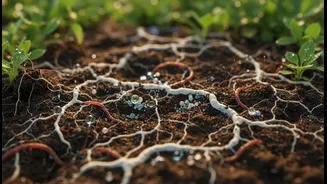
So, what exactly are these microbes doing? It's not just one thing, but a whole toolkit of supportive actions. Some PGPR act like tiny bodyguards, producing a sticky substance called exopolysaccharide (EPS). This substance binds to sodium ions in the soil, effectively preventing the salt from being absorbed by the plant's roots. Others produce an enzyme called ACC deaminase, which lowers the plant's stress hormone levels, keeping it calmer and more focused on growth instead of panic. A recent breakthrough study found an entirely new mechanism: instead of just blocking salt, some bacteria trigger the plant to produce more lignin. Lignin is a natural compound that strengthens plant cell walls. By boosting lignin production, the microbes help the plant build physically stronger, more resilient roots that are better able to withstand the harsh saline environment. These microbes also help plants absorb essential nutrients and maintain a better balance of potassium to sodium, which is critical for cell function under salt stress.
From the Laboratory to the Land
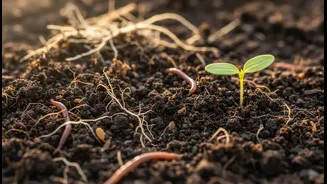
This isn’t just a fascinating laboratory finding; it holds enormous potential for real-world agriculture. Scientists are now developing bio-based treatments—essentially, microbial inoculants that can be coated on seeds or applied directly to the soil. Greenhouse and field trials have already shown promising results. In multiple studies, crops like maize, tomato, and soybean treated with these beneficial bacteria showed healthier growth, stronger root systems, and significantly higher yields in salty soils compared to untreated plants. The goal is to create tailored microbial solutions that can help restore the productivity of land currently considered marginal or unusable. By leveraging these naturally occurring microbes, farmers could reduce their dependence on chemical inputs and cultivate crops in areas affected by salinity. This approach offers a sustainable, eco-friendly way to enhance food security in a world where arable land is under increasing pressure from climate change.