

A New Window on a Gaseous Giant
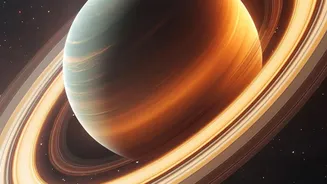
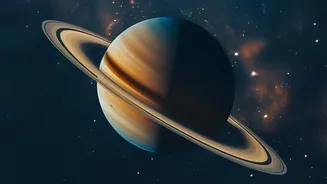
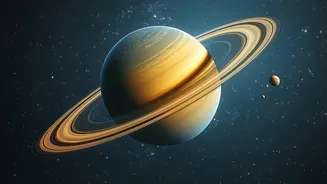
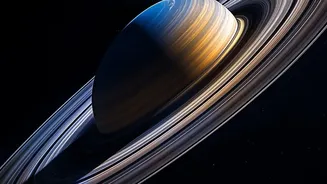
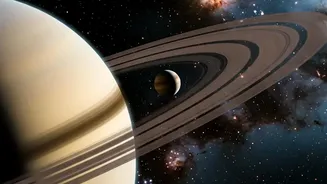
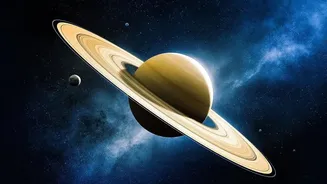
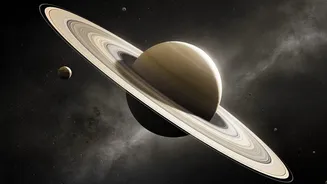
Even after decades of observation, Saturn still holds secrets. The venerable Hubble Space Telescope is providing astronomers with a fresh perspective on the ringed giant, capturing subtle but significant changes in its atmosphere. As part of the Outer
Planet Atmospheres Legacy (OPAL) program, Hubble monitors the outer planets annually, building a long-term forecast of their complex weather systems. These yearly observations have shown fascinating shifts in Saturn's colourful bands and storm activity as it progresses through its long seasons, each of which lasts more than seven Earth years. Recent observations are particularly focused on the transition from summer to autumn in the planet's northern hemisphere, which is causing noticeable changes in colour and cloud height.
The Science of Shadows and Infrared
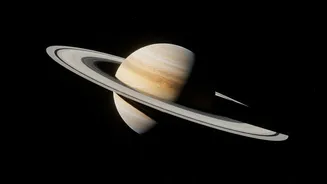
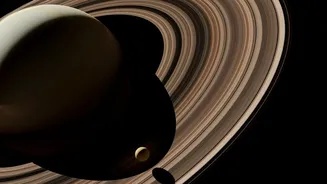
The latest technique involves a fascinating use of natural phenomena: the immense shadow cast by Saturn's rings onto the planet itself. By observing the planet in infrared light, specifically at wavelengths where methane gas in the atmosphere absorbs light, scientists can create a unique view. In these infrared images, most of the planet appears dark because the methane absorbs the sunlight. However, higher-altitude hazes and clouds, which are above most of the methane, reflect the sunlight and appear bright. When these hazy upper layers pass into the shadow of the rings, they disappear from view. This contrast allows astronomers to precisely measure the altitude and distribution of these atmospheric layers, providing a three-dimensional look at the planet's weather patterns that would otherwise be invisible. Combining visible light images from Hubble with infrared data from telescopes like the James Webb Space Telescope allows scientists to effectively 'slice' through Saturn's atmosphere at different depths.
Unveiling Saturn's Seasonal Secrets
So, what are these dynamic shifts? The data captured between 2018 and 2020 showed that Saturn's equator became 5 to 10 percent brighter. This suggests changes in cloud coverage or composition. Scientists also noted fluctuations in wind speeds, which can reach up to 1,100 mph near the equator on Saturn. A slight reddish haze was also photographed over the northern hemisphere, which could be a result of increased heating from summer sunlight. This additional solar energy might be altering atmospheric circulation or changing the amount of photochemical haze produced. While these year-to-year changes appear small, they are crucial indicators of the larger seasonal progression. They help planetary scientists test their models of how giant planet atmospheres respond to the slow change in seasons.
More Than Just a Pretty Picture
Studying Saturn's weather isn't just about cataloging distant storms. This research provides a natural laboratory for understanding fluid dynamics and atmospheric physics under conditions impossible to replicate on Earth. Understanding how Saturn's massive storms, jet streams, and seasonal patterns evolve helps scientists refine their models of planetary formation and climate. The famous hexagonal jet stream at Saturn's north pole, for instance, is a remarkably stable weather pattern that has persisted for decades, highlighting how energy moves through the atmospheres of gas giants. By observing these systems on other worlds, we gain a more profound understanding of the forces that shape all planets, including our own. These observations provide a vital baseline for future missions and help answer fundamental questions about how planetary systems work.