






What Has Been Discovered?
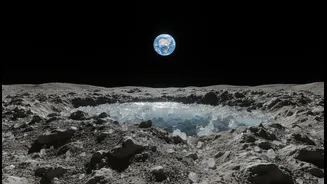
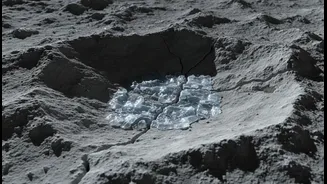
For years, scientists have theorised that water ice could exist in the Moon's permanently shadowed regions (PSRs) — deep craters at the poles that never see direct sunlight. Missions like NASA's Lunar Reconnaissance Orbiter (LRO) have provided mounting
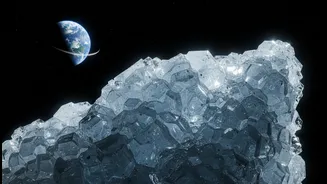
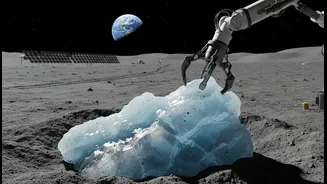
evidence, not just confirming ice in these super-cold traps, but suggesting these deposits are more widespread than previously thought. Recent studies indicate evidence of water ice far beyond the immediate south pole, hinting at a more accessible and distributed resource. This isn't liquid water, but frozen ice mixed with lunar soil (regolith), preserved for potentially billions of years in some of the coldest spots in our solar system.
Why On-Site Resources Are a Game-Changer
This is where the concept of In-Situ Resource Utilization, or ISRU, comes in. Put simply, ISRU means living off the land — using local materials to create what you need. Every kilogram of material launched from Earth is incredibly expensive; by some estimates, shipping a single gallon of water costs tens of thousands of dollars. If astronauts can harvest lunar ice, they unlock a resource with multiple, mission-critical applications. It’s not just about having something to drink. The ability to source water on the Moon radically changes the economics and logistics of space exploration.
More Than Just Water
The true value of lunar water ice lies in its chemical components: hydrogen and oxygen. Through a process called electrolysis, electricity (generated by solar panels, for example) can split water molecules into their constituent elements. This provides two of the most vital resources for any deep-space mission. Oxygen is obviously essential for breathable air in a lunar habitat. But when liquefied, hydrogen and oxygen become a potent rocket propellant. This transforms the Moon from a desolate destination into a potential refuelling station for more ambitious missions, such as those to Mars. The lower gravity on the Moon means it takes far less energy to launch a spacecraft from its surface compared to Earth.
The Challenges Ahead
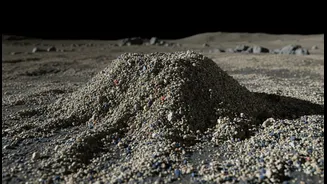
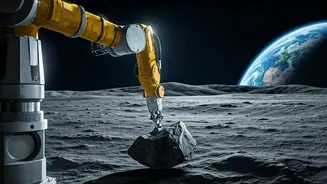
Despite the promise, harvesting lunar water is a formidable engineering challenge. The ice is located in some of the harshest environments imaginable, with temperatures colder than Pluto and in complete darkness. The ice is not a clean, solid block but is mixed with abrasive lunar dust, which can damage equipment. Developing robotic systems that can operate reliably in these cryogenic, dark conditions to mine, heat, and process the ice-rich regolith is a major focus for space agencies like NASA and private companies. They are actively testing excavation and extraction technologies, including systems that can liquefy the resulting oxygen for storage as propellant.
A Stepping Stone to the Solar System
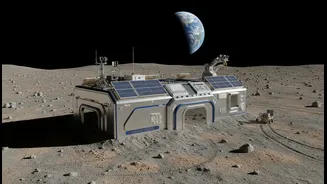
These findings and the development of ISRU technology are crucial for long-term plans like NASA's Artemis program, which aims to establish a sustainable human presence on the Moon. Success on the Moon will serve as a vital proving ground for technologies and strategies needed to send humans to Mars. Demonstrating the ability to generate fuel and life support from local resources on the Moon will build confidence and capabilities for even longer journeys. As India and other nations advance their own lunar ambitions, the prospect of a bustling cislunar economy, built on resources like water ice, is becoming an increasingly tangible goal for humanity's future in space.