



The Sun's Invisible Threat
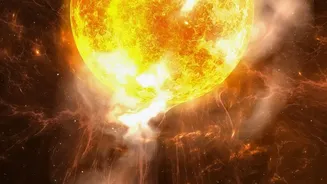
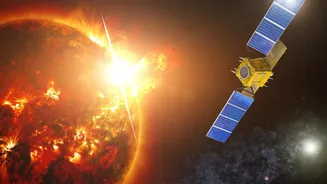
The primary threat to our power grid from the sun isn't a solar flare's light or heat, but something called a Coronal Mass Ejection (CME). Think of it as the sun throwing a massive, magnetized cloud of plasma into space. If Earth is in the path of this
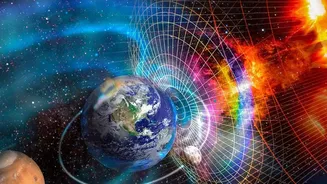
cloud, it can take anywhere from one to three days to arrive. When it does, it slams into our planet's magnetic field, causing a geomagnetic storm. This interaction induces powerful, low-frequency DC currents in long conductors on the ground, like power transmission lines. These are known as geomagnetically induced currents (GICs), and they are bad news for a grid designed for AC power. GICs can flow into the giant transformers that are the backbone of the grid, causing them to overheat, saturate, and potentially fail, leading to widespread and long-lasting blackouts.
A Telescope with Sunglasses
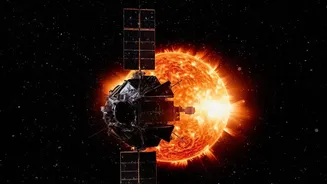
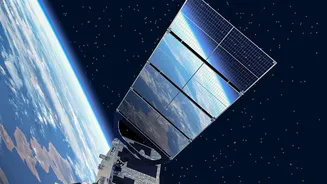
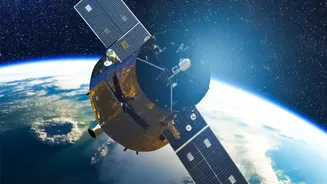
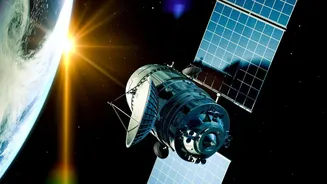
This is where the coronagraph comes in. The sun's surface is so blindingly bright that its faint outer atmosphere, the corona, is normally invisible. A coronagraph is a special telescope that creates an artificial eclipse. It uses an internal disk to block the direct light from the sun's main body. This allows scientists to see the much dimmer corona, which is exactly where CMEs are born. By watching the corona, space weather forecasters can spot a CME as it erupts and billows away from the sun. Satellites like the Solar and Heliospheric Observatory (SOHO) and newer instruments on GOES satellites are equipped with coronagraphs specifically for this purpose, providing a constant watch.
From Detection to Alert
Once a coronagraph detects an Earth-directed CME, the clock starts ticking. The images are sent back to space weather prediction centers, like those run by NOAA in the US and counterparts globally. Forecasters analyze the images to determine the CME's size, speed, and direction. This data is fed into models that predict its arrival time and potential intensity. This entire process gives power grid managers a crucial heads-up, typically ranging from 12 to 72 hours. This lead time is the single most important factor in mitigating the storm's impact. Without the coronagraph's early detection, grid operators would be flying blind, only discovering the problem when their equipment starts to fail.
Buying Precious Time
With a solar storm warning in hand, grid operators can take several protective measures. They can postpone scheduled maintenance to ensure the system is as robust as possible, increase generating capacity to handle unusual power demands, and re-route power away from the most vulnerable, long-distance transmission lines. In some cases, operators can strategically take certain high-voltage transformers offline before the storm hits to prevent them from being damaged. Specialized blocking devices can also be activated to stop GICs from entering transformers. These actions are all about reducing stress on the system and preventing a cascade of failures that could take weeks or even months to repair, given that large transformers are custom-built and not easily replaced.
India's Eye on the Sun
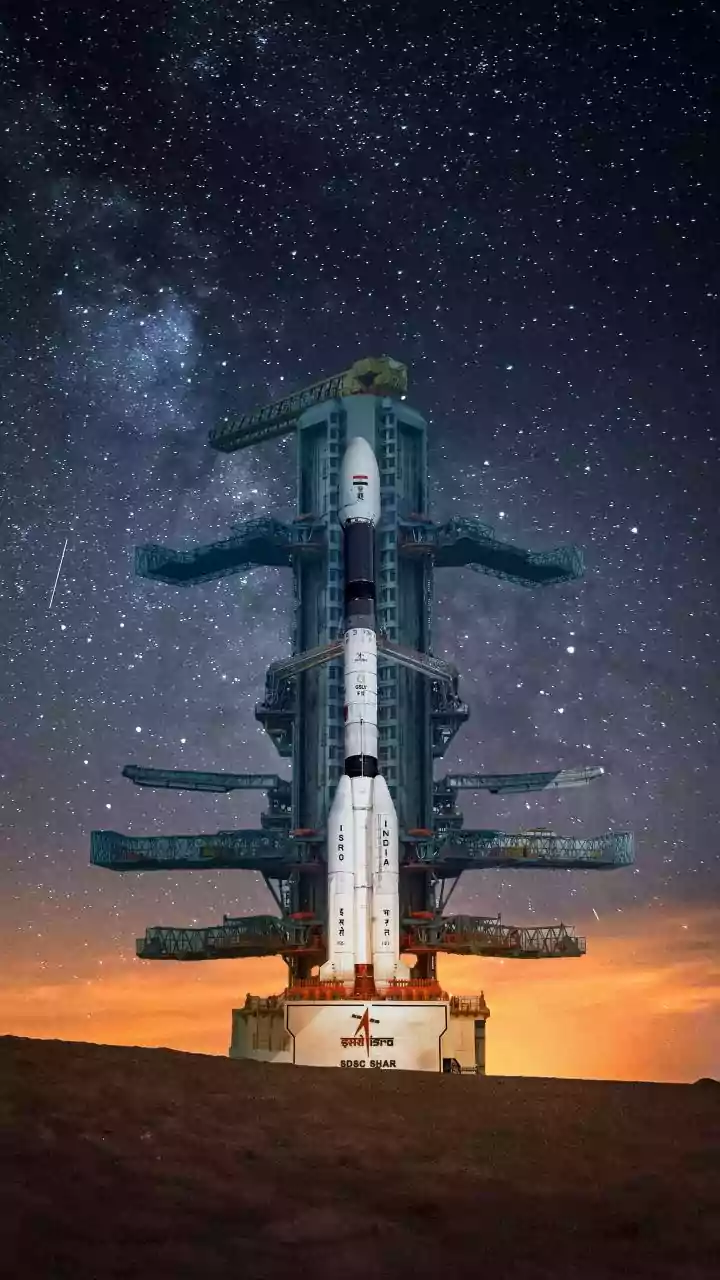
India has become a key player in this global effort with its Aditya-L1 mission. Launched by ISRO, Aditya-L1 is a dedicated solar observatory positioned at the L1 Lagrange point, providing a continuous, uninterrupted view of the sun. One of its primary instruments is the Visible Emission Line Coronagraph (VELC), which is designed to study CMEs and the dynamics of the solar corona. By observing these massive eruptions close to the sun's surface, Aditya-L1 contributes vital data to global space weather models, enhancing our ability to predict the arrival and strength of solar storms. This not only bolsters India's own grid security but also adds a crucial data point to the international network of observatories that protect our interconnected world.