







As the monsoon retreats, Indian cities often feel refreshed. The air seems cleaner, the sky a brighter blue. If you've noticed more birds during this time, you're not imagining it. This increased visibility is a real, observable phenomenon.
The Problem of Urban Haze
Throughout
the year, particularly during the dry and winter months, a persistent haze often blankets India's urban centres. This isn't just fog; it's a cocktail of microscopic pollutants. The main culprits are tiny airborne particles known as aerosols or particulate matter (PM2.5), which come from vehicle exhaust, industrial emissions, construction dust, and the burning of crops or waste. These particles hang in the atmosphere, scattering and absorbing sunlight. This process reduces visibility and gives the sky a murky, greyish-white appearance. For city dwellers, this haze is a constant backdrop to daily life, but it has a significant, often overlooked, impact on our ability to see the world around us, including the wildlife that shares our spaces.
How the Monsoon Clears the Air
The arrival of the Southwest Monsoon acts as a powerful, large-scale atmospheric cleansing system. The mechanism is twofold. Firstly, the rain itself physically washes pollutants out of the air in a process called 'wet deposition'. As raindrops fall, they capture and bring down particulate matter, effectively scrubbing the atmosphere clean. Secondly, the strong monsoon winds and changing weather patterns help to disperse and carry away stagnant pollutants that have accumulated for months. This combination of a thorough washing and a change in air circulation leads to a dramatic improvement in air quality, with significantly lower levels of haze-causing aerosols in the weeks following the rainy season.
From Murky Skies to Vibrant Plumage
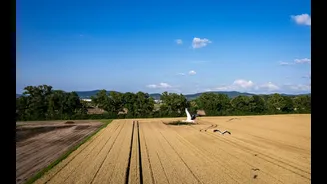
With fewer particles in the air to scatter light, the sky appears clearer and more intensely blue. This has a direct effect on birdwatching. It's not just about being able to see farther. The quality of light itself improves. Haze diffuses sunlight, making colours appear muted and dull. When the haze clears, the light is more direct and brilliant. This makes the colours of a bird's plumage pop. The iridescent purple of a sunbird, the bright green of a parakeet, or the striking red vent of a bulbul become much more vivid and easier to discern. This improved clarity and colour rendition allows birdwatchers to not only spot birds more easily but also to identify them more accurately from a distance.
More Birds, or Just Better Sightings?
While it feels like there's a sudden explosion of birdlife, the improved visibility is primarily about seeing the resident birds better. Species that were there all along, like House Sparrows, Common Mynas, Black Kites, and Coppersmith Barbets, are simply more noticeable against the clear, bright sky. Their activity hasn't necessarily increased, but our ability to observe them has. That said, the post-monsoon period does coincide with the arrival of some early migratory species, which can add to the variety of birds seen. However, the main reason your local park or balcony seems more alive with avian activity is the pristine condition of the atmosphere, which makes for a perfect viewing window.
Your Window for Urban Birding
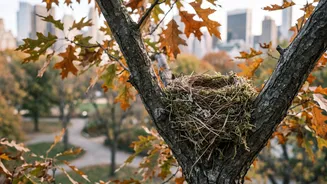
This period, typically from late September through November, is considered a prime time for birding in India, before winter conditions can sometimes trap pollution again. To take advantage of this, you don't need to travel far. Local city parks, wetlands, university campuses, and even residential areas with old trees become fantastic birding spots. Early mornings are often best, as birds are most active and the light is crisp. Look for the flash of a Rose-ringed Parakeet flock, the confident strut of a Common Myna, or listen for the metallic call of the Coppersmith Barbet. It's a reminder that a rich ecosystem thrives within our cities, waiting to be noticed when the conditions are just right.