



A Year Shorter Than a Day?
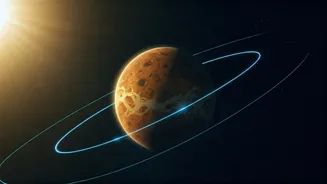
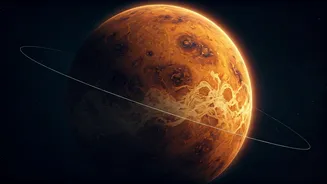
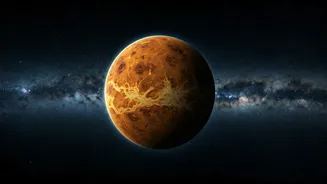
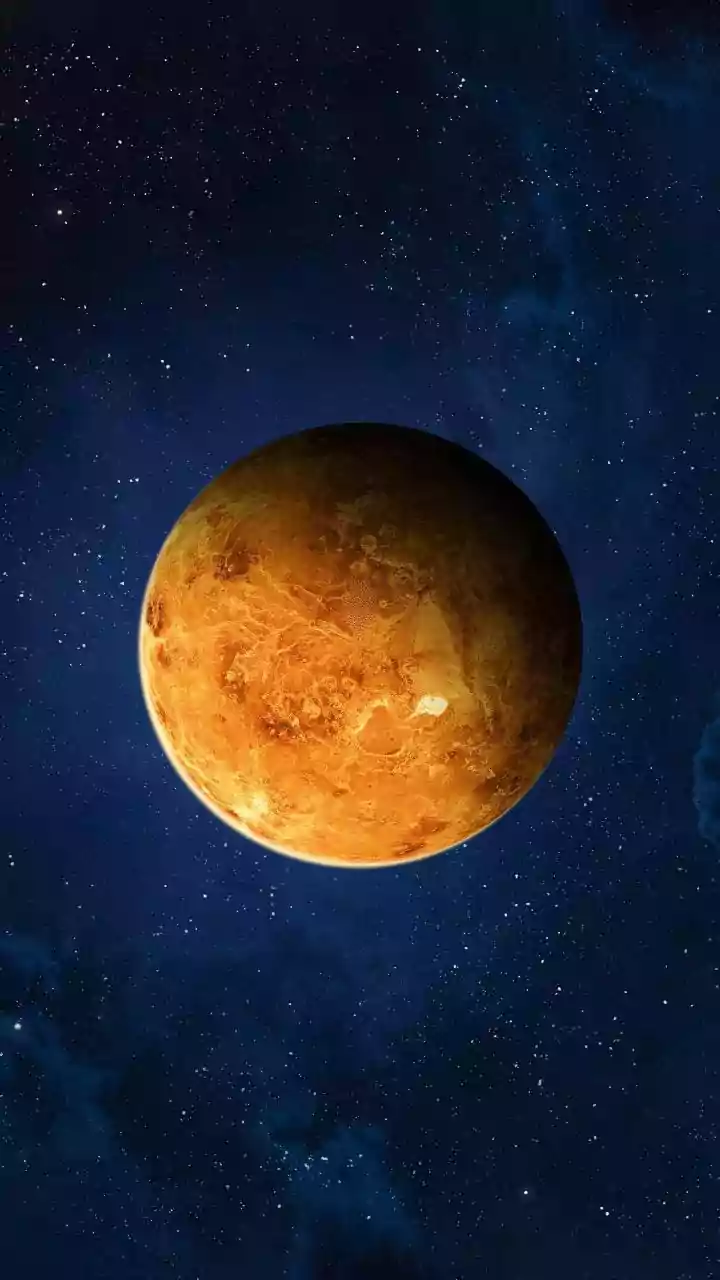
It sounds like a riddle, but it’s a simple, mind-bending astronomical fact. A 'year' is the time it takes a planet to complete one orbit around the Sun. For Venus, this journey takes about 225 Earth days. A 'day' is the time it takes for a planet to complete one rotation
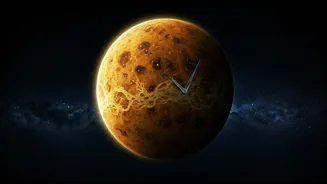
on its own axis. For Venus, this takes a staggering 243 Earth days. You read that correctly: Venus completes a full trip around the Sun more quickly than it spins around once. It’s the only planet in our solar system with this peculiar characteristic, making it a true oddity among its celestial peers.
The Two Types of Venusian 'Day'
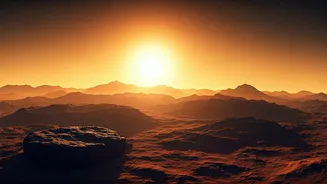
To be precise, we need to distinguish between two kinds of day. The 'sidereal day' is the 243-Earth-day period it takes for the planet to make one full 360-degree rotation. This is the 'day' that is longer than the Venusian year. However, if you were standing on Venus (which you wouldn’t want to do), the time from one sunrise to the next, called a 'solar day', would be different. Because Venus rotates backwards so slowly, the solar day is actually 'only' about 117 Earth days long. This means you would experience about 58 days of continuous daylight followed by 58 days of darkness. So while one type of day is longer than the year, the day-night cycle is shorter. It’s confusing, but that's what makes Venus so fascinating.
A Slow, Backward Spin
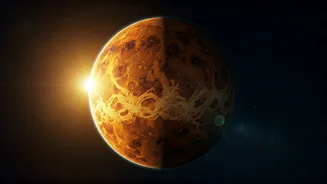
The core of Venus's temporal weirdness lies in its rotation. Not only is it the slowest-rotating planet in the solar system, but it also spins 'backwards'. While Earth and most other planets spin counter-clockwise on their axes, Venus spins clockwise. This is known as retrograde rotation. If you could watch the solar system from above the Sun's north pole, you'd see all the planets orbiting and spinning in the same direction, with Venus being the stubborn exception, lazily spinning the wrong way. This backward motion, combined with its orbital path, creates the unique relationship between its day and year.
Why Is Venus So Strange?
Scientists are still debating the exact cause of Venus's bizarre spin. One leading theory suggests that in the chaotic early days of the solar system, Venus was struck by a massive planet-sized object. Such a cataclysmic impact could have been powerful enough to not just slow its rotation to a crawl but actually reverse its direction entirely. Another theory points to its incredibly thick and heavy atmosphere. The dense blanket of gas, which is more than 90 times the pressure of Earth's, may create powerful atmospheric tides. Over billions of years, the friction and drag from this super-rotating atmosphere could have gradually slowed the planet down and flipped its spin. It’s possible a combination of these factors is responsible.
Life in a Hellish Haze
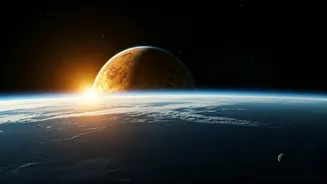
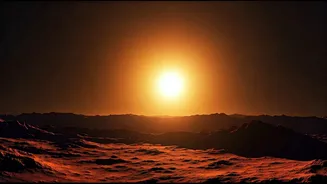
This strange timekeeping happens on a planet that is already one of the most inhospitable places imaginable. The surface of Venus is a scorching 465 degrees Celsius, hot enough to melt lead. Its thick atmosphere of carbon dioxide creates a runaway greenhouse effect, and clouds of sulfuric acid rain down. The atmospheric pressure on the surface is equivalent to being 900 metres underwater on Earth. So, while the idea of a day being longer than a year is a fun thought experiment, the reality is that any visitor would be crushed, melted, and dissolved long before they could appreciate a Venusian sunset—which would, of course, happen in the east.