




The Merger That Forged the Link
To understand why Singapore Airlines (SIA) is financially tied to Air India's fate, we have to rewind to the landmark merger of Vistara with Air India, completed in November 2024. Before this, Vistara was a joint venture between India's Tata Group (51%)
and SIA (49%). As part of the consolidation of its aviation assets, Tata Group merged Vistara into the larger Air India entity. In exchange for its stake in Vistara, Singapore Airlines received a significant 25.1% share in the newly enlarged Air India group. This transaction transformed SIA from a joint venture partner in a domestic carrier to a major strategic investor in India's national airline, giving it a direct and substantial foothold in one of the world's fastest-growing aviation markets.
Unpacking the H1 FY27 Numbers
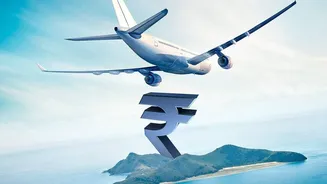
In the first half of the 2027 fiscal year, ending September 30, 2026, Air India is estimated to have incurred a loss of approximately ₹10,500 crore. While this is a staggering figure, it represents a 16% improvement from the nearly ₹12,500 crore loss reported in the same period the previous year. This reduction signals that cost-cutting measures and operational adjustments under the Tata Group's 'Vihaan.AI' transformation plan are beginning to show results. However, the overall losses remain substantial as the airline undertakes a capital-intensive overhaul of its fleet, technology, and services. The journey to profitability is a long-haul flight, with Tata Sons' Chairman N. Chandrasekaran estimating the full turnaround could take five to ten years.
How the Loss Translates to SIA's Books
Due to its 25.1% stake, Singapore Airlines must account for a corresponding share of Air India's profits or losses in its own financial statements. For the first half of FY27, SIA's share of Air India's loss amounted to S$361.7 million, or about ₹2,640 crore. This figure, while significant, was lower than the S$429.5 million (approx. ₹3,140 crore) it absorbed in the prior year, providing some relief to SIA's bottom line. The consistent losses have also impacted the carrying value of SIA's investment in Air India, which fell from around S$1.13 billion in March 2026 to approximately S$800 million by September 2026, reflecting the financial drain.
Short-Term Pain for a Long-Term Prize
Despite the financial impact, Singapore Airlines has repeatedly reaffirmed its commitment to the Air India partnership, viewing it as a crucial pillar of its multi-hub strategy. The investment provides SIA with unparalleled access to India's vast and rapidly expanding domestic and international aviation market. Executives from both SIA and Tata have stressed that a transformation of this scale will take time and that short-term losses were anticipated. SIA's leadership has expressed confidence that Air India is making 'tangible progress' and that the long-term strategic benefits will eventually outweigh the current financial pressures. The goal is to build a world-class airline, and both partners are buckled in for the long and potentially bumpy ride.
What This Means for Indian Skies
The deep-pocketed backing of both Tata Group and Singapore Airlines gives Air India a crucial advantage in its ambitious revival. It allows the carrier to make massive investments in new aircraft and service upgrades needed to compete effectively with domestic rivals like IndiGo and major international carriers. For the Indian passenger, this partnership promises a revitalised Air India with improved service quality and a broader network. The airline has already begun retrofitting its aircraft and integrating operations to create a more seamless customer experience. While financial losses paint a picture of the challenges, the strategic commitment behind the numbers suggests a determined effort to reshape India's aviation landscape with a stronger, more competitive national carrier at its center.