







Beyond Today’s Borders: What is Tamilakam?
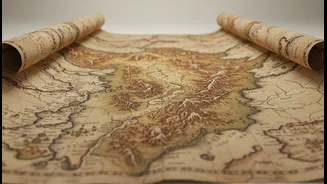
The 'ancient map' at the heart of this expansion is 'Tamilakam,' a term from classical Sangam literature. It describes a historical region where the Tamil language and culture were dominant. This was not a single, unified empire but a cultural landscape
that stretched far beyond the boundaries of modern-day Tamil Nadu. Ancient texts define its territory as extending from the Tirupati hills in the north to the subcontinent's southern tip, encompassing present-day Kerala and parts of Andhra Pradesh and Karnataka. For centuries, this area was home to powerful seafaring dynasties like the Cheras, Cholas, and Pandyas, who engaged in robust trade with civilizations as far away as Rome. This historical reality of a larger, culturally interconnected Tamil world forms the basis of the map now being conceptually expanded.
Digging Up a Deeper Past
The fuel for this expansionist view is coming directly from the soil. A series of state-funded archaeological excavations are yielding findings that challenge long-held timelines of Indian history. The most prominent among these is the Keeladi site near Madurai. Discoveries there suggest the existence of a sophisticated, literate, and urban civilization along the Vaigai riverbed as early as the 6th century BCE. This pushes the date of urbanisation in Tamil Nadu to be contemporaneous with the Gangetic plains civilization. Other sites like Sivakalai and Mayiladumparai have unearthed artifacts suggesting iron was used 4,200 years ago and that a literate society existed more than 3,000 years ago. As recently as July 2026, another significant find—a Sangam-era brick stepwell—was unearthed near Tenkasi, reinforcing the narrative of advanced ancient water management systems. The state government is heavily promoting these findings, establishing new museums and asserting that the history of the Indian subcontinent should be rewritten, starting from the Tamil land.
The Map as a Political Message
This historical project is deeply intertwined with contemporary politics and the powerful Dravidian movement, which has shaped Tamil Nadu's identity for over a century. The current DMK government, led by Chief Minister M.K. Stalin, is championing this narrative of Tamil antiquity as a cornerstone of its political ideology. By scientifically validating the claims of ancient Tamil literature, the government aims to reinforce a distinct cultural identity that is separate from, and in some narratives, older than the Sanskritic culture of northern India. This is presented as a counter-narrative to what some in the state perceive as an attempt by the central government to impose a singular, homogenized version of Indian history. The 'expansion' is therefore not just geographical but ideological—a re-centering of Indian history with the Dravidian south at its core.
From Local Pride to Global Soft Power
The vision extends beyond India's borders. The Tamil Nadu government is actively engaging with the global Tamil diaspora, encouraging them to connect with their roots and invest in the state. This includes initiatives like the 'Searching for Roots' program, which brings diaspora youth to Tamil Nadu, and plans for a global Tamil conference to showcase the language and heritage on an international stage. By funding research into connections between the Indus Valley Civilization and Tamil culture, and even offering a million-dollar prize to decipher the Indus script, the state is making a bold claim for its place in world history. This effort is a form of cultural diplomacy, using history and language not just to foster regional pride but to build a global brand and assert Tamil Nadu's influence on the world stage.