

The Core Challenge: Battery Costs
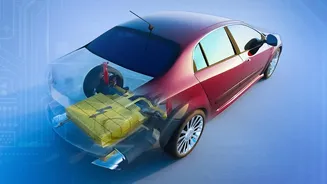
For years, the biggest hurdle to mass EV adoption in India has been the sticker price. The single most expensive component in any electric vehicle is its battery pack, which can account for nearly half of the total production cost. This has kept most EV models
in the premium category, out of reach for the average Indian car buyer. However, the global market for the raw materials that go into these batteries is undergoing a significant shift. Prices for key minerals are falling, and this trend is the primary enabler for the wave of budget-friendly EVs that automakers are now planning for India.
A Global Plunge in Material Prices
The key ingredients in the dominant lithium-ion batteries are lithium, cobalt, and nickel. After a period of price hikes, recent months have seen a notable downturn. As of September 2026, cobalt prices, for instance, have fallen significantly due to weaker demand in other sectors and changes in supply dynamics. Nickel has also seen prices dip to the lower end of its recent range. While one recent report noted a year-on-year rise in lithium carbonate costs, other indices show a broader negative trend for the lithium market. This global price correction is attributed to several factors, including the opening of new mines, improved extraction technologies, and a temporary cooling of demand in some major markets, creating a more favorable purchasing environment for battery manufacturers.
India's Push for Local Manufacturing
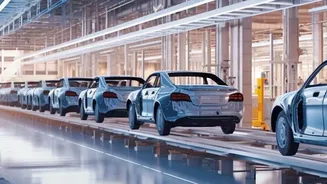
The Indian government is determined to capitalize on this global trend by fostering a domestic manufacturing ecosystem. The flagship Production Linked Incentive (PLI) scheme for Advanced Chemistry Cell (ACC) Battery Storage, approved in 2021 with an outlay of ₹18,100 crore, is central to this strategy. The goal is to establish 50 GWh of domestic battery manufacturing capacity, reducing the nation's heavy reliance on imported cells, primarily from China. While the rollout has been slower than anticipated, with no incentives claimed as of July 2026, the scheme has attracted over ₹5,180 crore in investments and is seen as a catalyst for the broader ecosystem. This push for localisation aims to make the supply chain more resilient and, eventually, bring down costs for consumers.
The Sodium-Ion Alternative
Beyond making lithium-ion batteries cheaper, Indian researchers and companies are looking at alternatives that sidestep lithium altogether. Sodium-ion batteries are emerging as a highly promising technology for India. Sodium is abundant and significantly cheaper than lithium, which India must import. Indian companies like Reliance New Energy and KPIT Technologies are actively developing commercially viable sodium-ion technology. Researchers at Bengaluru's Jawaharlal Nehru Centre for Advanced Scientific Research (JNCASR) have already developed a sodium-ion battery that boasts an incredibly fast charging time and a long lifecycle. These batteries are also inherently safer, making them a strong contender for future low-cost EVs designed for Indian conditions.
The Road to the Sub-₹10 Lakh EV
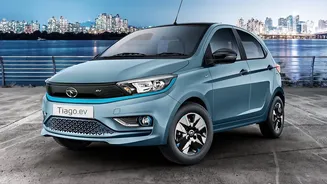
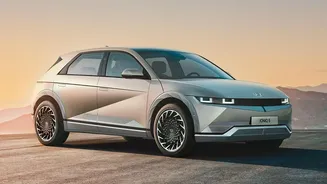
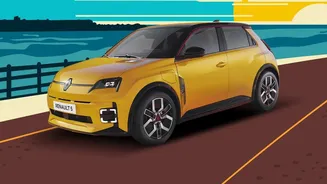
The convergence of cheaper raw materials and a push for local production is directly translating into concrete plans from automakers. A slew of affordable EVs, many with SUV styling, are expected to launch in India between 2026 and 2028. Hyundai is planning an entry-level electric SUV, codenamed HE1i, for late 2026. Tata Motors is working on a next-generation Nexon.ev, while Renault and Vietnam's VinFast are also entering the fray with compact electric SUVs. Perhaps most anticipated is Maruti Suzuki's plan for a truly affordable EV, possibly priced under ₹10 lakh, expected around 2028. This signals a clear market shift from premium-only models to vehicles designed for the everyday Indian driver.