



The Crisis of Coral Bleaching
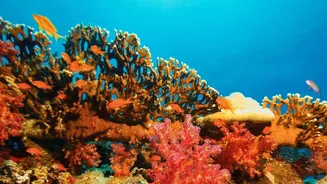
Coral reefs are stunningly beautiful and critically important ecosystems. However, they are under severe threat from climate change. The primary danger is rising sea temperatures. Corals have a symbiotic relationship with microscopic algae called zooxanthellae,
which live in their tissues, provide them with food through photosynthesis, and give them their vibrant colors. When water temperatures rise even slightly, corals become stressed and expel these essential algae. This process, known as coral bleaching, leaves the coral skeleton white and vulnerable. While corals can survive a bleaching event, prolonged heat stress leads to starvation, disease, and ultimately, death. In recent years, mass bleaching events have become more frequent and severe, devastating reefs worldwide.
Finding Nature’s Toughest Survivors
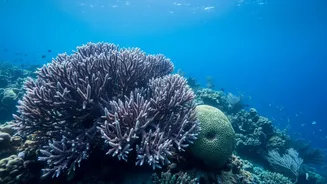
In the face of this crisis, scientists have observed a fascinating phenomenon: some corals survive, and even thrive, during heatwaves that kill their neighbors. These are the naturally resilient individuals, often dubbed 'super corals'. Their survival is linked to their thermal tolerance, or their ability to withstand higher temperatures without bleaching. Researchers are now actively seeking out these hardy survivors in areas that have experienced bleaching events or in naturally warmer waters. The goal is to identify the genetic traits or specific types of symbiotic algae that give these corals their advantage. Some corals, for instance, host more heat-tolerant strains of zooxanthellae, which allows them to resist bleaching at higher temperatures.
From the Lab to the Reef
Once these resilient corals are identified, the work of rebuilding begins. This process, often called 'assisted evolution', involves several techniques to accelerate natural adaptive processes. In controlled lab environments, scientists can use a few key methods. One is 'stress hardening', where corals are gradually exposed to higher temperatures to build up their resilience before being planted back on the reef. Another powerful technique is selective breeding. Scientists crossbreed different heat-tolerant corals during their annual spawning events to produce offspring that may have enhanced survival traits. They can even hybridize different species to increase genetic diversity and create novel combinations that are better suited to future ocean conditions. These selectively bred or conditioned corals are then grown in underwater or land-based nurseries before being carefully outplanted onto damaged reefs to help kickstart recovery.
A Race Against Time
While this research offers a powerful new toolkit for conservation, it is not a silver bullet. The scale of the problem is immense, and restoring reefs is a labor-intensive and costly process. Scientists warn that research and development must be accelerated if these techniques are to make a significant impact before it's too late. The discovery of resilient corals is complex; a species that is tolerant in one location may not be in another, highlighting the vast genetic and environmental variables at play. Furthermore, even the most resilient corals have their limits. The ultimate threat remains climate change, and without rapid and significant reductions in global greenhouse gas emissions, the oceans will continue to warm beyond the tolerance of even the toughest 'super corals'.