






Know Your Airline's Rules First
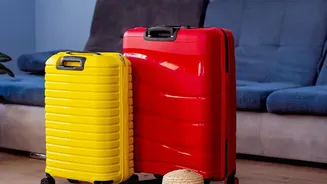
Before you pack a single item, check your airline’s specific cabin baggage rules. In India, most domestic carriers like IndiGo and SpiceJet generally limit carry-on bags to a dimension of 55cm x 35cm x 25cm and a weight of 7kg. However, some airlines
can be stricter; Air India, for instance, uses a more restrictive size of 55cm x 40cm x 20cm. These dimensions include wheels and handles, so measure carefully. Remember that on connecting flights, the rules of the most restrictive airline on your itinerary apply for the whole journey. Exceeding these limits can force you to check your bag at the gate, often for a high fee. A quick visit to the airline's website is the most crucial first step to avoiding extra costs.
Adopt the Capsule Wardrobe Mindset
A four-day trip doesn't require four completely distinct outfits. The secret is a 'capsule wardrobe'—a small collection of essential items that all complement each other. Think mix-and-match. For a short trip, a good formula is the 5-4-3-2-1 rule: five sets of socks and underwear, four tops, three bottoms, two pairs of shoes, and one accessory like a hat or jacket. By choosing neutral colours for your main items (like trousers or a jacket) and adding variety with lighter tops, you can create multiple looks from a few key pieces. This strategy prevents you from packing 'just in case' clothes that you'll never wear.
Embrace Compression Packing Cubes
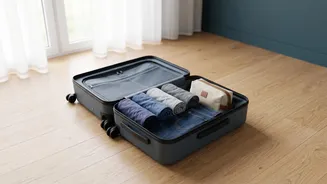
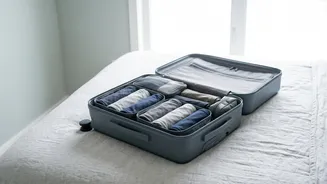
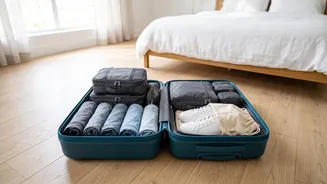
Packing cubes are game-changers for organisation, but compression cubes are miracle workers for saving space. These zippered fabric containers allow you to pack clothes tightly and then squeeze out excess air using a second compression zipper. You can fit significantly more into your bag while keeping everything neatly categorised—tops in one, bottoms in another. This not only saves precious space but also prevents your bag from becoming a chaotic mess when you’re searching for a specific item. For travellers who struggle to pack light, these cubes can make the difference between fitting everything in a carry-on or being forced to check a bag.
Master the Art of Rolling
The classic debate of rolling versus folding has a clear winner for carry-on packing: rolling. Tightly rolling clothes like t-shirts, trousers, and dresses minimises wrinkles and allows you to fit items into every nook and cranny of your suitcase. This technique works exceptionally well when combined with packing cubes. For bulkier items like blazers or sweaters, a neat, tight fold might be more efficient. The goal is to eliminate any dead air or empty space in your bag. By packing rolled items first and then tucking smaller things like socks or chargers into the gaps, you maximise every available centimetre.
Be Strategic With Liquids and Toiletries
Liquids are often the downfall of carry-on travellers. Airport security regulations strictly limit liquids in hand luggage to containers of 100ml or less, all of which must fit into a single transparent, resealable bag. Instead of buying travel-sized versions of your favourite products, invest in a set of reusable 100ml silicone bottles and decant your shampoo, conditioner, and lotion. Better yet, switch to solid toiletries. Solid shampoo bars, conditioner bars, and toothpaste tablets eliminate the liquid problem entirely, freeing up space and saving you from potential spills. This simple swap is one of the most effective ways to streamline your packing process.
Wear Your Heaviest Items
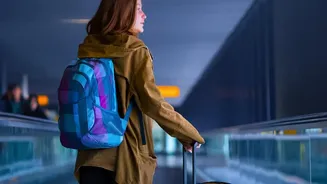
This is one of the oldest and most effective packing hacks. Your bulkiest items—be it a jacket, a heavy sweater, or a pair of boots—should be worn on the plane, not packed in your bag. This frees up a significant amount of space and weight in your carry-on. If you're bringing a pair of hiking boots and a pair of sandals, wear the boots to the airport. If you need a jacket for your destination, wear it or carry it over your arm. Airlines don't count the clothes on your body towards your baggage allowance, making this the perfect way to bring along essential but bulky items without penalty.