




The Unique Dangers of Monsoon Nights
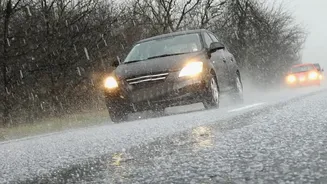
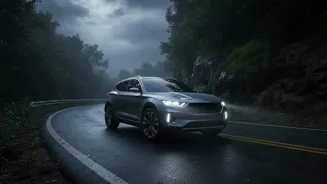
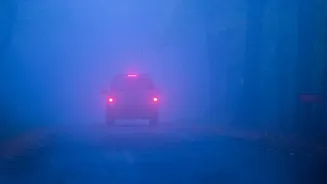
Driving on winding ghat roads requires constant focus, but the monsoon adds another layer of difficulty. Torrential rain and thick fog create a curtain of white that can disorient even experienced drivers. Standard headlights, especially high beams, become
a liability. The light scatters off the millions of water droplets in the air, reflecting straight back into your eyes. This creates a blinding wall of glare, making it impossible to see the road, its edges, or any potential hazards like fallen rocks or other vehicles.
How Fog Lights Cut Through the Mist
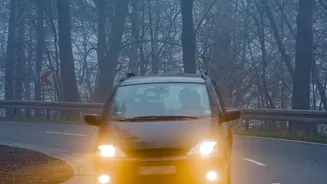
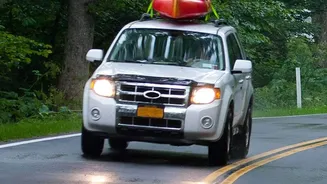
Fog lights are designed specifically for these low-visibility situations. Their effectiveness comes down to two key factors: placement and beam pattern. They are mounted very low on the front bumper, often just a foot or so off the ground. This is critical because fog rarely sits directly on the road surface; there's usually a small, clear space just above the tarmac. Fog lights project a wide, flat, bar-shaped beam of light into this space, illuminating the road directly in front of the car without hitting the fog bank above and causing glare. This allows you to see lane markings, the edge of the road, and immediate obstacles more clearly.
Never Use High Beams in Fog
It’s a common but dangerous mistake to think that brighter is better. Switching on your high beams in fog or heavy rain is one of the worst things you can do. Because high beams are angled upwards to illuminate the road far ahead, their light hits the fog directly, creating intense reflective glare. This severely compromises your vision, effectively making you blind to what's right in front of you. Always use your low beams in conjunction with your fog lights for the best possible visibility in these conditions. The low beams provide some forward illumination while the fog lights cover the crucial area near the front of the vehicle.
The Yellow vs. White Light Debate
Many cars come with yellow or selective yellow fog lights, and for good reason. While the beam pattern is the most important factor, colour can help. The longer wavelength of yellow light scatters less when it hits water droplets compared to the shorter wavelength of white or blue light. This can result in less glare and improved contrast, making it slightly easier for your eyes to distinguish shapes in the gloom. While modern white LED fog lights are very effective, many drivers who frequently navigate foggy or rainy rural roads prefer yellow lights for the reduction in eye strain and perceived improvement in contrast.
Proper Use Is a Sign of a Good Driver
Fog lights are a specialized tool and should only be used when visibility is significantly reduced—generally to less than 100 metres. Using them in clear weather, or even light rain, is not only unnecessary but can be dangerous for other drivers. Their brightness and low angle can be dazzling to oncoming traffic. Remember to be courteous and switch them off as soon as visibility improves. The goal is to see and be seen safely, not to blind others on the road. When navigating ghats, pair them with a slower speed, maintain a safe distance from the vehicle ahead, and use lower gears on ascents and descents to maintain control.