







The Problem with Perfect Numbers
For years, the fitness world has been obsessed with 'macros'—the proteins, fats, and carbohydrates that make up our food. The theory is simple: get the right ratio of these three, and you’ll achieve your health goals. This has led to a culture of meticulous
tracking, where every meal is weighed, logged, and scrutinised. While this approach can be useful for professional athletes or those with very specific medical needs, for the average person, it can become a source of stress and anxiety. It can turn eating, a source of joy and culture, into a math problem. This obsession with numbers often misses a crucial point: food quality matters more than just ratios. A calorie from a processed snack is not the same as a calorie from a whole fruit.
Enter Fiber: The Unsung Hero
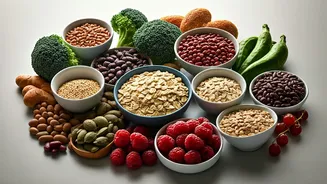
Instead of subtracting and restricting, let’s talk about adding. Fiber is a type of carbohydrate that the body can't digest. It doesn't provide nutrients or energy, so it might sound unimportant, but its role in our health is monumental. Found in plant-based foods like fruits, vegetables, whole grains, and legumes, fiber is the 'scaffolding' of these foods. There are two main types: soluble fiber, which dissolves in water to form a gel-like substance (think oats and beans), and insoluble fiber, which adds bulk to stool and helps food pass more quickly through the digestive system (found in whole wheat and nuts). A balanced diet rich in both is key to unlocking a host of health benefits, without the headache of constant tracking.
Why Fiber is a Game-Changer
Focusing on fiber shifts your perspective from restriction to abundance. Instead of asking, “Can I eat this?” you start asking, “How can I add more goodness to this?” The benefits are profound. Firstly, fiber is crucial for gut health. It feeds the beneficial bacteria in your gut, which are linked to everything from a stronger immune system to better mental health. Secondly, it promotes satiety, meaning it helps you feel full and satisfied for longer. This naturally helps with weight management without a feeling of deprivation. Soluble fiber, in particular, slows down the absorption of sugar, leading to more stable blood sugar levels and preventing those dreaded energy crashes. It also helps lower cholesterol levels, supporting long-term heart health. In essence, by focusing on fiber, you naturally improve the overall quality of your diet.
Making It Work with an Indian Diet
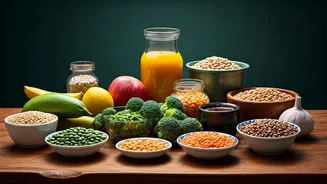
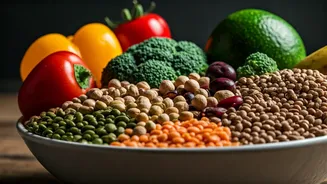
The good news is that traditional Indian cuisine is naturally well-suited for a high-fiber diet. You don't need to look for exotic or expensive ingredients. Simple swaps and additions can make a huge difference. Start by choosing whole grains over refined ones. Swap white rice for brown rice, millets like jowar or bajra, or quinoa. Instead of white bread, opt for whole wheat roti or multigrain bread. Make dals and legumes a daily staple. A bowl of dal, rajma, or chana is a powerhouse of both protein and fiber. Load up on seasonal vegetables in your sabzis and salads. Don't peel fruits like apples and pears, as much of the fiber is in the skin. Snacking on a handful of nuts, seeds, or a piece of whole fruit instead of packaged snacks is another easy win.
A Simple Daily Checklist
Making the switch doesn't have to be overwhelming. Aim for small, consistent changes. Here’s a simple mental checklist for your day:
* **Breakfast:** Can you add a tablespoon of chia seeds or flaxseeds to your oats, dahi, or smoothie?
* **Lunch:** Is your plate at least half-filled with vegetables? Are you having a whole grain like bajra roti or a serving of dal?
* **Snack:** Could you reach for a guava or a handful of almonds instead of biscuits?
* **Dinner:** Can you incorporate a hearty vegetable soup or a mixed-vegetable sabzi alongside your main meal?
Remember to increase your fiber intake gradually and drink plenty of water to help your digestive system adjust. The goal is progress, not perfection.