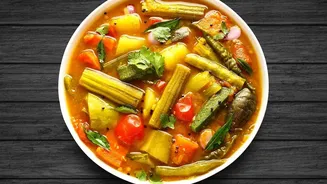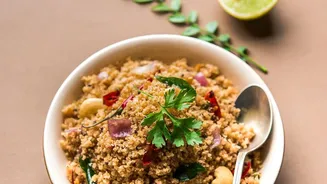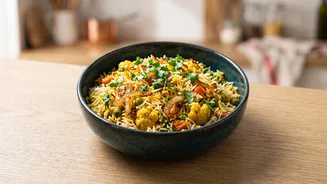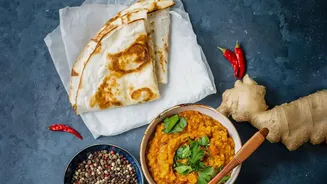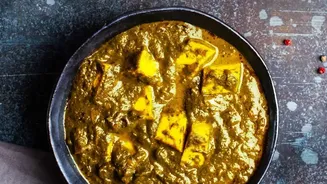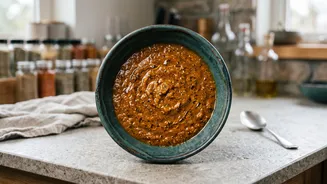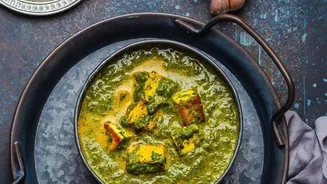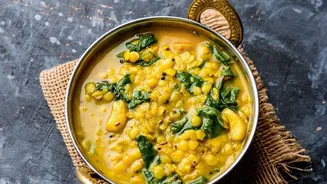



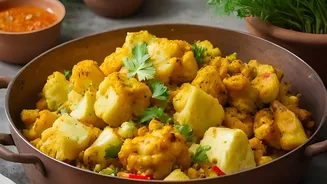
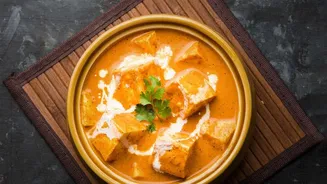
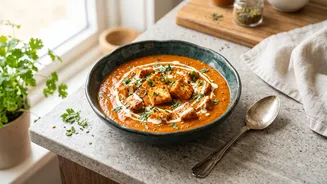
It’s a familiar and comforting experience: the dal or rajma that was delicious last night is somehow even more satisfying today. This isn't just your imagination. There is real food science at play, turning leftovers into a superior meal.
The Slow Dance of Flavours
When you first
cook a complex Indian dish like a curry or dal, you bring together a host of ingredients: onions, ginger, garlic, tomatoes, and a dozen spices. While cooking combines them, the flavours remain distinct. Think of it as a party where guests have arrived but haven't started mingling. Overnight in the refrigerator, a process called 'flavour equilibration' takes place. The various flavour compounds slowly move and spread throughout the dish. The sharpness of ginger mellows, the tang of tomato integrates, and the individual notes of spices stop shouting and start singing in harmony. The result is a more rounded, cohesive taste where the dish tastes like one unified whole, rather than a collection of its parts.
The Magic of Spices and Fat
Many of the aromatic compounds that give Indian spices their incredible flavour are fat-soluble, not water-soluble. This means they dissolve in ghee or oil. During cooking, the heat helps extract these compounds, but the process doesn't stop when the stove is turned off. As the stew cools and rests, these flavour-packed oils continue to migrate and disperse through the gravy. Whole spices like cloves and cardamom slowly release their aromatic oils, while ground spices that might have tasted a little raw or sharp initially become fully hydrated and mellow out. This ensures that every spoonful has a complete, well-distributed flavour, eliminating those bites that are bland or overly intense.
A Creamier, Richer Mouthfeel
The improvement in texture, or mouthfeel, is especially noticeable in lentil and bean dishes like dal, chole, or rajma. This is largely due to starch. As cooked lentils and legumes cool, they continue to release starch into the surrounding liquid. This naturally thickens the gravy, giving it a velvety, richer consistency that clings to rice or bread. Furthermore, a process called 'starch retrogradation' occurs. As the cooked starches cool, their molecules reorganise into a more structured form. This change can contribute to a firmer, more satisfying texture and helps the starches better absorb the surrounding sauce and its flavours. When reheated, this thickened, flavour-infused gravy provides a much more luxurious mouthfeel.
Proteins and Aromatics Continue to Work
The chemical changes aren't limited to fats and starches. In meatstewstews, the collagen continues to break down even after cooking, forming gelatin as it cools. When reheated, this gelatin melts, contributing to a silkier, smoother sauce. In all stews, proteins slowly break down into smaller components like amino acids, which enhance the savoury, or umami, taste of the dish. Meanwhile, aromatics like onion and garlic also continue to evolve. Their initial pungent bite softens, and their underlying sweetness becomes more prominent, adding another layer of depth to the overall flavour profile. Reheating then releases all these newly developed aromas, making the dish smell and taste even more complex and appealing.