




From Sugarcane to Sweetener
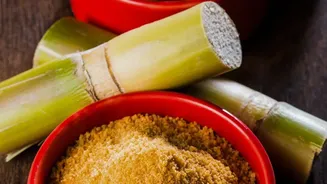
Both jaggery and white sugar begin their lives as sugarcane juice, but their paths diverge dramatically in processing. White sugar is produced through intensive industrial refining. The juice is clarified with chemicals like sulphur dioxide, boiled, and spun
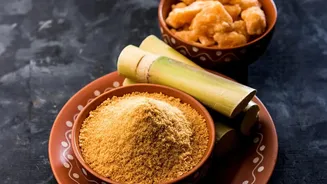
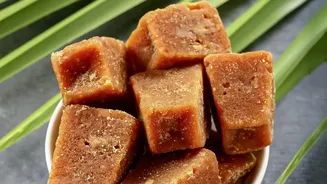
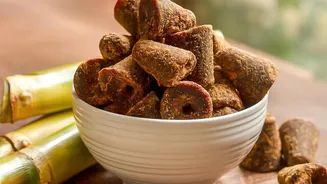
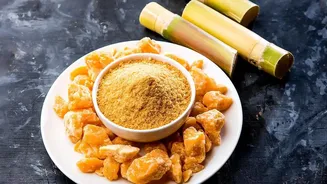
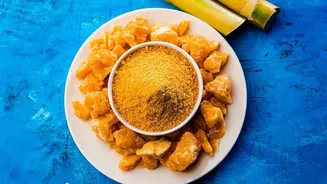
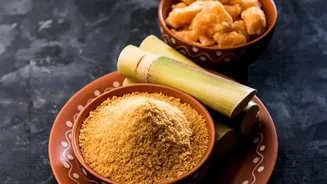
in centrifuges to separate the pure sucrose crystals from the molasses. This results in the uniform white granules we know, which are about 99.9% sucrose but stripped of all other nutrients.Jaggery, on the other hand, is made using a more traditional, less intensive method. The sugarcane juice is boiled in large, open pans, often over a wood fire. Impurities are skimmed off, and the liquid is boiled until it thickens into a dense, golden-brown paste that solidifies as it cools. Crucially, this process does not remove the molasses, which is why jaggery retains its colour, distinct flavour, and some of the original plant's nutrients.
A Nutritional Standoff
The presence of molasses is what gives jaggery its nutritional edge over white sugar. While white sugar offers 'empty calories', jaggery contains trace amounts of essential minerals like iron, potassium, magnesium, and calcium. Some sources note that the iron content is boosted by the traditional practice of boiling the juice in iron vessels.However, it's a question of quantity. Calorically, the two are nearly identical, with 100 grams of jaggery providing about 383 calories and the same amount of white sugar providing about 387. To get a significant dose of minerals from jaggery, you would need to consume a very large amount—far more than is advisable. For instance, a typical 10-gram serving provides only a small fraction of your daily mineral requirements. The consensus is clear: while jaggery is marginally more nutritious, the difference is negligible in the context of a balanced diet.
The Glycemic Index Surprise
One of the most persistent beliefs about jaggery is that it's safer for blood sugar control. This is a myth. The glycemic index (GI), a measure of how quickly a food raises blood glucose levels, tells a surprising story. While values vary slightly across studies, most sources place the GI of white sugar at around 65. Sugarcane jaggery, conversely, has a GI of around 84, which is significantly higher. This means that sugarcane jaggery can raise blood sugar levels faster than white sugar.For anyone managing diabetes, insulin resistance, or simply trying to avoid sugar spikes, neither option is 'safe' in large amounts. The idea that you can freely swap jaggery for sugar without affecting your blood glucose is not supported by evidence. Some varieties, like palm jaggery, may have a lower GI, but the common sugarcane jaggery does not offer an advantage here.
The Verdict: Moderation, Not Miracles
So, which one should you choose? The answer isn't a simple victory for jaggery. It is less processed and contains a few extra minerals, which gives it a slight edge if you're choosing between the two for flavour in traditional recipes. Its rich, caramel-like taste is a feature in many Indian desserts for a reason.However, from a health perspective, the difference is too small to matter if consumed in moderation. Both are concentrated sources of sugar that should be limited in a healthy diet. Switching from white sugar to jaggery without reducing your overall intake does not make your diet healthier. The real goal should be to reduce the total amount of added sweeteners you consume, regardless of the source. Neither jaggery nor white sugar is a health food, and treating them as such is a mistake.