


The Promise of Polar Ice
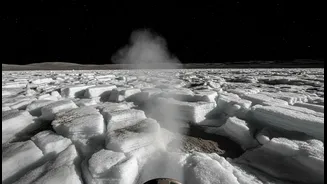
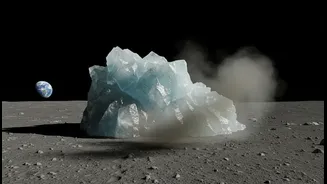
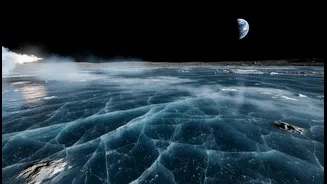
For decades, scientists theorized that the Moon’s poles could harbor water ice. In permanently shadowed regions (PSRs)—craters and depressions that never see sunlight—temperatures are cold enough to trap water and other volatile compounds for eons. In 2009,
NASA's LCROSS mission confirmed it by impacting a crater and detecting water in the resulting plume. This discovery was a game-changer. This ancient ice isn't just a scientific curiosity; it’s a potential resource that could be converted into drinking water, breathable air, and even rocket propellant. It’s the key to establishing a long-term human presence on the Moon under programs like Artemis. However, this ancient, pristine ice could hold even more profound secrets, including chemical clues about the formation of our solar system and the origins of life on Earth.
An Unavoidable Side Effect of Landing
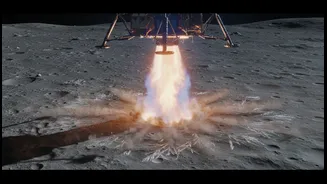
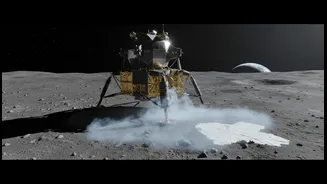
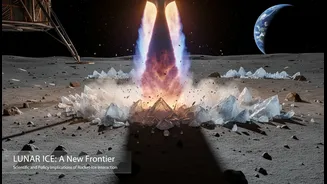
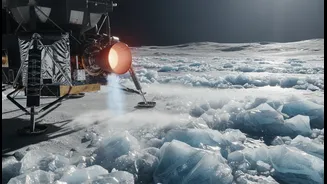
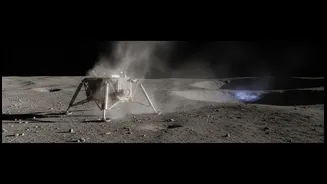
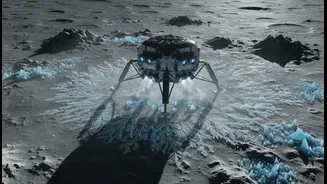
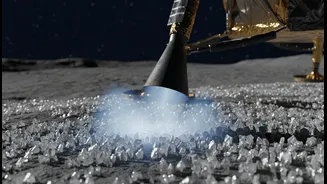
Every spacecraft that lands on the Moon does so by firing powerful rocket engines. In the near-vacuum of space, the exhaust from these engines, known as the plume, expands rapidly and interacts with the lunar surface. This isn’t just a gentle cloud; it's a high-velocity spray of gases and particles that can kick up lunar dust, or regolith, at incredible speeds. More importantly, the exhaust itself contains water vapor and other chemicals, like methane and hydrogen. When a lander touches down, it releases a significant amount of these compounds into the Moon’s incredibly thin atmosphere. The concern is that these artificial volatiles don't just stay local; they can travel vast distances.
The Problem with Predictive Models
To understand where this exhaust goes, scientists rely on complex computer simulations, often called computational fluid dynamics (CFD) models. These models predict how the plume will behave, how it will interact with the surface, and where the contaminants will end up. They are essential tools for planning missions. Here's the catch highlighted in the headline: while these models are well-established for Earth's atmospheric conditions, they require further validation for the unique, low-pressure environment of the Moon. Validation means checking the computer model's predictions against real-world experimental data to ensure they are accurate. Without this, the models are sophisticated estimates, but estimates nonetheless.
What 'Mission-Specific' Validation Means
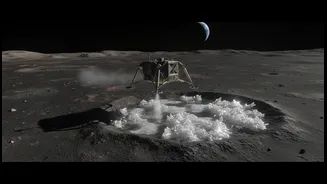
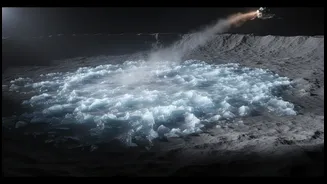
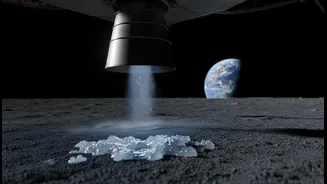
Not all landers are created equal. A small robotic lander creates a very different plume from a massive human landing system like SpaceX's Starship. The engine type, thrust level, fuel composition, and even the specific landing trajectory all drastically change how the exhaust behaves. This is why generic models aren't enough. Mission-specific validation means tailoring and confirming a model for the exact lander being flown. Recent studies have simulated how exhaust from specific landers could spread globally in just hours or days, with a significant fraction eventually freezing in the same cold traps that hold the ancient ice. One study found that a large lander could deposit over 10 tons of water into these regions, potentially masking or mixing with the native ice. European Space Agency planetary protection officer Silvio Sinibaldi has warned that without instruments on future missions to take real-world measurements and validate these models, we will miss a critical opportunity.
The Stakes for Science and Exploration
The lack of validated models creates a serious risk. If we contaminate a PSR with water and organic compounds from our own rockets, it could become incredibly difficult, if not impossible, to distinguish between modern contamination and the scientifically priceless, billions-of-years-old native materials. It would be like trying to study an ancient archaeological site after someone has scattered modern objects all over it. This uncertainty affects missions like NASA's now-discontinued VIPER rover, which was designed to map lunar water ice. Protecting these scientifically vital areas is crucial. As more nations and private companies plan lunar missions, the cumulative effect of contamination becomes a greater concern, threatening to hinder the very science that motivates the exploration.