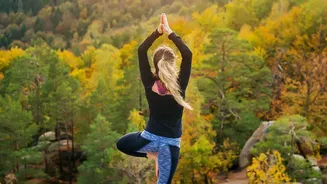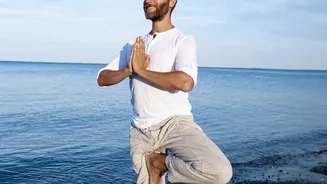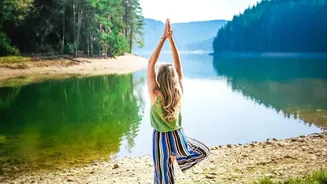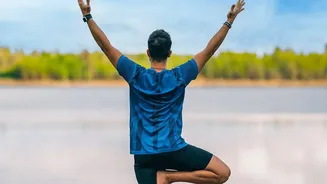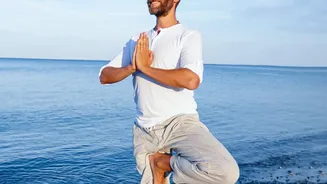


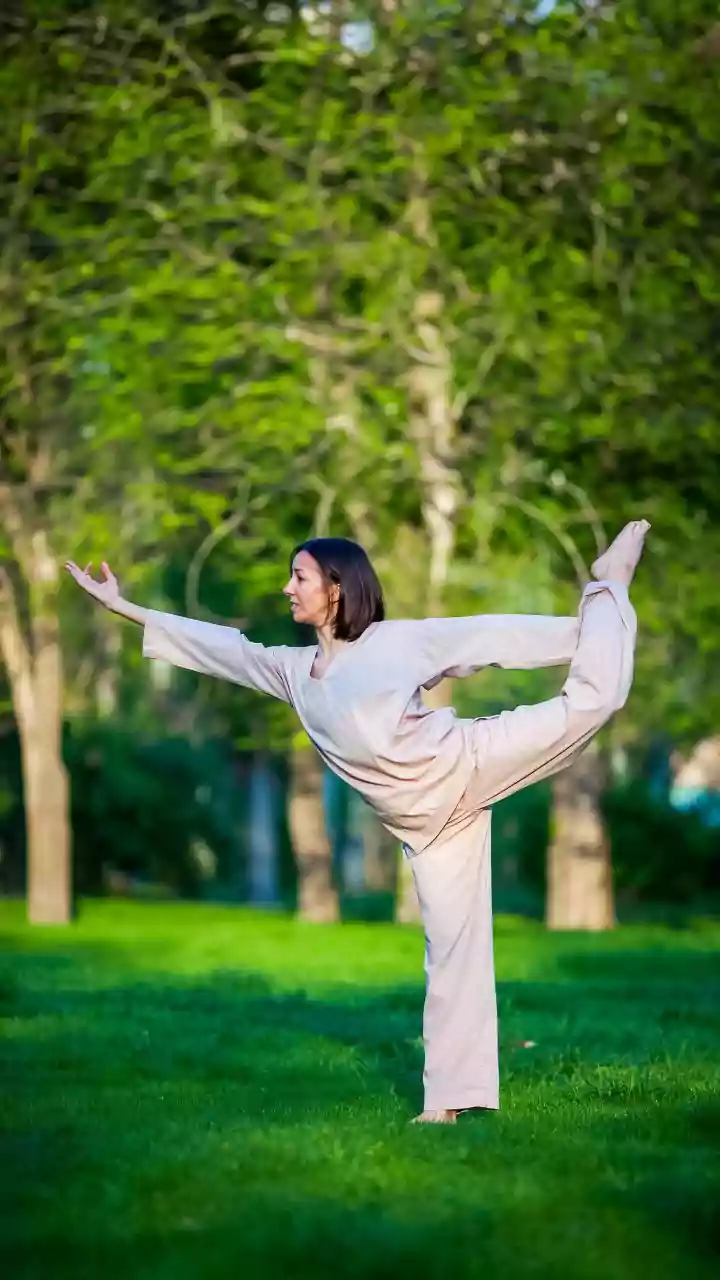
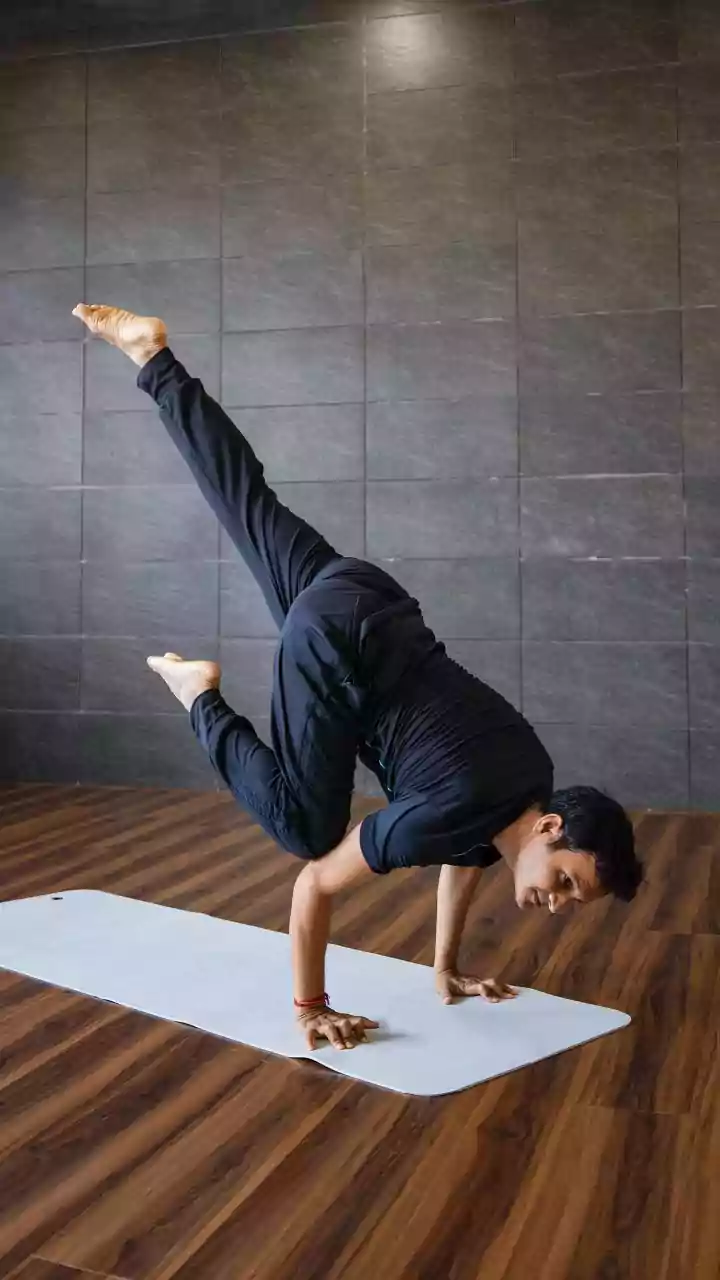
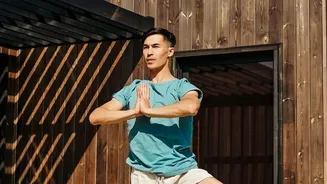
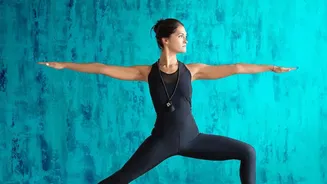
Tree Pose, or Vrksasana, is a cornerstone of balance in yoga, teaching us to be steady and grounded. But what happens when you introduce the dynamic coil of Eagle Pose? This guide explores how to weave Eagle-inspired arm and leg positions into your Tree Pose.
The Foundation: Mastering Tree Pose (Vrksasana)
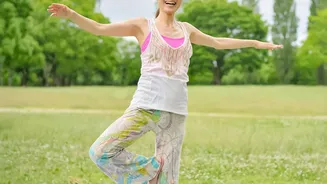
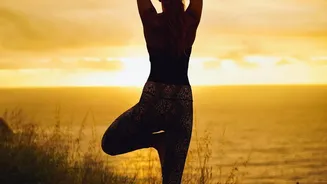
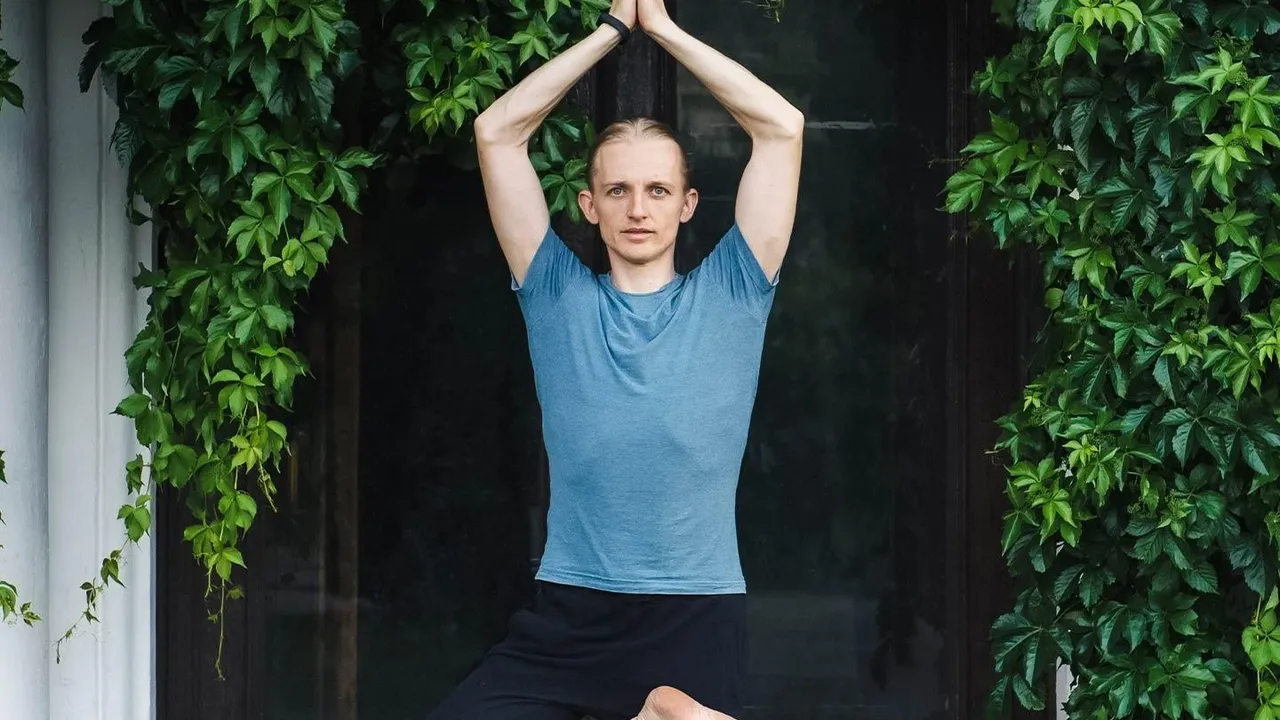
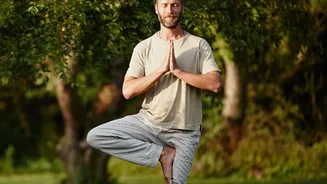
Before exploring variations, it's essential to have a stable foundation. Tree Pose is celebrated for improving balance, strengthening the legs and core, and calming the mind. To begin, stand tall in Mountain Pose (Tadasana). Shift your weight onto one foot, engaging the standing leg. Bend your other knee and place the sole of your foot on your inner calf or thigh, avoiding the knee joint. Find a non-moving focal point, or 'drishti', in front of you to aid your balance. Press the foot into the leg and the leg back into the foot to create a stable connection. Your hands can be at your heart center or extended overhead like branches. The goal is to find a sense of being rooted down through your standing leg while lifting up through your spine.
The Challenge: Understanding Eagle Pose (Garudasana)
Eagle Pose involves wrapping the arms and legs, which challenges balance, opens the shoulder and hip joints, and enhances concentration. The arm position, known as Garudasana arms, provides a deep stretch across the upper back and shoulders. The leg position requires strength and flexibility, creating a compact shape that demands focus to hold steady. This pose teaches us to find stability even when feeling constricted, making it a powerful mental as well as physical practice. Understanding these actions is key to integrating them into other postures.
Variation 1: Tree Pose with Eagle Arms
This variation combines the grounding of Tree with the upper body opening of Eagle. It’s an excellent way to challenge your stability and release tension in your shoulders simultaneously. First, establish a solid Tree Pose on one leg. Once you feel steady, extend your arms forward. Cross one arm over the other, bend your elbows, and bring the backs of your hands or your palms to touch. As you hold the arm bind, actively lift your elbows and gently press your forearms away from your face. This action will deepen the stretch across your shoulder blades. Keep your gaze fixed and your breath steady to maintain balance as you explore this new shape. If the full arm bind is inaccessible, you can simply cross your arms and give yourself a hug, placing your hands on your opposite shoulders.
The Combined Benefits of This Hybrid
Why combine these two poses? By adding Eagle arms to Tree Pose, you introduce a new balancing challenge that forces your core to work harder. The grounding effect of Tree Pose can make the intense shoulder stretch of Eagle arms feel more accessible. This hybrid enhances focus, as the mind must work to manage both the lower body stability and the upper body complexity. It stretches the shoulders, upper back, and chest while continuing to strengthen the ankles, calves, and thighs. It is a creative way to deepen your practice, moving beyond familiar shapes to build greater body awareness.
Variation 2: Tree Pose with Eagle-Inspired Legs
A more complex variation involves incorporating the leg wrap of Eagle into your standing balance. This deeply challenges stability and hip mobility. From Mountain Pose, bend your standing leg slightly as if sitting into a shallow chair pose. Cross the other thigh high over your standing leg. This alone is a great preparatory pose. For the fuller expression, you can try to hook the top of your lifted foot behind your standing calf. This is a significant balance challenge that requires deep hip compression and ankle stability. Keep your hands at your heart center or on your hips for balance. Remember to keep a slight bend in the standing knee to act as a shock absorber.
Tips for Stability and Mindful Practice
In any balancing pose, stability is key. Always find your drishti, or unmoving focal point, to help quiet the mind. Engage your core muscles to create a solid center from which your limbs can move. Don't be afraid to use a wall for support, especially when first trying these variations. It's better to use support and maintain good alignment than to struggle without it. Most importantly, listen to your body. Yoga is not about forcing yourself into a shape but about exploring your current abilities with awareness and breath. If you feel any sharp pain, gently release the pose. The journey of combining these poses is more important than achieving a 'perfect' final form.