
A Football Field in the Sky
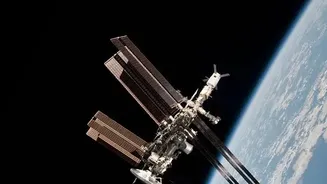
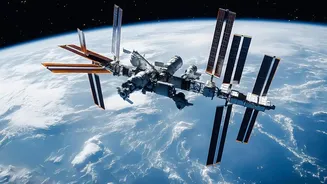
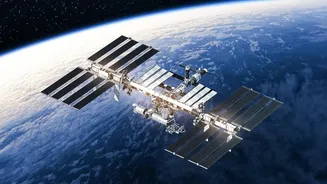
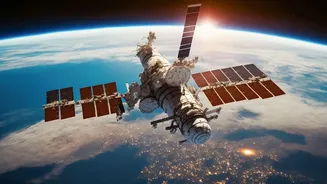
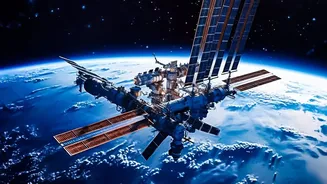
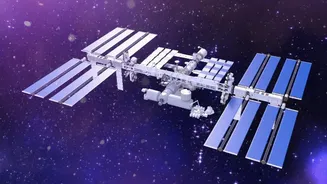
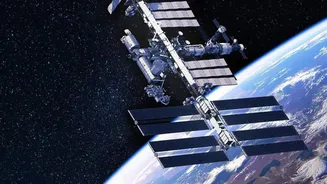
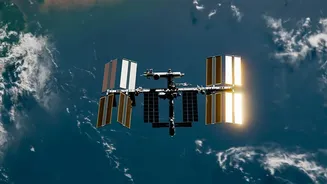
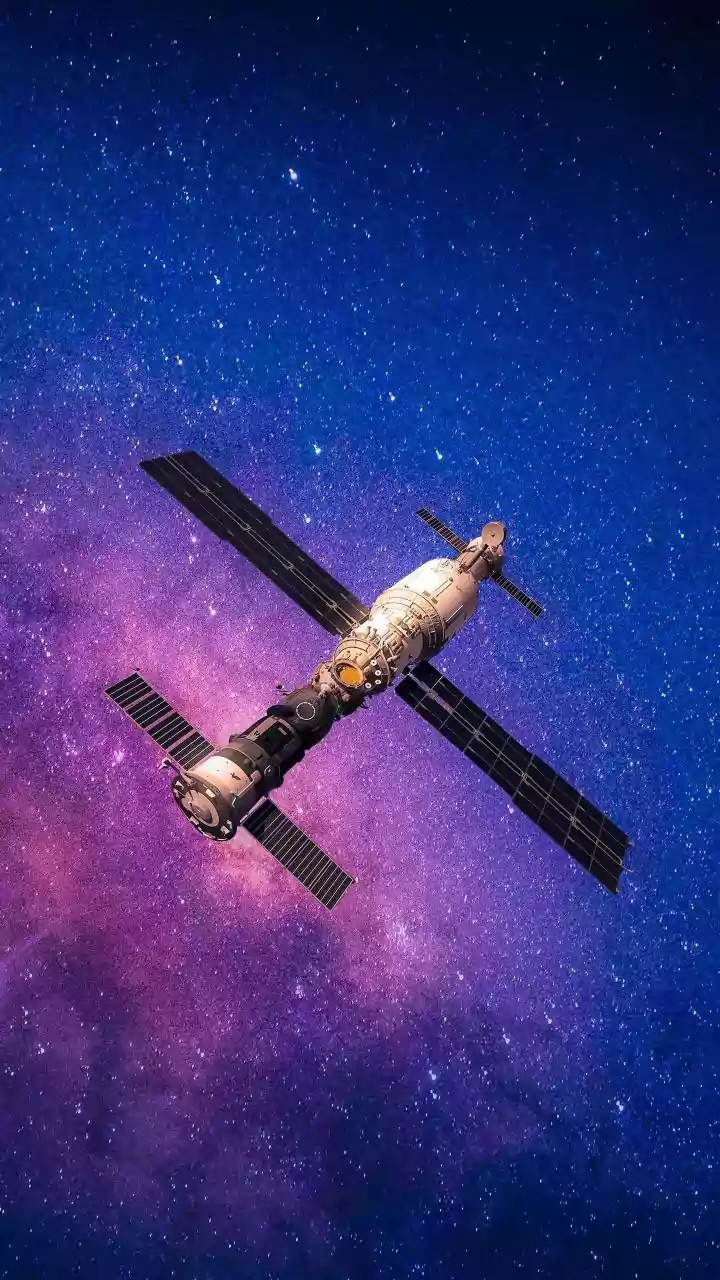
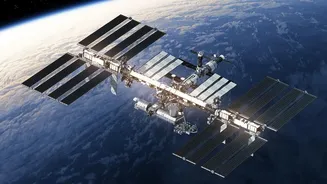
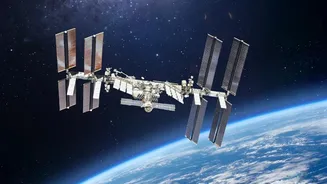
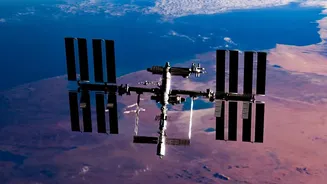
First, it helps to understand what you're looking for. The ISS is a massive orbiting laboratory, a testament to international collaboration that has been continuously inhabited by astronauts since November 2000. It's an enormous structure, roughly the
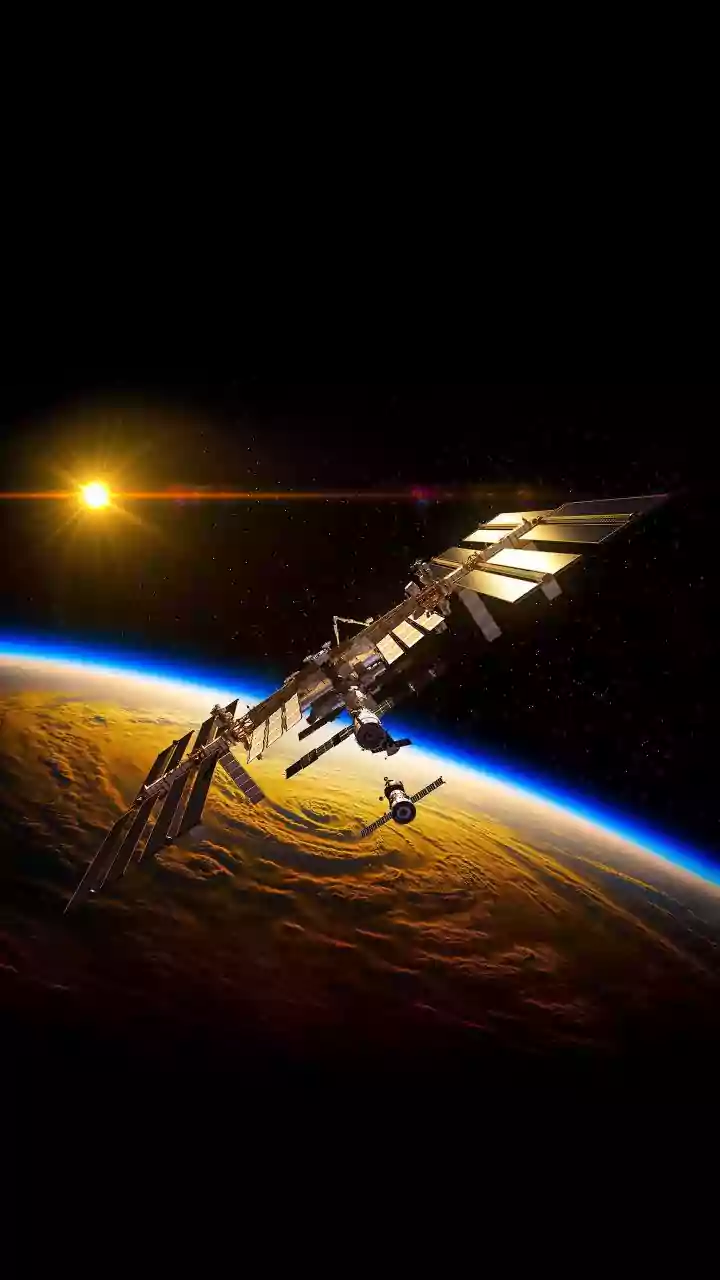
size of a football field, including its large solar arrays. It orbits Earth about 400 kilometres up, travelling at a staggering 28,000 kilometres per hour. This incredible speed means it circles the entire planet every 90 minutes or so, allowing the crew to witness 16 sunrises and sunsets each day. Its sheer size is the first reason it’s possible to spot from so far below.
The Science of Sight: It's All Reflected Sunlight
The ISS doesn't have giant spotlights aimed at Earth. Its visibility comes down to simple physics: reflected sunlight. Just like the Moon, the ISS shines because its surfaces, especially its massive and highly reflective solar panels, bounce sunlight down to us on the ground. In fact, when conditions are right, the ISS can be the third brightest object in the sky, outshone only by the Sun and the Moon. It appears brighter than the most brilliant stars and even the planet Venus, which is why it can often be spotted even from light-polluted city centres.
Perfect Timing: The Dawn and Dusk Window
So, why can't you see it at midnight or midday? Visibility requires a perfect alignment of you, the station, and the Sun. The best viewing opportunities occur shortly before sunrise or just after sunset. During these twilight hours, it's dark on the ground where you are, creating a high-contrast backdrop. However, at its high altitude, the ISS is still bathed in sunlight, allowing it to reflect those rays down to you. If it passes overhead during the day, the bright sky washes it out. If it passes in the middle of the night, it’s in Earth’s own shadow and isn't lit by the sun, making it invisible to us. This special dawn and dusk window is the key to every sighting.
What to Look For in the Sky
When you're looking for the ISS, you're searching for a very specific sight. It appears as a bright, steady, white point of light moving smoothly across the sky. Think of it as a fast-moving star. Unlike an airplane, it does not have blinking or flashing lights. And while it’s fast, it's much slower and more deliberate than a fleeting meteor. A typical pass can last anywhere from three to seven minutes as it travels from one horizon to the other. Sometimes, it might seem to fade out and disappear before reaching the horizon; this happens when it moves into Earth's shadow.
Your Step-by-Step Viewing Plan
Ready to see it for yourself? It's simple with modern tools. First, find out when it will pass over your specific location. NASA’s Spot The Station website and official app are excellent resources. You can enter your city and get a list of upcoming viewing times. You can also sign up for email or text alerts. The predictions will tell you the start time, how long it will be visible, the maximum height it will reach (90 degrees is directly overhead), and the direction it will appear and disappear. For the best experience, head outside a few minutes early to let your eyes adjust to the dark. No special equipment is needed; this is a naked-eye spectacle for everyone to enjoy.