








The Heartbeat of Kumaon
Harela is more than just a festival; it's a cultural cornerstone in Uttarakhand, especially in the Kumaon region. The name itself translates to 'Day of Green,' and it traditionally marks the arrival of the monsoon and the start of the sowing season. For
generations, families have celebrated it by sowing seeds of seven grains, called 'Harela,' in baskets ten days before the festival. These sprouted shoots are then ceremonially placed on the heads of family members as a blessing for a prosperous and healthy year. Deeply connected to agriculture and the worship of Lord Shiva and Goddess Parvati, the festival symbolises fertility, renewal, and a deep-seated respect for nature.
From Ritual to Green Revolution
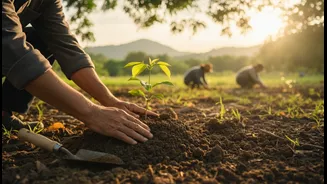
In recent years, this ancient tradition has taken on a vibrant, modern form. The cultural reverence for greenery has evolved into a structured, large-scale environmental campaign. The state government has harnessed the spirit of the festival to launch an annual month-long plantation drive. What began as a household ritual has now become a mass movement for afforestation, turning the festival into a powerful platform for environmental conservation and climate action. This year's drive, kicking off on July 16, coincides with the state's 25th anniversary, adding a layer of historic significance to the green initiative.
A People-Powered Movement
The true strength of the Harela sapling drive lies in its community participation. This is not just a top-down government initiative; it's a ground-up mobilisation involving every section of society. From school children and youth organisations to village-level 'Van Panchayats' (forest councils), self-help groups, and NGOs, everyone plays a part. Even the armed forces are involved, with units like the Territorial Army's Ecological Kumaon battalion setting ambitious targets and working with villagers to plant tens of thousands of saplings. This collective effort transforms the act of planting into a shared responsibility, reinforcing a community-wide commitment to preserving the fragile Himalayan ecosystem.
Ambitious Targets and Tangible Goals
The scale of the drive is ambitious. While other states have conducted larger single-day plantations, the Harela drive is significant for its sustained, month-long effort and deep community integration. This year, various districts have set impressive targets. Dehradun district alone aims to plant over 1.5 million saplings. Across the state, the collective goal is to plant lakhs of trees, with a focus on native and fruit-bearing species suited to the local ecology. The focus is not just on planting but on post-plantation care to ensure high survival rates, with mobile apps used for real-time monitoring of the sites. The themes for this year, such as "Ek Ped Maa Ke Naam" (A tree in mother's name), further connect the drive to personal and emotional sentiments, boosting public participation.
Saplings with a Purpose
The choice of saplings is strategic. The administration and forest department are prioritising native species like oak and deodar, alongside fruit-bearing and fodder trees. This approach delivers multiple benefits. Ecologically, it helps restore biodiversity and prevent soil erosion, a critical issue in the mountainous terrain. Economically, it aims to provide sustainable livelihood opportunities for local families through fruits and other forest produce. By planting species that are less likely to be destroyed by wild animals, the initiative also helps mitigate human-wildlife conflict, a growing concern in the region. It's a holistic vision where regreening the hills goes hand-in-hand with securing the future of the communities living there.