




The Goal: A Revolutionary Double Catch
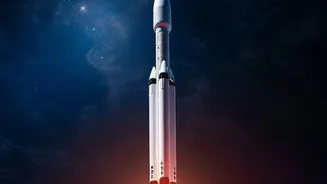
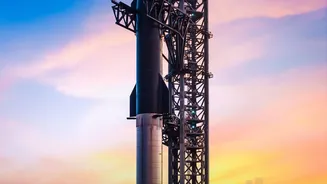
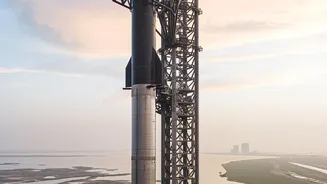
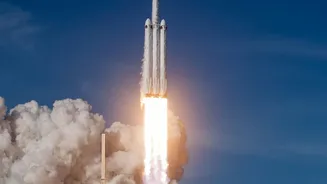
SpaceX's Flight 15 was its most ambitious test to date for the world's most powerful rocket. The primary goal was to achieve something never done before: launch the two-stage Starship vehicle to orbit and then recover both the Super Heavy booster and the Starship upper
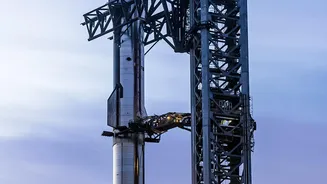
stage. The plan involved using the launch tower's giant mechanical 'chopstick' arms to catch both parts as they returned to the Starbase facility in Texas. This 'double catch' is central to Elon Musk's vision of a fully and rapidly reusable spaceflight system, which is key to lowering launch costs and enabling future missions to the Moon and Mars. The flight plan called for the booster to return just minutes after liftoff, while the ship itself would complete a 22.5-hour mission before its own catch attempt.
A Historic Success: The Starship is Caught
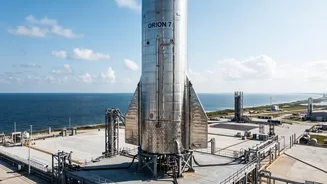
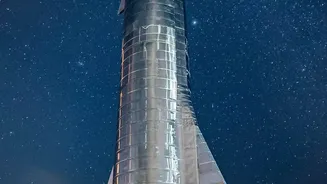
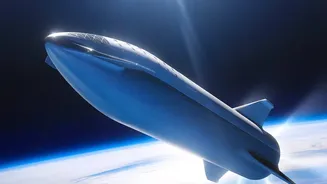
The mission's crowning achievement came nearly a day after its launch. After orbiting the Earth 14 times and deploying 26 Starlink satellites, the Starship upper stage, known as Ship 42, performed a controlled reentry. It survived the intense heat and navigated itself precisely back to the launch site. In a stunning display of engineering, the 'Mechazilla' launch tower's arms successfully caught the vehicle as it hovered for its landing. This was the first time an orbital-class upper stage has ever been caught for reuse, a moment one SpaceX commentator called 'the holy grail of spaceflight'. Recovering the upper stage is considered more difficult than the booster because it returns from orbital speeds, facing much more extreme conditions. Musk praised the result, noting the ship looked to be in good condition and could potentially fly again within weeks.
The Setback: An Alarm and a Fiery Finish
While the Starship upper stage was on its way to making history, the mission's first act did not go to plan. The Super Heavy booster separated successfully but ran into trouble during its return. According to SpaceX, a 'low fuel mass alarm' was triggered, causing its boostback burn to end early. The booster's guidance system correctly determined it was not in the right position to safely attempt a tower catch and automatically aborted the maneuver. The rocket was diverted for a splashdown in the Gulf of Mexico, where it was intentionally destroyed in a fiery explosion.
A Major Step Forward, Despite the Loss
The loss of the Super Heavy booster was a clear setback, preventing SpaceX from achieving its full objective. However, the company and the broader space community are framing the mission as a resounding success. SpaceX has successfully caught boosters on three previous flights, so while this failure needs investigation, the technique itself has been validated. The unprecedented successful catch of the Starship upper stage after an orbital mission is by far the more significant milestone. It proves that the most complex part of the reusability equation is viable. This achievement moves SpaceX dramatically closer to its goal of a launch system with airplane-like reusability. The data gathered from the returned ship will be invaluable for improving the heat shield and other systems for even faster turnaround times in the future.