



The Challenge of Atmospheric Re-entry
Any spacecraft entering a planet's atmosphere, whether it's Earth or Mars, faces a monumental physics problem. It arrives at hypersonic speeds, travelling many kilometres per second. Hitting the atmosphere at this velocity compresses the air in front
of the craft, creating a shockwave with temperatures hot enough to melt most metals—potentially reaching thousands of degrees Celsius. The primary job of a heat shield, or Thermal Protection System (TPS), is to protect the spacecraft and its precious cargo from this intense heat while using atmospheric drag to slow down.
Traditional Shields and Their Limitations
For decades, space agencies have relied on rigid heat shields. These come in two main varieties: ablative shields, like those on the Apollo capsules, which are designed to burn away and carry heat off in the process, and reusable ceramic tiles, famously used on the Space Shuttle. While effective, these rigid systems have a critical limitation: their size is constrained by the rocket's payload fairing, the nose cone that protects the spacecraft during launch. This size limit directly restricts the mass of the payload that can be safely landed, which is a major bottleneck for ambitious plans like sending heavy cargo, habitats, and eventually humans to Mars.
A New Approach: The Inflatable Aeroshell
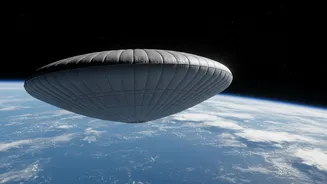
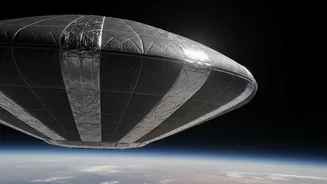
This is where Hypersonic Inflatable Aerodynamic Decelerators (HIADs) come in. Instead of a fixed, rigid structure, a HIAD is a marvel of material science that can be packed into a small volume for launch and then inflated in space just before atmospheric entry. This allows for a much larger diameter shield than could ever fit in a rocket fairing. A larger shield creates more drag, which is immensely beneficial. It allows the spacecraft to begin decelerating higher up in the atmosphere where the air is thinner, reducing the peak heating and mechanical stress the vehicle experiences.
How It Provides Thermal Protection
An inflatable heat shield isn't just a simple balloon. It’s a sophisticated, multi-layered system. The outermost layer is a flexible fabric woven from ceramic fibers like silicon carbide, a material that can withstand extreme temperatures. Beneath this tough exterior are layers of high-tech insulation that prevent heat from reaching the inflatable structure itself. The inflatable part is an exceptionally strong assembly of pressurised rings, or tori, woven from synthetic polymers that are stronger than steel by weight. When inflated, these rings form a rigid, cone-shaped structure that provides the shape and stability needed to act as a shield. The entire system works together to both radiate heat away and slow the vehicle down efficiently.
Proving the Technology: The LOFTID Mission
This technology isn't just theoretical. NASA successfully demonstrated its viability with the Low-Earth Orbit Flight Test of an Inflatable Decelerator (LOFTID) mission. Launched as a secondary payload, the LOFTID aeroshell inflated to a diameter of 6 meters (about 20 feet) and successfully survived a fiery re-entry through Earth's atmosphere at speeds of over 18,000 miles per hour. The vehicle splashed down safely and was recovered, with early analysis showing the test was a huge success. It proved that the inflatable structure and its flexible thermal protection system could withstand the incredible heat and forces of orbital re-entry, paving the way for its use in future missions.