




From the Maidan to the Metaverse
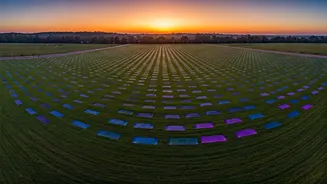
For years, the defining image of International Yoga Day in India has been one of collective action: thousands of people in synchronised motion at iconic locations like Delhi's Kartavya Path or Mysuru's Palace Grounds. It was a spectacle of physical presence.
Now, that spectacle is undergoing a profound evolution. While physical events are returning, the digital shift accelerated in recent years has become a permanent, powerful fixture of the celebration. Organisers, from the Ministry of AYUSH to global yoga schools, have recognised that the internet is not just a broadcast tool but a venue in itself. This year, the focus is on a hybrid model, where the energy of physical gatherings is amplified and extended to a global online audience, creating 'crowds' that transcend geography.
The Digital 'Common Yoga Protocol'
The backbone of these mass events is the 'Common Yoga Protocol' (CYP), a 45-minute sequence of asanas designed by experts to be accessible to people of all ages and fitness levels. Traditionally practised in unison at live events, the CYP is now the unifying script for the world's largest yoga class, conducted online. Participants log in via platforms like YouTube Live, Zoom, and dedicated government web portals. The experience is a blend of guided practice and shared digital space. Screens show lead instructors—often prominent yoga gurus or officials—while a cascade of comments and shared photos on social media creates a sense of community. The Ministry of AYUSH often centralises these efforts, providing official streams and encouraging participation through campaigns, effectively turning individual homes into interconnected yoga studios.
This Year's Theme: Yoga for All
Each year, a theme guides the celebrations. This year, themes often centre on ideas like 'Yoga for Self and Society' or 'Yoga for Vasudhaiva Kutumbakam,' emphasizing yoga's dual role in fostering individual well-being and promoting global harmony. The online format powerfully reinforces this message. By removing barriers of distance and cost, it makes participation possible for people in remote villages, busy professionals in metros, and Indians living abroad. It embodies the idea that personal practice (Yoga for Self) can contribute to a larger, collective positive energy (Yoga for Society). The digital gathering becomes a real-time demonstration of a connected community, where each person's participation adds to the whole, even if they are practising alone in their living room.
What's Gained and Lost Online?
The move to massive online sessions brings a fascinating trade-off. The biggest gain is unprecedented accessibility. People with mobility issues, those in different time zones, or anyone simply intimidated by a large public event can now join from the comfort of their home. The scale is also staggering, with participation numbers reaching into the millions, far beyond what any single physical venue could hold. However, something is inevitably lost. The tangible energy of a group breathing and moving together is hard to replicate through a screen. The gentle, in-person correction from an experienced instructor is replaced by self-monitoring. The spontaneous conversations with fellow participants before and after the session give way to a chatbox. It's a different kind of connection—less sensory, perhaps, but no less meaningful for many.
How to Join the Virtual Flow
Participating in the online celebrations is remarkably simple. The first place to look is the official website and social media channels of the Ministry of AYUSH, which serve as a central hub for official events and the Common Yoga Protocol stream. Many renowned yoga institutions, such as the Isha Foundation, Art of Living, and the Ramamani Iyengar Memorial Yoga Institute, host their own large-scale online events, often led by their famous founders. A quick search on YouTube for 'International Yoga Day Live' on the day itself will yield numerous options. For a more interactive experience, some organisations use platforms like Zoom, which may require pre-registration. Following hashtags like #InternationalYogaDay or #YogaForSelfAndSociety on social media is also a great way to discover streams and feel connected to the global community.