




Beyond the Mainstream Montage
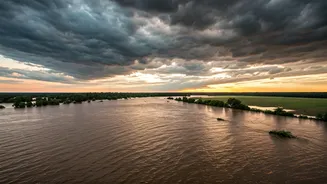
For much of India, the monsoon is a celebrated guest. Its arrival is marked by a collective sigh of relief, a change in cravings, and a romanticised aesthetic that permeates popular culture. Yet, in Northeast India, the monsoon is not a visitor; it's
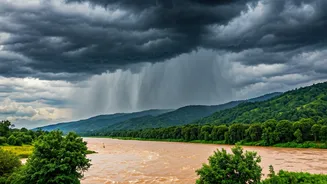
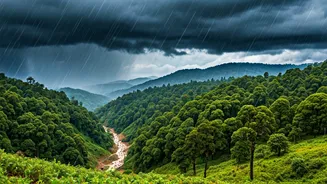
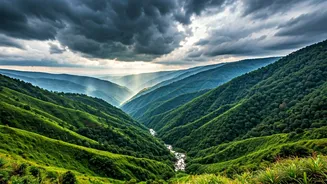
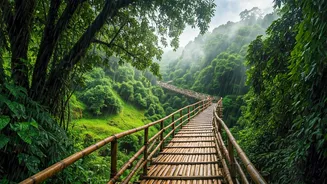
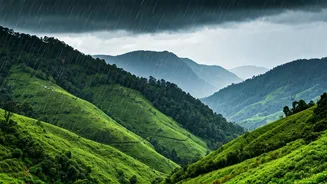
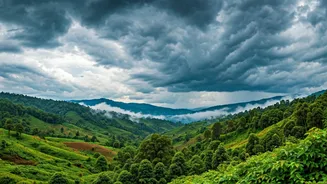
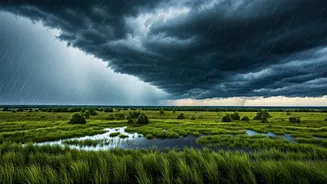
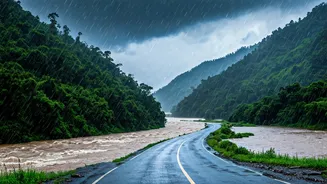
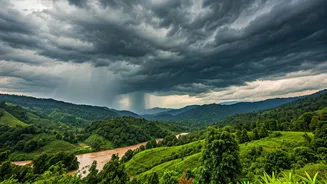
a fundamental force that shapes existence. Here, in places like Meghalaya—the 'abode of clouds'—the rainy season is not a gentle four-month affair but a deluge that defines the landscape, the agricultural calendar, and the very rhythm of life. The mainstream national narrative, often centred on the experiences of major urban hubs, overlooks the profound and diverse ways the monsoon is lived in the Northeast. This isn't just a matter of geography; it's a missed opportunity to understand the full spectrum of our country's relationship with this life-giving season.
Festivals Forged by Rain
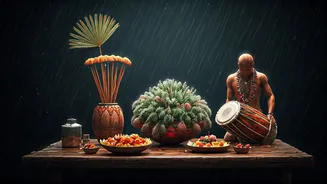
The Northeast doesn't just endure the monsoon; it celebrates it with unique festivals that are deeply connected to the environment. In Meghalaya, the Pnar community of the Jaintia Hills observes Behdeinkhlam in July, a vibrant festival to drive away plague and pestilence and pray for a bountiful harvest. The name literally means "driving away evil with sticks." It involves elaborate rituals, processions with towering bamboo structures called 'rots', and a community-wide cleansing. Similarly, the Ambubachi Mela at Assam's Kamakhya Temple, held annually in June, is a massive gathering that venerates the menstruation of the goddess, symbolising the earth's fertility as the monsoon arrives. During this time, the temple doors close for three days, and farming activities cease, honouring a period of natural regeneration. These festivals are not mere spectacles; they are sophisticated cultural responses to the ecological realities of the monsoon.
A Taste of the Monsoon
The region’s monsoon cuisine is a masterclass in seasonal and hyperlocal eating. When the rains arrive, the landscape provides a bounty of foraged greens, edible flowers, and a wide variety of mushrooms. Fermentation, a technique honed over centuries, becomes crucial. In Nagaland, pork is smoked and cooked with fermented bamboo shoots, a dish that is both a delicacy and a practical way to preserve food. In Meghalaya, Nakham Bitchi, a comforting and smoky soup made from dried fish and local vegetables, becomes a staple. Arunachal Pradesh offers dishes like Paa Saa, a fish-based soup, and Zan, a thick millet-flour porridge enjoyed by the Monpa tribe on rainy days. These dishes, often cooked with little to no oil, are perfectly attuned to the climate and the nutritional needs of the season, offering a culinary wisdom that the rest of the country could learn from.
Weaving a Richer National Narrative
So why does this matter? Because a national identity is a tapestry woven from all its regional threads. To exclude the Northeast’s monsoon experience is to present a flattened, incomplete version of India. Integrating these stories is not about tokenism or exoticism. It's about acknowledging that the monsoon has multiple meanings. For a farmer in Mizoram, whose jhum cultivation depends entirely on natural rainfall, the monsoon is a matter of survival. For the Khasi people, who have a rich vocabulary to describe different kinds of rain, it's a sacred force embedded in their spiritual beliefs. By including these perspectives in our national consciousness—through media, education, and tourism—we do more than just add diversity. We build a more resilient and empathetic nation. It encourages a deeper appreciation for different ways of life and fosters a more nuanced understanding of our shared environment. The monsoon connects all of us, but it doesn't affect us all in the same way. Embracing the celebrations, foods, and philosophies of the Northeast is a powerful way to honour that complex and beautiful truth.