



What Exactly Was Tested?
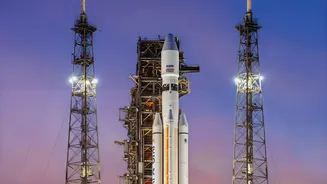
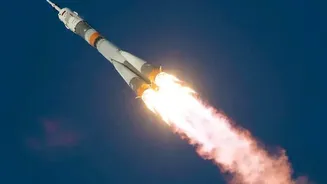
The Indian Space Research Organisation (ISRO) conducted a high-altitude abort test, a crucial trial for the Gaganyaan human spaceflight programme. This test involved launching a specially designed rocket, the Test Vehicle, to simulate the conditions of
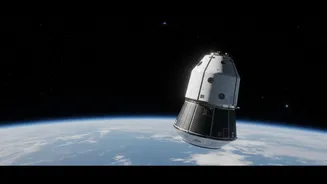
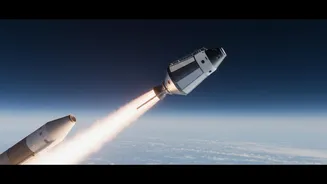
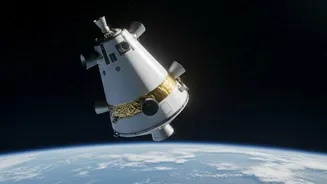
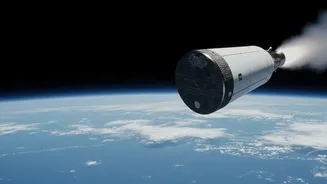
an actual launch. At a specific altitude and speed (corresponding to Mach 1.2, or 1.2 times the speed of sound), a deliberate abort was triggered. This commanded the Crew Escape System (CES) to activate, firing its powerful, quick-acting solid motors to pull the crew module, the capsule where astronauts will sit, away from the rocket. The module was then guided to a safe splashdown in the Bay of Bengal using a sequence of parachutes. This successful validation proves the system works as designed in a high-stress, high-altitude scenario.
The Crew Escape System: A Lifeboat in the Sky
Think of the Crew Escape System (CES) as the ultimate safety net for astronauts. It is an emergency measure designed to rapidly pull the crew module to a safe distance if the launch vehicle malfunctions. This could happen on the launch pad before liftoff or, as demonstrated in this test, during the rocket's ascent. The system is a marvel of engineering, equipped with its own set of powerful solid-fuel motors that can produce more acceleration than the main rocket itself. If the launch vehicle's health management system detects a critical failure, it automatically triggers the CES, which yanks the crew capsule away in milliseconds. This ensures the survival of the crew even in the face of a catastrophic rocket failure, making it one of the most critical technologies for any human-rated space mission.
Why This High-Altitude Test Is Crucial
While ISRO had previously conducted a Pad Abort Test in 2018, which verified the escape system's function from a standstill on the launchpad, this high-altitude test was arguably more complex and critical. The ascent phase of a launch subjects the vehicle to immense aerodynamic pressures and stresses. An emergency abort at high speed and altitude presents a different set of challenges, including separating cleanly from the rocket while it is travelling faster than the speed of sound. This test validates that the escape system is robust enough to function under these extreme conditions. Successfully demonstrating this capability is a non-negotiable requirement before astronauts can be put on board, as it proves that a safe escape is possible during one of the most dangerous phases of spaceflight.
A Major Milestone for Gaganyaan
The Gaganyaan programme is India's ambitious mission to send its own astronauts, or 'Gaganauts', into a Low Earth Orbit of about 400 km for a three-day mission and bring them back safely. This successful test is a significant confidence booster and a major milestone on the mission's ambitious roadmap. It moves ISRO one giant leap closer to achieving a 'human-rated' launch vehicle, which means the vehicle is certified to be safe enough to carry people. The Gaganyaan mission has seen several timeline revisions due to its complexity and challenges like the COVID-19 pandemic, with the first crewed flight now anticipated around the first quarter of 2027. Each successful test, from engine qualifications to parachute trials and now this critical abort test, builds the foundation for that eventual historic launch.
What Comes Next for ISRO?
With this major safety validation complete, ISRO will proceed with its meticulously planned series of tests. This includes further uncrewed missions to test all systems in an integrated manner. At least two uncrewed flights, G1 and G2, are planned for 2026 before the first human flight. One of these missions will carry Vyommitra, a humanoid robot, to monitor module parameters and simulate a human presence. The space agency will continue to test and refine every component, from the life support systems that will provide breathable air to the crew, to the complex recovery operations planned for splashdown. The four astronaut-designates are also continuing their mission-specific training in Bengaluru. Each step is carefully orchestrated to ensure that when India does launch its first crewed mission, it is with the highest possible degree of safety and reliability.