





An Encore for an Accomplished Explorer
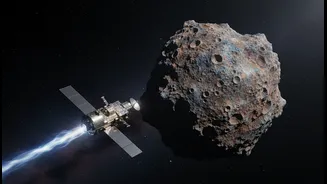
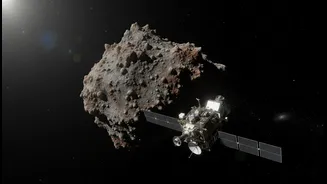
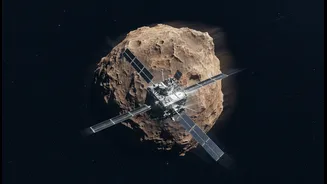
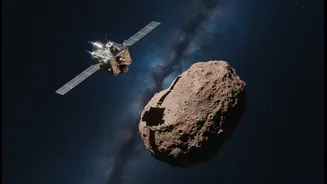
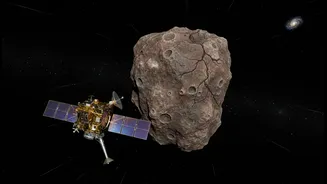
Hayabusa2 is no stranger to the spotlight. The Japan Aerospace Exploration Agency (JAXA) probe became famous for its primary mission: rendezvousing with the asteroid Ryugu. It not only surveyed the diamond-shaped space rock but also deployed rovers and,
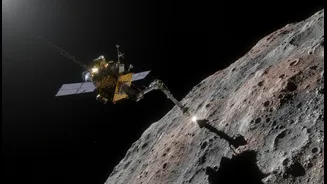
most impressively, collected samples from both its surface and subsurface before returning them to Earth in December 2020. Those samples have provided invaluable clues about the early solar system, including the presence of water and organic molecules, the building blocks of life. But unlike many missions that end after delivering their precious cargo, JAXA sent the still-healthy Hayabusa2 on a new, extended journey.
Meet the New Target: Torifune
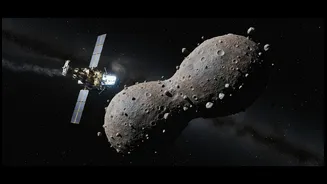
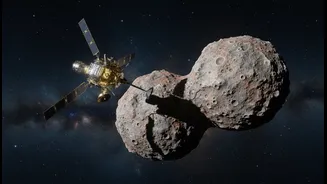
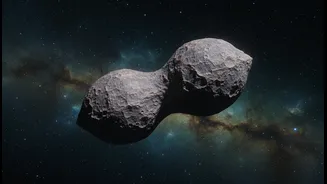
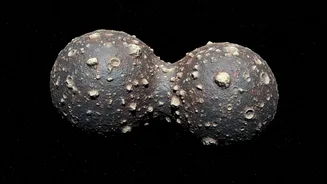
The first major stop on this extended tour was the near-Earth asteroid 98943 Torifune, formerly known as 2001 CC21. About 450 meters long, Torifune is an S-type, or stony, asteroid. Images from the flyby confirmed what ground-based observations had only hinted at: Torifune is a 'contact binary' asteroid, appearing like two distinct lobes fused together, resembling a peanut or snowman. This happens when two asteroids gently collide and stick together, offering scientists a glimpse into how larger bodies, and eventually planets, may have formed. The name 'Torifune' was chosen through a public campaign in Japan and refers to a god's ship in Japanese mythology known for travelling safely at high speed—a fitting name for the target of such a daring maneuver.
A High-Stakes Flyby
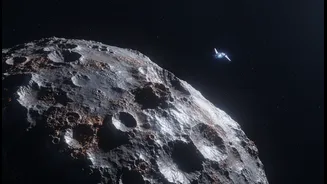
The July 5 encounter was technically challenging. Hayabusa2 zipped past Torifune at a relative speed of about 5 kilometers per second, or roughly 18,000 kilometers per hour. The spacecraft came as close as 800 meters from the asteroid's center. Because asteroids are small and dark, the probe's exact trajectory had to be adjusted just days before the flyby, testing JAXA's autonomous navigation systems to their limits. The maneuver was described by one team leader as being as precise as “shooting a ¥1 coin in Hokkaido from Okinawa Prefecture.” This precision was a key objective of the flyby, serving as a rehearsal for rapid reconnaissance missions.
A Test for Planetary Defense
Beyond pure science, the Torifune flyby had a crucial secondary purpose: planetary defense. An asteroid the size of Torifune could cause significant damage if it were to collide with Earth. By successfully executing such a close, high-speed flyby, JAXA has demonstrated the precise guidance technology needed to potentially intercept a hazardous asteroid. The techniques are similar to what would be used for a 'kinetic impactor' mission, where a spacecraft is deliberately crashed into an asteroid to alter its course. The data gathered helps scientists better understand how to identify and characterize potentially threatening objects quickly, a critical step in any future defense scenario.
The Journey Continues
The Torifune encounter is a milestone, but it's not the end of the road for Hayabusa2. The resilient spacecraft is now continuing its journey, using its remaining fuel to navigate toward its ultimate destination. After a pair of Earth flybys in 2027 and 2028 to adjust its course, it is scheduled to rendezvous with an even more challenging target in July 2031: 1998 KY26. This asteroid is incredibly small, estimated to be only a few tens of meters in diameter, and rotates extremely rapidly. Visiting it would mark the first time a spacecraft has explored such a tiny, fast-spinning object up close, pushing the boundaries of exploration once again.