






The whirlwind resignation and reinstatement of Nvidia's CEO, Jensen Huang, has done more than just rattle markets. It has thrust a complex corporate issue into the spotlight: are the old rules of executive security enough for today's celebrity CEOs?
An Unprecedented 'Exit'
To
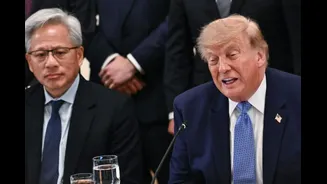
be clear, the 'exit' that captured headlines wasn't a planned departure but a dramatic, short-lived resignation. In mid-November 2026, Jensen Huang stepped down as CEO of the company he co-founded, following revelations of extramarital affairs, one of which involved a woman U.S. officials suspected of being a Chinese intelligence asset. The news sent shockwaves through the tech industry and financial markets. Yet, in a stunning reversal just 11 days later, Nvidia's board reinstated him, a move reportedly encouraged by senior U.S. government figures, including President Donald Trump. This chaotic episode, mixing personal conduct with national security, has become a flashpoint for discussing the unique vulnerabilities of today's highest-profile executives.
The Celebrity CEO Phenomenon
Jensen Huang is not just a CEO; he's a global icon. In places like Taiwan, his visits spark a frenzy dubbed 'Jensanity', with fans mobbing him for autographs like a rock star. This celebrity status, shared by figures like Elon Musk, puts a human face on a corporation and can be a powerful brand asset. However, it also transforms them into highly visible public figures, blurring the line between their professional and personal lives. Their immense public profiles make them accessible and, therefore, vulnerable in ways that the buttoned-down, anonymous executives of past generations never were. This new reality presents a challenge that traditional corporate security was not designed to handle.
Old Rules for a New Game
Traditional executive protection (EP) has focused on predictable threats: kidnapping, corporate espionage, and securing planned events like shareholder meetings. It's a discipline centered on risk assessments for travel to high-risk regions and securing corporate facilities. The assumption was that the primary risks were tied to the executive's corporate role. However, the Huang scandal illustrates a different kind of threat. The issue wasn't a physical attack at a conference but a personal entanglement with potential national security implications—a 'honeypot' scenario that traditional bodyguard details are ill-equipped to prevent. Nvidia reportedly spent nearly US$10 million on Huang's personal security in recent years, yet this massive apparatus failed to flag a critical counter-intelligence threat.
Rethinking the Security Playbook
The Huang incident is forcing boards to ask tough questions. Security experts argue that protecting a celebrity CEO now requires a hybrid approach, blending the tactics of corporate EP with the strategies used to protect politicians and entertainers. This includes comprehensive digital risk management, monitoring online chatter for threats, and conducting sophisticated counter-intelligence vetting of an executive's close contacts. It also means extending security beyond the office and planned events to an executive's entire life, a costly and complex undertaking. Following recent high-profile attacks and incidents, boards are increasingly viewing this expanded security not as a perk, but as a crucial component of risk management to ensure business continuity.
A Boardroom Imperative
Ultimately, the debate sparked by Huang's temporary exit is about corporate governance. A CEO is a company's most critical asset, and their incapacitation—whether by physical harm or scandal—poses a material risk to shareholders. The prevalence of personal security for S&P 500 CEOs has already been rising, with one study showing an increase from 35% to 54% year-over-year. The conversation is shifting from whether to provide enhanced security to how to structure it effectively. Companies must now balance an executive's freedom with the need for comprehensive protection that covers not just physical threats but also the complex, personal vulnerabilities that come with global fame.