




The Journey from Crude Oil
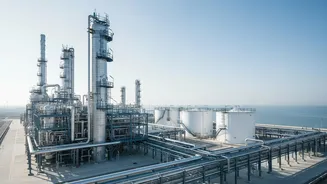
The entire process starts with the cost of crude oil, which India overwhelmingly imports—sourcing over 80% of its needs from international markets. The price of this raw material is determined by global supply and demand, geopolitical events, and the exchange
rate between the Indian Rupee and the US Dollar. Oil Marketing Companies (OMCs) like Indian Oil, BPCL, and HPCL purchase this crude oil, and its price, known as the Indian Basket, serves as the base for the entire pricing structure. This cost is the first and most volatile component in the complex equation of fuel pricing.
Refining, Freight, and Company Margins
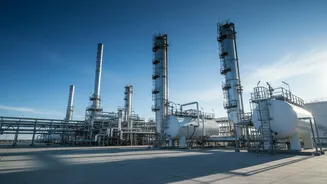
Once the crude oil arrives in India, it isn't ready to be used. It must be transported to refineries where it's processed into petrol. The costs associated with refining the crude, transporting it from the port to the refinery, and then from the refinery to fuel depots across the country are added to the base price. On top of these operational expenses, the OMCs add their own margin to cover costs and generate a profit. This combined figure is the price at which the petrol is sold to the dealers, but it's still far from the final retail price.
The Central Government's Share: Excise Duty
A significant portion of the petrol price is made up of central taxes. The Central Government levies an excise duty, which is a fixed amount per litre, regardless of the base price of the fuel. This means that even if crude oil prices fall, the excise duty component remains constant unless the government decides to change it. This tax is a major source of revenue for the central government, used to fund infrastructure projects and various welfare schemes. Over the years, the excise duty has been adjusted multiple times, sometimes to stabilize prices and other times to boost government revenues.
The State's Cut: Value Added Tax (VAT)
After the central excise duty is applied, state governments add their own tax, known as Value Added Tax (VAT). Unlike the fixed excise duty, VAT is typically an ad valorem tax, meaning it's charged as a percentage of the price (base price + excise duty + dealer commission). This is a key reason why petrol prices vary significantly from one state to another; each state has the authority to set its own VAT rate. States with higher VAT see much higher retail prices for petrol. This tax is a crucial source of revenue for state governments.
The Final Mile: Dealer Commission
The last financial component added to the price is the dealer's commission. This is the amount paid to the petrol pump owners for their services. It covers their operational costs, such as staff salaries, electricity, and maintenance, as well as their profit margin. This commission is also a fixed amount per litre and is added before the final retail price is displayed at the pump. Though a smaller component compared to taxes, it is an essential part of the final price calculation.
Daily Changes: Dynamic Fuel Pricing
Since June 2017, India has followed a dynamic fuel pricing system. This means that petrol prices are revised daily at 6 a.m. across the country. These daily adjustments are meant to align domestic prices with international crude oil rates and currency fluctuations, making the system more transparent and responsive. Previously, prices were revised every fortnight, which could lead to sudden and sharp price jumps. The daily system passes on changes, whether increases or decreases, to the consumer more immediately.