

Decoding the Solar Wind
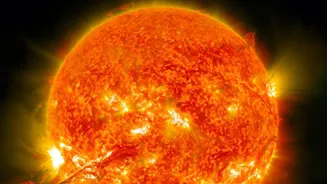
Before diving into the hardware, it's essential to understand what it's looking for. The Sun constantly releases a stream of charged particles—mostly protons and electrons—called the solar wind. This wind travels across the solar system, carrying with
it the Sun's magnetic field, known as the Interplanetary Magnetic Field (IMF). These phenomena are the primary drivers of space weather, which can disrupt satellites, power grids, and communication systems on Earth. Aditya-L1's mission is to study these particles and fields directly from the L1 Lagrange point, an ideal spot for uninterrupted observation. Three of its seven payloads are dedicated to this task: ASPEX, PAPA, and MAG.
ASPEX: The Particle Analyser
The Aditya Solar wind Particle EXperiment (ASPEX) is a crucial payload designed to study solar wind particles. It consists of two main components: the Solar Wind Ion Spectrometer (SWIS) and the SupraThermal and Energetic Particle Spectrometer (STEPS). SWIS is focused on the lower-energy ions that form the bulk of the solar wind, primarily protons (hydrogen ions) and alpha particles (helium ions). With two sensors providing a 360-degree field of view, it can measure not just the energy and composition of these particles, but also their direction of travel. This directional capability is vital for understanding how the solar wind is accelerated and how it behaves. By observing the ratio of alpha particles to protons, scientists can also identify the arrival of major solar events like Coronal Mass Ejections (CMEs).
PAPA: Capturing Electrons and Ions
Working in tandem with ASPEX is the Plasma Analyser Package for Aditya (PAPA). This payload also has two sensors: the Solar Wind Electron Energy Probe (SWEEP) and the Solar Wind Ion Composition Analyser (SWICAR). As its name suggests, SWEEP is dedicated to measuring solar wind electrons, specifically their energy distribution and temperature. SWICAR, meanwhile, focuses on the composition of heavier ions in the solar wind, capable of identifying elements with a mass range up to 60 times that of hydrogen. Together, these sensors provide a comprehensive picture of the plasma environment, measuring the flux, density, and arrival direction of both electrons and ions. This data has already proven effective in detecting the impact of CMEs.
MAG: Measuring the Invisible Force
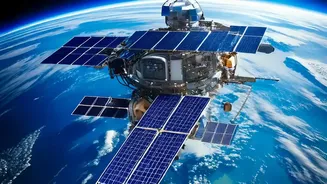
The third key instrument is the Magnetometer (MAG), designed to measure the Interplanetary Magnetic Field (IMF) with high accuracy. To do this effectively, the sensors must be placed away from the spacecraft's own magnetic interference. Therefore, Aditya-L1 features a 6-meter-long deployable boom. Two high-precision fluxgate magnetometer sensors are mounted on this boom—one at the 3-meter midpoint and another at the 6-meter tip. This dual-sensor setup allows scientists to measure the IMF while effectively cancelling out the magnetic 'noise' from the spacecraft itself. The MAG provides vital data on the direction and strength of the magnetic field, which is essential for understanding how solar events like CMEs travel through space and supplement the particle measurements from ASPEX and PAPA.