





The Persistent Supply Gap
India holds the unique position of being the world's largest producer, consumer, and importer of pulses. Despite significant increases in domestic production, a persistent gap remains between what the country grows and what it consumes. For the 2024-25
period, India produced 25.7 million tons but consumption required importing another 7.3 million tons, meaning nearly a quarter of the nation's supply came from abroad. This reliance on imports from countries like Canada, Australia, and Myanmar makes India vulnerable to global price shifts and supply chain disruptions, directly impacting household budgets.
How Import Duties Work
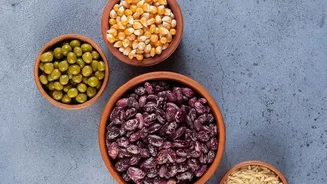
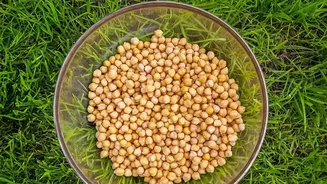
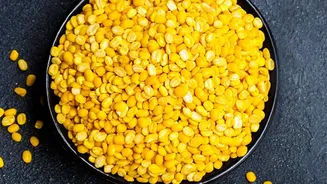
Import duties, or tariffs, are taxes the government places on imported goods. For pulses, these taxes serve a dual purpose: they generate revenue and, more importantly, they protect domestic farmers from being undercut by cheaper international supplies. By making imported pulses more expensive, duties are intended to ensure that Indian farmers can get a fair price for their crops, ideally at or above the Minimum Support Price (MSP). However, the government's policy is not static. Currently, duties are varied: tur (pigeon peas) and urad (black gram) have been allowed duty-free import until March 2027 to ease shortages, while masoor (red lentils) and chana (chickpeas) have a 10% duty, and yellow peas face a steep 30% tariff.
The Argument for Lowering Duties
The primary argument for cutting import duties is to control food inflation and provide relief to consumers. When domestic production is hit by factors like a poor monsoon, as seen with below-average rainfall in key growing states, supplies tighten and prices rise. With the festive season typically driving up demand, the pressure to stabilize prices becomes even greater. By lowering or removing tariffs on pulses like lentils and yellow peas, the government can make it cheaper for traders to import them. This increases the overall availability in the market, which in turn helps to bring down retail prices for households and food processors across the country.
The Risk for Indian Farmers
On the other side of the coin is the welfare of India's farmers. A sudden influx of cheap, duty-free pulses can cause domestic market prices to crash, often falling below the MSP. This is a significant concern for the millions of farmers who depend on pulse cultivation for their livelihood. If farmers cannot get a profitable price for their harvest, they may be disincentivized from planting pulses in the next season, opting for more reliably profitable crops like wheat or rice. This could worsen the domestic supply-demand gap in the long run, making India even more dependent on imports. This is why the government is reportedly considering keeping the duty on chickpeas, to encourage farmers who are about to start planting the crop.
A Delicate Balancing Act
The government faces a difficult balancing act: ensuring affordable food for its citizens without sacrificing the interests of its farmers. This policy tug-of-war means that decisions on import duties are often short-term measures to address immediate price crises rather than a long-term strategy. The frequent changes—allowing duty-free imports one year and imposing high tariffs the next—create market uncertainty for both farmers and importers. Striking the right balance is crucial, but it highlights that import duties are a reactive tool, not a foundational solution.
Beyond Tariffs: The Path to Self-Sufficiency
True self-sufficiency in pulses, or 'Atmanirbharta', requires a multi-pronged strategy that goes beyond tweaking import duties. Experts and government bodies like Niti Aayog point to the need for long-term solutions. This includes investing in high-yielding, climate-resilient seeds, improving irrigation, and reducing post-harvest losses through better storage infrastructure. Strengthening the MSP procurement system to ensure more farmers actually receive the guaranteed price is also critical. By making pulse cultivation more productive and profitable, India can hope to close the supply gap from within, ensuring stable prices and food security for the long haul.