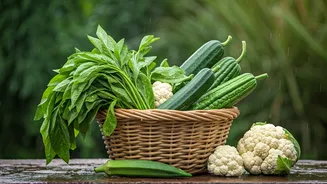









1. Bottle Gourd (Lauki)
Often overlooked, lauki is a powerhouse of nutrients perfectly suited for the monsoon. Composed of over 90% water, it’s incredibly hydrating and light on the stomach, which is crucial when the digestive system tends to become sluggish. Rich in fibre,
it helps prevent constipation and keeps the gut healthy. Ayurveda praises bottle gourd for its cooling properties and its ability to reduce stress. It is also packed with essential minerals like calcium, magnesium, and zinc. Its subtle flavour makes it incredibly versatile; you can use it in dals, make a simple sabzi with cumin and turmeric, or even blend it into a refreshing juice with mint and lemon.
2. Pointed Gourd (Parwal)
Parwal, or pointed gourd, is one of the most recommended vegetables during the rainy season. It's loaded with antioxidants, vitamins A and C, and fibre. These nutrients are vital for boosting the immune system, which helps the body fight off common monsoon ailments like colds, coughs, and fevers. According to traditional medicine, parwal also has properties that help purify the blood and keep the skin clear. Its low calorie count and high fibre content make it excellent for weight management. A simple stir-fry with potatoes (Parwal Aloo) or stuffed with a blend of spices makes for a delicious and healthy meal that’s easy to digest.
3. Bitter Gourd (Karela)
The name might be a deterrent for some, but bitter gourd is a true monsoon warrior. It is famed for its potent antiviral and antibacterial properties, providing a strong defence against infections that are rampant during this season. Karela is rich in Vitamin C, which fortifies the immune system, and it’s a well-known natural aid for managing blood sugar levels. While its bitterness can be an acquired taste, you can reduce it by salting and rinsing the slices before cooking. A classic 'Bharwa Karela' (stuffed bitter gourd) or a simple, crispy stir-fry can transform this vegetable into a dish you’ll look forward to.
4. Ridge Gourd (Turai)
Turai, also known as tori, is another humble gourd that shines during the monsoon. It has an impressive amount of dietary fibre and is low in saturated fats, making it excellent for digestive health. It acts as a natural blood purifier and is known to boost liver health. Ridge gourd also contains insulin-like peptides that help control blood sugar. Because of its high water content, it has a cooling effect on the body. This versatile vegetable absorbs flavours beautifully. It can be cooked into a simple sabzi, added to sambar, or even used to make flavourful chutneys. Its soft texture when cooked is comforting and easy on the gut.
5. Sweet Corn (Bhutta)
No monsoon experience is complete without a roasted bhutta, seasoned with salt, chilli, and a squeeze of lime. Beyond being a beloved snack, corn is a nutritious vegetable to include in your diet. It is packed with fibre, which aids digestion and promotes a feeling of fullness. It’s also a good source of antioxidants like lutein and zeaxanthin, which are beneficial for eye health. The B vitamins in corn help in energy production, combating the lethargy that often accompanies gloomy weather. Whether roasted on the cob, boiled and added to salads, or made into a comforting soup, corn is a delicious way to get your dose of monsoon nutrients.
6. Indian Squash (Tinda)
Also called apple gourd, tinda is a small, round vegetable that is highly recommended during the rainy season. Its high water content and mild nature make it extremely easy to digest, preventing stomach issues like acidity and indigestion. It is rich in antioxidants and has anti-inflammatory properties, which can help soothe the digestive tract. Low in calories but high in nutrients, tinda is an excellent choice for those watching their weight. Its tender flesh and seeds cook quickly and pair well with a variety of spices. A simple gravy-based tinda curry or a dry sabzi with onions and tomatoes is a perfect, light meal for a rainy day.