




The Science of Shrinking Your Clothes
Vacuum compression bags are a simple but brilliant solution to a common packing problem: bulk. Winter clothes like sweaters, fleece jackets, and thermals are full of air pockets, which is what makes them warm but also incredibly voluminous. These bags work
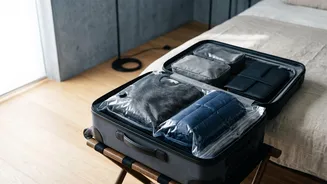
by removing that trapped air. You place your neatly folded clothes inside, seal the bag, and then force the air out, either by using a small hand pump or, with travel-specific versions, by simply rolling the bag tightly. As the air is expelled through a one-way valve, the bag shrinks dramatically, compressing your bulky garments into a dense, flat, and much smaller package. It’s not uncommon for these bags to reduce the volume of soft clothing by 50% or more, freeing up a significant amount of space in your luggage.
The Critical Detail: Volume vs. Weight
Here is the most important rule to remember: compression bags reduce volume, not weight. While your puffy jacket might shrink to the size of a book, it will still weigh exactly the same. This is the crucial distinction that many travellers overlook. Airlines in India, like IndiGo, Air India Express, and SpiceJet, are notoriously strict with their 7kg cabin baggage allowance. This 7kg limit almost always includes the weight of the suitcase itself, which can be 1-2kg even when empty. Using compression bags can give you a false sense of security. You might successfully fit two jackets, three sweaters, and multiple layers into your cabin bag, but you will almost certainly have created a small, dense brick of a bag that is well over the weight limit.
How to Use Compression Bags Smartly
To make compression bags work for you, a strategic approach is necessary. First, choose your bags wisely. For travel, manual roll-up bags are far more practical than those requiring a vacuum cleaner or even a portable pump, as you won’t have to worry about repacking for your return journey. Second, be selective about what you compress. These bags are most effective for your bulkiest, softest items. Use them for your puffer jacket and chunkiest sweaters. Don't bother trying to compress items that have very little air in their fibres, like jeans or formal shirts. Before you pack anything, lay out all the clothes you intend to take and be ruthless. Remember that you can wear your heaviest items—your coat, boots, and thickest sweater—on the plane, which doesn't count toward your baggage allowance.
The Final Weigh-In Is Non-Negotiable
Once you have compressed your bulkiest items and packed your bag, the final and most important step is to weigh it. Use a home luggage scale to check if you are under the 7kg limit. If you are over, you have two choices: take items out or prepare to pay excess baggage fees at the airport. It can be tempting to think an agent might let a bag that’s 7.8kg slide, but it's a gamble you shouldn't rely on. By weighing your bag at home, you can make calm, rational decisions instead of frantically repacking at the check-in counter. This step turns compression bags from a potential weight-trap into a genuinely useful packing tool.
More Than Just Space Saving
While the primary benefit is saving space, compression bags offer other advantages. The airtight seal protects your clothes from moisture, spills, and odours. If you’re caught in the rain or a toiletry bottle leaks, the clothes inside your sealed bag will remain dry and clean. They also help with organisation. By grouping similar items into different bags, you can create a more structured suitcase, making it easier to find what you need without unpacking everything. Because the bags are reusable, they are a durable and long-lasting travel accessory.