




A Frozen Discovery from Orbit
Though its lander tragically failed in 2019, the Chandrayaan-2 orbiter has been a silent workhorse, circling the Moon and gathering invaluable data. Recent findings from its advanced radar instrument have provided some of the strongest evidence yet for
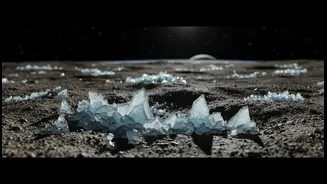
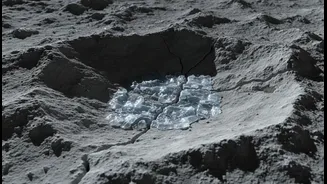
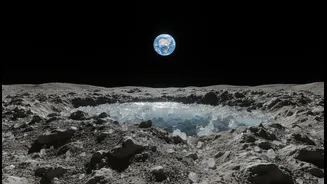
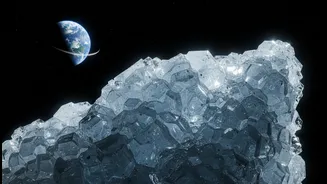
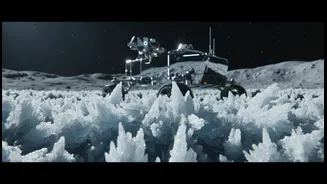
the presence of subsurface water ice at the lunar south pole. Scientists from the Physical Research Laboratory used the Dual-Frequency Synthetic Aperture Radar (DFSAR) to peer beneath the surface of permanently shadowed regions—areas that haven't seen sunlight in billions of years. The radar signals bounced back in a way that suggests the presence of ice mixed with lunar soil, particularly within extremely cold, 'doubly shadowed' craters where temperatures drop to an incredible -248°C. One crater within the larger Faustini crater complex, about 1.1 km wide, showed particularly compelling evidence.
Why Water is the Moon's Gold
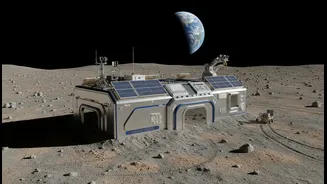
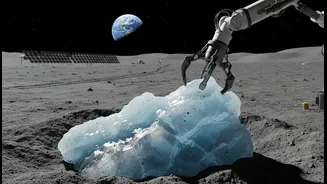
Finding water on the Moon is more than just a scientific curiosity; it's the foundational element for a sustainable human presence. This resource is incredibly versatile. It can be purified for drinking and used to grow food. More critically, it can be split into its component parts: hydrogen and oxygen. Oxygen is essential for breathable air in lunar habitats, and both hydrogen and oxygen are the primary components of powerful rocket propellant. The ability to refuel on the Moon, a concept known as in-situ resource utilization (ISRU), would revolutionize space travel. It would dramatically lower the cost of missions by reducing the need to launch everything from Earth, effectively turning the Moon into a refuelling station for deeper voyages to Mars and beyond.
ISRO's High-Resolution Advantage
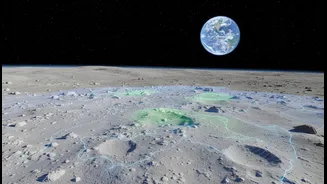
While previous missions, including India's own Chandrayaan-1, had detected hints of water, Chandrayaan-2's DFSAR instrument is a game-changer. It is the first fully polarimetric radar system sent to study the Moon, meaning it can analyze the properties of the radar waves in much greater detail. This advanced capability helps scientists distinguish the signature of water ice from that of rough, rocky terrain, which has been a major challenge in the past. By using two different radar frequencies (L-band and S-band), DFSAR can penetrate the lunar surface and provide a more definitive map of where these precious ice deposits might be located. This high-resolution data acts as a treasure map, guiding future robotic and human missions to the most promising locations for resource extraction.
Guiding the Next Giant Leaps
Global space agencies are taking notice. NASA's Artemis program, which aims to land astronauts on the lunar south pole, stands to benefit significantly from ISRO's findings. Precise maps of potential water ice deposits are crucial for selecting safe and resource-rich landing sites for future astronauts. The data from Chandrayaan-2 is already being used to help downselect and characterize candidate landing zones for Artemis missions, complementing data from NASA's own Lunar Reconnaissance Orbiter. This collaboration was also seen when Japan’s JAXA used high-resolution imagery from Chandrayaan-2 to help its SLIM lander achieve a pinpoint touchdown. India's data isn't just a national asset; it has become a critical piece of the international puzzle for lunar exploration.
A Legacy of Exploration
The discoveries from Chandrayaan-2 are a testament to the resilience of India's space program. Even with the partial success of the initial mission, the orbiter has provided a legacy that will shape the next decade of lunar activity. These findings bolster ISRO’s own ambitious plans, which include a sample return mission (Chandrayaan-4), a joint lunar polar exploration mission with Japan (LUPEX), landing an Indian astronaut on the Moon by 2040, and eventually establishing a lunar space station. By identifying potential resources, Chandrayaan-2 has not only advanced lunar science but has also positioned India as a key player in the emerging cislunar economy, where the resources of the Moon will support a new era of human activity in space.