





The Problem: Urban Heat Islands
Anyone who has lived in a major Indian city knows the feeling: the air feels hotter, the nights offer little relief, and concrete surfaces radiate warmth long after sunset. This is the 'urban heat island' effect. Cities, with their dense concentration
of buildings, roads, and other dark surfaces, absorb and retain far more of the sun's energy than natural landscapes. Traditional dark roofs are a major culprit, absorbing up to 90% of the sunlight that hits them and reaching blistering temperatures that heat both the building below and the surrounding air. This not only makes our homes and cities uncomfortably hot but also puts immense strain on our energy grids from increased air conditioning use and worsens air quality.
The Science of a Simple Solution
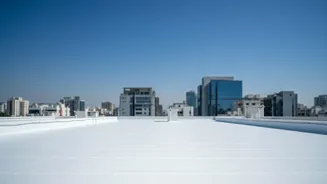
Reflective terrace coatings offer a brilliantly simple answer. Much like wearing a white shirt on a sunny day keeps you cooler than a black one, these coatings work by reflecting sunlight away from the building. A cool roof has two key properties: high solar reflectance (or albedo) to bounce sunlight back, and high thermal emittance to efficiently release any heat that is absorbed. While a standard dark roof might reflect only 5-15% of solar energy, a high-quality reflective coating can reflect 80% or more. This simple act can keep a roof surface up to 33°C cooler than a conventional roof during peak summer weather, significantly reducing the amount of heat transferred into the building below.
More Than Just a Cooler Room
The benefits of cool roofs ripple outwards from a single home to the entire community. For homeowners, the most immediate impact is a cooler indoor environment, which can reduce the need for air conditioning by 10-30%. This translates directly into lower electricity bills and less strain on the power grid during peak demand. On a city-wide scale, widespread adoption of cool roofs helps mitigate the urban heat island effect, lowering overall ambient air temperatures. Cooler air temperatures also slow the chemical reactions that form smog, leading to better air quality. Furthermore, by reflecting heat, these coatings protect the roof structure from the damaging effects of thermal expansion and UV radiation, extending its lifespan.
The Gold Standard? A Comparison
While the headline calls reflective coatings the 'gold standard', how do they stack up against other solutions like 'green roofs' (rooftops covered in vegetation)? A 2024 study led by University College London found that reflective or 'cool' roofs were significantly more effective at lowering city-wide temperatures than green roofs. The study, which modelled the effects across London, found that cool roofs could lower urban temperatures by an average of 1.2°C, while the net cooling effect of green roofs was negligible on average. While green roofs offer other valuable benefits like stormwater management and providing habitats for wildlife, they can also retain heat and release it at night. For pure, scalable, and cost-effective heat mitigation, reflective coatings currently hold the edge.
Cool Roofs in the Indian Context
The push for cool roofs is gaining serious momentum in India. With over 60% of existing roofs made from heat-trapping materials like concrete and metal, the potential for improvement is enormous. Pilot projects in cities like Ahmedabad and Hyderabad have demonstrated their effectiveness. In 2023, Telangana became the first state in India to launch a dedicated Cool Roof Policy, mandating their use on most new government, commercial, and large residential buildings. The policy aims to install 300 square kilometres of cool roofs by 2028, a move expected to save 600 million units of electricity annually. These initiatives show a growing recognition of cool roofs as a vital, low-cost tool for building climate resilience in one of the world's most heat-stressed regions.