





Start with Your Boots
Before you even think about packing, give your travel boots a waterproofing treatment. Most new hiking and travel boots come with a factory-applied durable water repellent (DWR) finish, but this wears off over time. You'll know it's time for a refresh
when water stops beading up and starts absorbing into the material. First, make sure your boots are clean and dry. For full-grain leather, a wax-based product will create a strong, durable barrier. Apply it with a cloth, allow it to absorb, and then buff it off. For suede or nubuck leathers, stick to a waterproofing spray designed for those materials to avoid stains and damage. Simply spray an even coat and let it air dry completely, away from direct heat which can cause cracking.
The Low-Cost Hack: Plastic Bags
When it comes to protecting your electronics, the simplest solutions are often incredibly effective. The humble zip-seal plastic bag is a traveller's best friend. You can find them in any size, and they provide an excellent first line of defence against rain, splashes, and spills for phones, power banks, and charging cables. For an extra layer of security, especially if you anticipate heavy rain or activities near water, use the double-bagging method. Place your device in one bag, press out all the air, and seal it. Then, place that bag upside down into a second bag and seal that one, too. This ensures the two openings are not aligned, significantly reducing the chance of any water getting in.
Level Up with Dry Bags
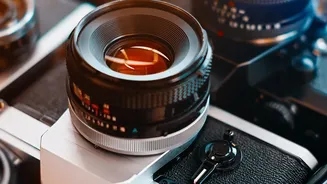
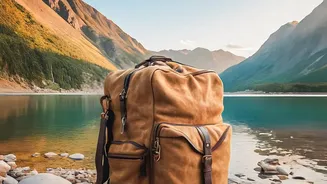
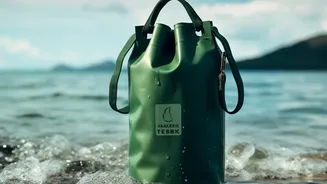
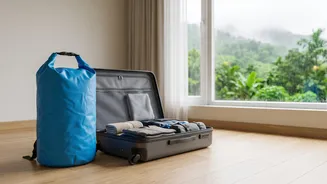
For anyone spending significant time outdoors, a dedicated dry bag is a worthwhile investment. These are specifically designed to be watertight, often using a roll-top closure that creates a secure seal. They come in various sizes, from small pouches perfect for a phone and wallet to larger bags that can hold a camera, a tablet, and a change of clothes. For very sensitive or expensive electronics like a DSLR camera, experts recommend double protection: place the camera in a smaller dry bag or waterproof case first, and then place that inside a larger dry bag. This not only protects against submersion but also from dust and sand.
Pack for Protection
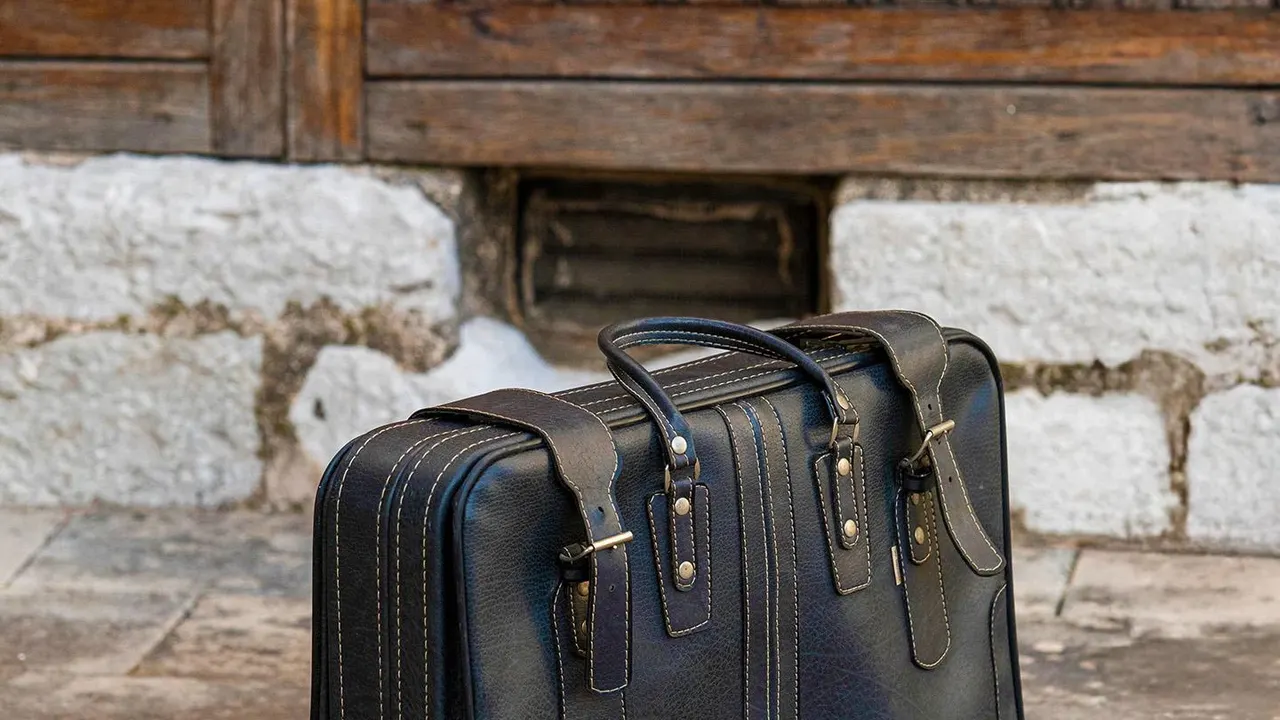
How you pack your bag also plays a crucial role. Always place your most vulnerable items in the centre of your backpack or suitcase, cushioned by soft clothing. This placement keeps them away from the seams and zippers where water is most likely to seep through during a downpour. Avoid placing electronics in the top pocket of your backpack, as it’s often the most exposed area. Another useful trick is to use silica gel packets—the small pouches that come in new shoe boxes and with electronics. Toss a few into the bags or compartments where you store your electronics to absorb any ambient moisture or condensation that might build up.
Emergency Plan: What If It Gets Wet?
Despite your best efforts, accidents happen. If an electronic device gets wet, the most important thing to do is turn it off immediately and, if possible, remove the battery. The damage is often caused by a short circuit, which can only happen if there is power. Dry the exterior with a cloth. Resist the urge to turn it on to see if it still works. A popular trick is to place the device in a sealed container of uncooked rice or silica gel packets for at least 24 to 48 hours to draw out the moisture. The more time you give it to dry completely, the better its chances of survival.