
Winter transforms the world’s great lakes into magical, otherworldly landscapes. For travellers who embrace the cold, these frozen expanses offer scenes of surreal beauty, from glass-like surfaces to bizarre natural ice formations.
1. Abraham Lake, Canada
This man-made lake in
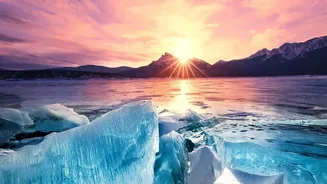
Alberta has become famous for a stunning natural phenomenon: frozen methane bubbles. Bacteria decomposing organic matter on the lakebed release methane gas, which gets trapped in mesmerising vertical stacks as the water freezes. The result is a polka-dotted underwater world visible through the clear ice. Strong winds often sweep the surface clean of snow, making it a dream destination for photographers from mid-January to early February.
2. Lake Baikal, Russia
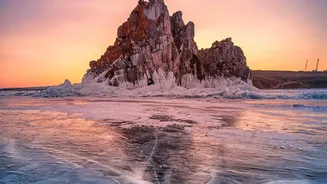
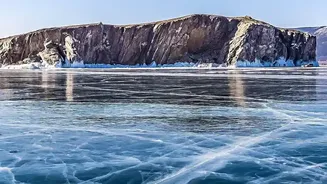
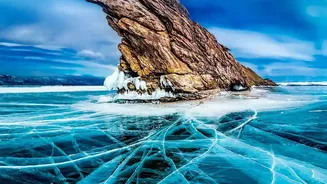
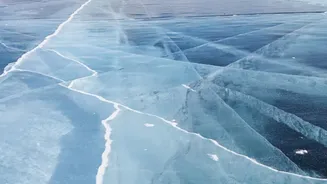
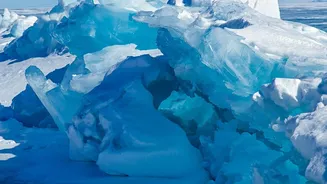
As the world’s oldest and deepest lake, Lake Baikal in Siberia holds about 20% of the Earth's fresh water. In winter, it transforms into a breathtaking spectacle. The ice, which can grow up to two metres thick, is so clear you can see up to 40 metres below. A phenomenon unique to Baikal is its turquoise ice shards, or 'hummocks', which are large blocks of transparent ice that jut out from the surface, glowing an incredible gem-like blue in the sunlight.
3. Pangong Tso, India
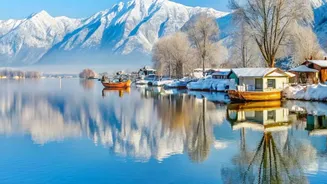
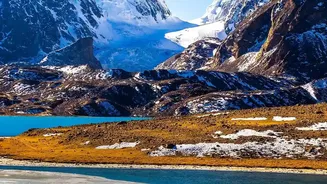
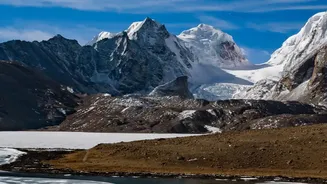
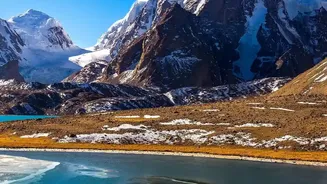
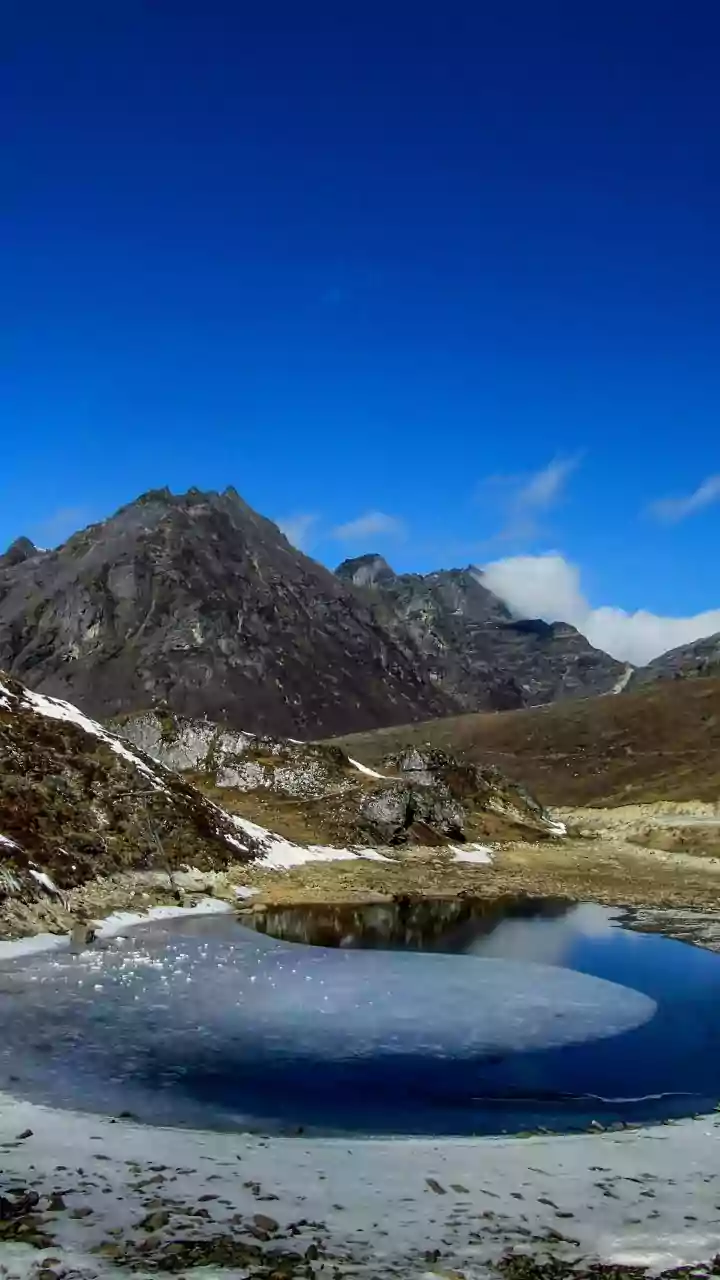
Situated at an altitude of over 4,350 metres in the Himalayas, Pangong Tso is a high-altitude saline lake that stretches from India to China. Despite its salt water, the lake freezes completely solid during the harsh winter months, with temperatures dropping to minus 30 degrees Celsius. Its frozen expanse creates a surreal, vast white sheet set against the stark, beautiful mountains of Ladakh, making it a dramatic and popular destination for adventure travellers. The lake even hosts a frozen lake marathon.
4. Jökulsárlón, Iceland
While not a traditional frozen lake, Jökulsárlón glacier lagoon offers a unique icy spectacle. This deep lagoon is filled with enormous icebergs that break off the Breiðamerkurjökull glacier. These ice chunks, some over 1,000 years old, drift through the lagoon and out to sea, where many are washed ashore onto a black volcanic sand beach, famously known as 'Diamond Beach'. The contrast of the crystal-like ice against the black sand is an unforgettable sight.
5. Lake Louise, Canada
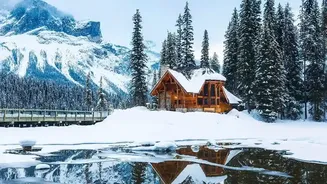
Nestled in Banff National Park, Lake Louise is often called one of the most beautiful ice-skating rinks in the world. Framed by the magnificent Victoria Glacier and surrounding snow-covered peaks, the lake freezes solid from around December to April. The Fairmont Chateau Lake Louise maintains a large cleared rink on the ice, often complete with a magical ice castle, creating a fairy-tale atmosphere for skaters. It’s an iconic Canadian winter experience.
6. Lake Bled, Slovenia
Lake Bled is the picture of a winter fairy tale. With its iconic island church and medieval cliff-top castle, the scene becomes even more magical when dusted with snow. While the lake doesn't freeze solid every year, when it does, it transforms into a vast natural ice rink for locals and visitors. Even without a complete freeze, the snowy alpine setting, tranquil 6km lakeside path, and proximity to winter sports make it a top cold-weather destination.
7. Blue Pond (Aoiike), Japan
Located in Biei, Hokkaido, the Blue Pond is a man-made wonder famous for its ethereal blue colour, caused by natural minerals in the water. While its vibrant blue is a summer spectacle, winter offers a completely different kind of magic. The pond freezes over and is covered in snow, with the stark, submerged larch trees creating a minimalist landscape. From November to April, the site is illuminated nightly, turning the frozen scene into an enchanting, otherworldly display.
8. Lake Superior, USA/Canada
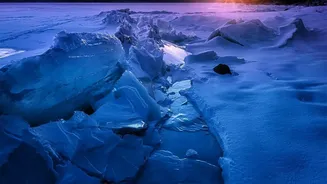
The largest of the Great Lakes becomes a dramatic canvas of ice in winter. While it rarely freezes over completely, its shorelines produce incredible ice formations. The Apostle Islands National Lakeshore in Wisconsin is particularly famous for its sea caves, which, under the right conditions, transform into breathtaking ice caves. Waterfalls freeze into pillars of ice, and waves create intricate sculptures along the red sandstone cliffs, offering a stunning, albeit rare, spectacle for hikers.
9. Lake Michigan, USA
Another of the Great Lakes, Lake Michigan is known for producing peculiar ice formations. While it doesn't freeze solid, its shores can become a playground of natural ice art. Visitors might witness 'ice volcanoes', which are conical mounds that spout water and slush when waves crash ashore under an ice shelf. Another phenomenon is the formation of 'ice balls', where slush is rolled by waves into thousands of spheres that wash up on the beach.
10. Lake Baikal, Russia
As the world’s oldest and deepest lake, Lake Baikal in Siberia holds about 20% of the Earth's fresh water. In winter, it transforms into a breathtaking spectacle. The ice, which can grow up to two metres thick, is so clear you can see up to 40 metres below. A phenomenon unique to Baikal is its turquoise ice shards, or 'hummocks', which are large blocks of transparent ice that jut out from the surface, glowing an incredible gem-like blue in the sunlight.