



The Science of a Soggy Meal
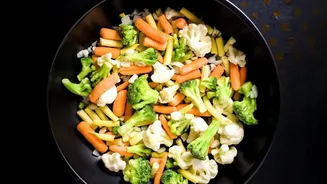
When you want a beautiful, flavourful crust on your food, you need high, dry heat. But when too many ingredients are packed into a pan, they release moisture that gets trapped. Instead of the pan's surface staying hot enough to sear, the temperature plummets.
The excess liquid turns into steam, and your food ends up simmering in its own juices. This effectively poaches the food, preventing it from ever getting that delicious golden-brown finish. Essentially, by overcrowding the pan, you are creating a steam bath when what you really want is a hot, dry searing surface. All the water released has to evaporate before any browning can begin.
Understanding the Maillard Reaction
That desirable browning is not just for looks; it is a chemical reaction that creates immense flavour. Known as the Maillard reaction, it occurs when amino acids and sugars in food are heated to temperatures typically above 140°C (280°F). This process creates hundreds of new aroma and flavour compounds that give seared steak, toasted bread, and fried onions their complex, savoury taste. However, this reaction cannot happen in the presence of water, which boils at 100°C (212°F). When your pan is crowded and full of steam, the surface temperature of the food struggles to get above the boiling point of water, completely stalling the Maillard reaction and leaving your food tasting flat and one-dimensional.
The Golden Rule: Give Your Food Space
The solution is simple: do not overcrowd the pan. As a rule of thumb, ensure that no pieces of food are touching each other. A good guideline is to leave at least an inch of space between larger items like chicken breasts or steaks. For smaller items like mushrooms or chopped vegetables, arrange them in a single, even layer. If you put food in the pan and it is so jam-packed there is no room to move things around, you have overcrowded it. This space allows moisture to escape and evaporate quickly, keeping the pan hot and allowing each piece to make direct contact with the searing-hot surface.
Mastering the Art of Batch Cooking
If you have more food than can fit in your pan with adequate spacing, the answer is to cook in batches. It might take a few extra minutes, but the results are well worth it. Cook the first batch until it is properly browned, then remove it from the pan and set it aside on a plate. You can keep the cooked food warm by tenting it with foil or placing it in a low-temperature oven while you cook the remaining batches. If you are using multiple baking sheets in an oven, be sure to rotate their positions halfway through cooking to promote even heating. This ensures every single piece of food gets the same opportunity to develop a perfect, flavourful crust.
Beyond Spacing: Other Keys to a Perfect Sear
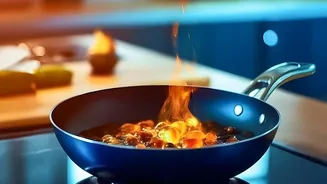
While pan crowding is a major culprit, a few other factors are crucial for achieving a great sear. First, always make sure your pan is properly preheated. A hot pan, typically between 200-230°C (400-450°F), is essential. Second, your food should be as dry as possible. Pat meat and vegetables dry with a paper towel before adding them to the pan. Excess moisture on the surface has to burn off before browning can start. Finally, use the right cooking fat. Choose an oil with a high smoke point, such as grapeseed, canola, or vegetable oil, which can withstand high heat without burning.
Choose Your Pan Wisely
The type of pan you use can also make a significant difference. Heavy-bottomed pans, such as cast-iron or stainless steel, are ideal for searing because they retain heat exceptionally well. When you add food to them, their temperature does not drop as dramatically, which is key for maintaining the high heat needed for the Maillard reaction. While non-stick pans are convenient for many tasks, they often are not designed to be used over the very high heat required for a hard sear. For that deep, restaurant-quality browning, a heavy, heat-retentive pan is your best friend in the kitchen.