






The Problem with Power on the Moon
Powering a lunar habitat or rover isn't as simple as plugging into an outlet. For decades, space missions have relied on lithium-ion batteries, the same technology that powers your phone and laptop. While powerful, they have significant drawbacks for
lunar exploration. The Moon experiences wild temperature swings, from a scorching 100°C in daylight to a bone-chilling -200°C at night near the South Pole. The liquid electrolyte inside a conventional battery can freeze in the cold, causing permanent damage, or evaporate in the vacuum of space. More critically, these batteries contain flammable liquids, posing a risk of 'thermal runaway'—a dangerous chain reaction where a single failing cell overheats and triggers a catastrophic, explosive fire, which would be devastating in a sealed spacecraft or habitat.
A Solid Solution to a Splashy Problem
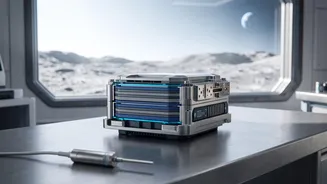
To solve this, NASA's Glenn Research Center is leading a project called SPEARS, which stands for Solid Power for Extreme Environment Adaptability and Resilience in Space. The goal is to develop a new generation of solid-state batteries specifically for the harsh lunar environment. The key innovation is replacing the flammable liquid electrolyte with a solid, non-flammable material, like a ceramic or polymer. This simple change has massive implications. By removing the liquid, the risk of freezing, evaporation, and fire is virtually eliminated. This makes the batteries inherently safer for astronauts and more resilient to the extreme conditions they will face.
Putting the Technology to the Test
Recent tests on small, prototype SPEARS battery cells at NASA's Langley Research Center have shown incredible promise. The cells have proven they can survive exposure to temperatures ranging from 100°C all the way down to -170°C without being damaged. While they cannot yet generate power at the most extreme cold, they operated well at temperatures as low as -80°C. This is a major breakthrough. Current lunar systems need heavy, power-hungry heaters to keep batteries from freezing during the long, 14-day lunar night. A SPEARS battery could simply 'cold-soak' through the night and be warmed up by a small, efficient heater only when it's needed, saving precious energy and mass on missions.
Powering the Artemis Generation
This technology is a critical enabler for NASA's Artemis program, which aims to establish a sustained human presence on the Moon. Reliable and safe power is essential for everything from lunar rovers exploring permanently shadowed craters to the life support systems in astronaut habitats and even portable power tools. The SPEARS project is working to create batteries that are not only safer and more resilient but also adaptable. The modular design could allow the chemistry to be tuned for different jobs, whether a mission needs high power output, long-term durability, or maximum energy storage. Though still in development, this research is a foundational step toward making long-duration lunar settlement a reality.