



Gujarat's Other Wilderness
Tucked away near the coastal city of Porbandar lies the Barda Wildlife Sanctuary, a protected area that stands in stark contrast to the world-famous Gir. Established in 1979, this roughly 192-square-kilometre sanctuary was once the private hunting ground
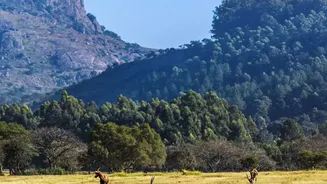
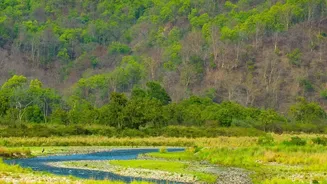
for the royal families of Porbandar and Jamnagar. Today, it’s a crucial ecological zone, not just for its resident wildlife, but for its very geography. Unlike the relatively flat plains of Gir, Barda is defined by its rugged, hilly terrain, with elevations rising to over 600 meters. This undulating landscape, crisscrossed by rivers like the Bileshvary and Joghri, creates a diverse mosaic of microhabitats, making it one of the most unique ecosystems in the Saurashtra region.
A Rich Tapestry of Flora and Fauna
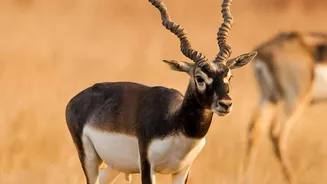
The sanctuary's varied terrain supports an incredible diversity of plant life, boasting over 650 species, which is the highest floral diversity recorded in the state. Its forests are a mix of southern tropical, dry mixed deciduous, and northern tropical thorn forests, creating a rich environment for numerous species. While leopards, hyenas, bluebulls (nilgai), and wild boars are among the key residents, Barda is also a paradise for birdwatchers, home to rare species like the spotted eagle and crested hawk-eagle. This rich biodiversity is the foundation of what makes Barda so special—it's a self-sustaining ecosystem that has thrived for decades, providing a vital natural barrier against the salinity ingress from the nearby coast.
A Second Home for the King
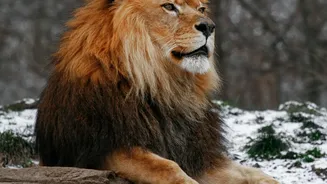
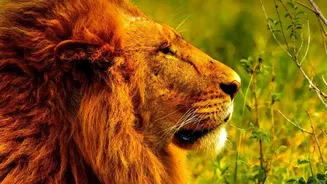
For years, conservationists warned of the risks of having the world’s entire wild population of Asiatic lions confined to a single location—Gir. A single epidemic, like the canine distemper virus outbreak in 2018, could be catastrophic. The Gir-Barda Project was initiated as far back as 1979 to establish Barda as a second home. This long-held vision is now a reality. After a male lion naturally migrated to Barda in early 2023, the first to do so in nearly 144 years, the Gujarat Forest Department introduced several females. As of late 2026, a small but growing pride of 17 lions now calls Barda home, marking a monumental step in securing the species' future.
Preparing the Sanctuary for Royalty
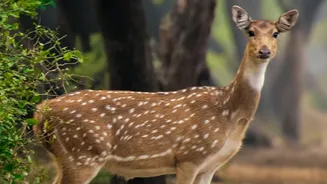
Making Barda a viable long-term habitat for lions required careful planning. A major focus has been on augmenting the prey base. To support the new predators, species like chital (spotted deer) and sambar have been reintroduced into the sanctuary, some captured using the gentle Boma technique to minimize stress. Studies show the lions are adapting well, with a diet primarily consisting of wild pigs, supplemented by some domestic cattle. This highlights the delicate balance required in managing the sanctuary, where pastoral communities like the Maldharis have coexisted with wildlife for generations. Habitat restoration, including the removal of invasive thickets to encourage grasslands, is also underway to ensure the ecosystem can support its new apex predator.