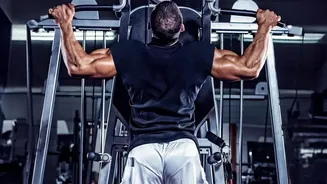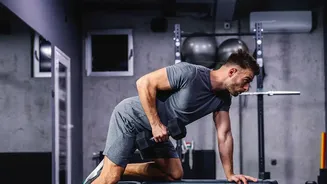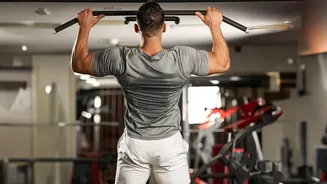



Looking for a reliable way to build a stronger back without cheating the movement? The seated row is a gym staple for a reason. It provides stability, allowing you to focus on form and target key muscles for powerful, controlled growth.
Why A Strong Back Matters
A strong back is
the foundation of a functional, resilient body. The muscles in your back, including the latissimus dorsi (lats), rhomboids, and trapezius, are crucial for maintaining good posture, especially for those who spend hours sitting at a desk. Strengthening these muscles helps counteract the rounded-shoulder slump that can lead to stiffness and discomfort. A powerful back also supports your spine, reduces the risk of injury, and provides the pulling strength needed for everyday activities, from carrying groceries to opening a heavy door.
The Advantage of Sitting Down
The primary benefit of the seated row is its ability to enforce strict form. Unlike standing row variations where it's easy to use your hips and lower back to swing the weight, the seated position locks you in place. This stability makes it harder to use momentum, forcing the target muscles in your upper and mid-back to do the work. By removing the 'cheat' factor, you ensure that every repetition contributes directly to building strength and muscle in your lats and rhomboids. This makes the seated row an excellent exercise for beginners learning the movement and for experienced lifters looking to isolate their back muscles effectively.
How to Perform a Perfect Seated Row
Proper form is everything. Follow these steps for a safe and effective seated row: 1. Set Up: Sit on the bench with your feet planted firmly on the platform and your knees slightly bent. Sit tall with an upright torso and a straight, neutral spine. Extend your arms to grab the handle. 2. The Pull: Brace your core and pull the handle towards your torso, aiming for your lower ribs or belly button. Focus on driving your elbows back past your body, keeping them close to your sides. Avoid flaring them out. 3. The Squeeze: As the handle approaches your body, consciously squeeze your shoulder blades together. Imagine you're trying to pinch a pencil between them. Pause for a second at the peak of the contraction to maximize muscle engagement. 4. The Return: Slowly extend your arms back to the starting position over two to three seconds. Control the weight on the way back; don't just let it drop. Allow your shoulder blades to stretch forward slightly at the end of the movement without rounding your lower back.
Common Mistakes to Avoid
Even with the machine's stability, errors can creep in and reduce the exercise's effectiveness. Watch out for these common mistakes:
Leaning Back: The most frequent error is swinging your torso back and forth to move the weight. This uses momentum and recruits your lower back, taking the focus off the target muscles. Keep your torso stable and upright, allowing only a very slight lean.
Rounding Your Back: Never let your back round, especially as you return the weight. This puts your spine at risk. Keep your chest up and your core engaged throughout the set.
Shrugging Your Shoulders: Pulling your shoulders up towards your ears engages the upper traps instead of the mid-back. Keep your shoulders down and back.
Pulling with Your Arms: The goal is to initiate the pull with your back, not your biceps. Think of your hands as hooks and focus on driving your elbows backward. If you feel it mostly in your arms, the weight might be too heavy.
Variations for a Complete Back
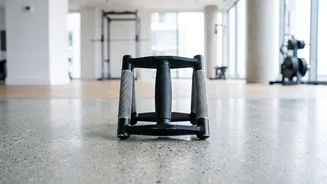
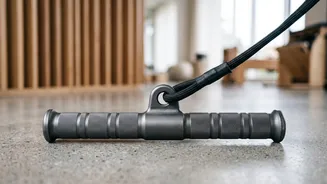
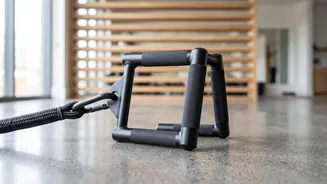
Changing your grip can shift the emphasis to different parts of your back. The standard V-'grip handle with a neutral (palms facing each other) grip is excellent for targeting the lats. Using a wide bar with an overhand grip will flare your elbows out more and place greater emphasis on your rhomboids and rear deltoids, the muscles in your upper-'middle back'. You can also perform the exercise one arm at a time with a D-'handle'. This unilateral movement helps correct strength imbalances between your left and right sides and engages your core more to prevent your torso from twisting.