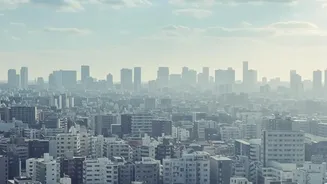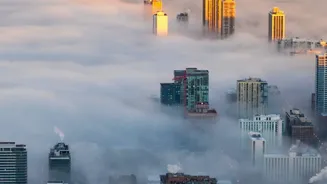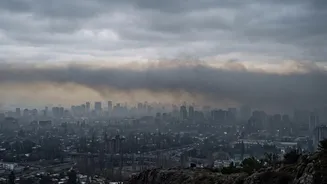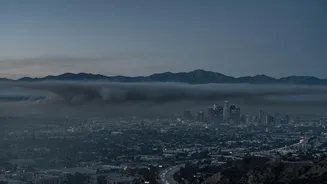






Ever wonder why a thick, hazy smog sometimes settles over a city and refuses to leave for days? The culprit is often an invisible atmospheric phenomenon known as a temperature inversion, which acts like a lid, trapping pollution right where we breathe.
How Air Normally Behaves
On a typical day, the air closest to the ground is warmer than the air at higher altitudes. This happens because the sun heats the Earth's surface, which in turn warms the air directly above it. As we know from basic physics, warm air is less dense than cool air, so it naturally rises. This upward movement, called convection, is crucial for air quality. It acts like a giant atmospheric elevator, carrying pollutants from vehicles, factories, and other ground-level sources up and away, where they can be dispersed by winds into the wider atmosphere. This constant vertical mixing is what helps keep the air we breathe relatively clean.
Enter the Inversion Layer: The Atmosphere's Lid
A temperature inversion flips this normal pattern on its head. During an inversion, a layer of warmer air forms at a higher altitude, sitting on top of a layer of cooler air near the ground. This creates an incredibly stable atmospheric condition because the cool, dense air at the surface has no way to rise through the warmer, less-dense air above it. It's effectively trapped. This layer of warm air acts like a giant, invisible lid or cap over the region, shutting down the vertical mixing that would normally clear the air.
How Do Inversions Form?
The most common type of inversion, a radiation inversion, typically forms during calm, clear nights, especially in winter when nights are longer. After the sun sets, the ground rapidly loses heat, which cools the air nearest to it. The air at higher altitudes, however, remains warmer. Calm winds are a key ingredient, as they prevent the air layers from mixing horizontally. This setup allows the cool surface air to become trapped under the warm layer above, creating the inversion that can persist until the morning sun is strong enough to heat the ground again and break the cycle. High-pressure systems can also cause inversions by causing air to sink and warm at higher altitudes, strengthening the 'lid' effect.
Trapping Pollutants in a Stagnant Bowl
Once an inversion layer is in place, the air near the ground becomes stagnant. All the pollutants being pumped into the air from traffic, industrial activity, and residential heating have nowhere to go. They cannot rise and disperse, so their concentration builds up in the shallow layer of cool air trapped near the surface. The height of this breathable layer, known as the mixing height, can shrink dramatically from a kilometre or more in the summer to just a few hundred metres during a winter inversion. This means the same amount of pollution is being squeezed into a much smaller volume of air, causing air quality to deteriorate rapidly.
Why Cities Like Delhi Are So Vulnerable
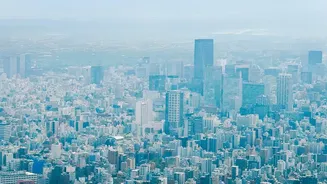
Urban areas are particularly susceptible to the effects of inversion layers. First, they are massive sources of pollutants like particulate matter (PM2.5), nitrogen oxides, and volatile organic compounds. Second, the geography of some cities exacerbates the problem. Cities located in valleys or natural basins, like Delhi which sits in a bowl-like area between the Himalayas and the Aravalli range, are natural traps for cold air. The surrounding mountains can block winds that might otherwise help disperse the polluted air. Furthermore, tall buildings can disrupt air circulation at street level, worsening the stagnation. In winter, this combination of high emissions, calm winds, and trapping topography creates the perfect recipe for severe pollution episodes.
The Dangerous Health Consequences
The accumulation of pollutants during an inversion poses serious health risks. The trapped pollutants often include fine particulate matter (PM2.5), which are particles so small they can penetrate deep into the lungs and even enter the bloodstream. Exposure to these high concentrations of pollutants, even for a short period, can worsen conditions like asthma and COPD and increase the risk of acute cardiac events. Prolonged exposure is linked to a host of health problems, including respiratory infections, heart disease, and other chronic conditions. This is why air quality alerts are so common during extended inversion periods, advising vulnerable populations to limit outdoor activity.