




Before You Drive: A Pre-Monsoon Check
The most important part of safe rain driving happens before you even turn the key. Your car's condition is critical. Tyres are your only point of contact with the road, and their ability to grip a wet surface is paramount. [6] Ensure they have adequate
tread depth and are properly inflated, as worn or under-inflated tyres significantly increase the risk of skidding and hydroplaning. [6, 12, 25] Similarly, check that your windshield wipers are not worn out; they should clear water effectively without leaving streaks that impair vision. [2, 4] Finally, confirm that all your lights—headlights, tail lights, and indicators—are functioning correctly. They are essential for you to see and for others to see you in low-visibility conditions. [2, 4, 6]
Slow Down and Increase Your Following Distance
This might seem obvious, but it’s the golden rule for a reason. Wet roads drastically reduce tyre traction, which means your braking distance increases significantly. [22] Experts recommend reducing your speed and expanding the gap between you and the vehicle ahead. [14] The standard three-second rule for following distance in dry conditions should be increased to at least five or six seconds in the rain. [9, 17] This extra buffer gives you more time to react to sudden stops or hazards on the road, helping to prevent rear-end collisions. [9, 14]
Understand and Avoid Hydroplaning
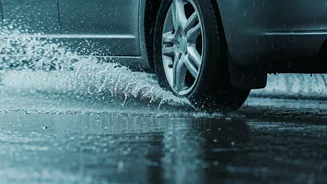
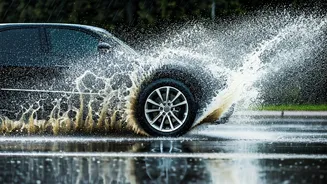
Hydroplaning is one of the most dangerous situations in wet weather. It occurs when a layer of water builds up between your tyres and the road surface, causing a loss of traction and control. [12, 22] At speeds as low as 55-60 km/h, tyres can start to lose contact with the roadway. [10, 12] To avoid it, slow down, especially when you see standing water. [25] Driving in the tracks of the vehicle ahead can also help, as its tyres will have displaced some of the water. [11, 25] If you do start to hydroplane, it's crucial not to panic. Do not slam on the brakes or make sharp turns. [12, 25] Instead, ease your foot off the accelerator and steer gently in the direction you want the car to go until you feel the tyres regain grip. [10, 12]
Turn Off Cruise Control
While cruise control is a convenient feature for long highway drives, it should never be used in rainy conditions. [3, 7] The system is designed to maintain a constant speed, but it cannot detect when your tyres lose traction. [3, 5] If your car begins to hydroplane while cruise control is engaged, the system might actually try to accelerate to maintain speed, making a dangerous situation even worse. [3, 5, 21] By keeping your foot on the pedal, you remain in full control of the vehicle's speed and can react instantly to changes in road conditions, which is critical when every fraction of a second counts. [3, 16]
Be Gentle and Stay Alert
Wet roads demand smooth and deliberate actions. Avoid sudden acceleration, hard braking, and sharp turns, as these abrupt movements can easily cause your vehicle to skid. [14, 26] Be especially cautious of puddles, which can hide deep potholes capable of damaging your tyres or suspension. [10] It’s also wise to be mindful of larger vehicles like buses and trucks, as they can create significant spray that can temporarily blind you. [26] If visibility becomes too poor or you feel unsafe, the best course of action is to pull over to a safe location, like a gas station or rest area, and wait for the storm to pass. [8]
Handle Standing Water with Extreme Caution
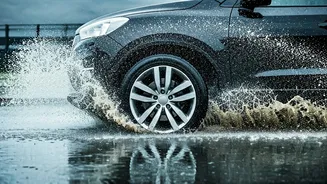
Never attempt to drive through deep or fast-moving water. It can be difficult to judge the depth, and as little as six inches of water can be enough for you to lose control or for your engine to stall. [11] Just 12 inches of rushing water can carry away a small car. [13] If you encounter a waterlogged road, the safest choice is always to turn around and find an alternative route. [13, 15] Driving through deep water not only risks severe damage to your car's engine and electrical systems but also puts your safety at risk. [2, 6]