






The Old Gap Between Page and Practice
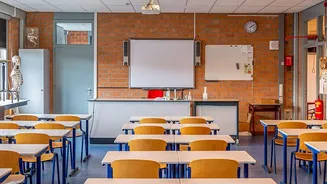
In many technical fields across India, students have long faced a significant disconnect between what they learn in the classroom and the skills required in the professional world. The curriculum, traditionally heavy on theoretical concepts and examinations,
often leaves graduates without the practical experience needed to excel in a competitive job market. This theory-practice gap means that while students might understand complex algorithms on paper, they may have never built a functional model or worked with real-world datasets. Employers frequently report that new hires require extensive on-the-job training to become productive, highlighting a need for a more experiential and application-focused educational approach. This is precisely the problem that the new generation of AI labs aims to solve.
What is an AI Lab?
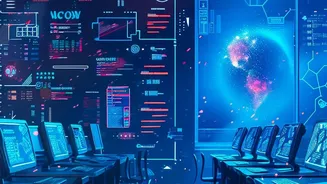
Far from being just another computer room, an AI lab is a dedicated, high-tech environment designed for experimentation and innovation. These labs are equipped with powerful GPU-accelerated computers, robotics kits, 3D printers, and access to massive datasets and cloud computing platforms. Here, students can move beyond textbooks to engage directly with the building blocks of artificial intelligence. This includes training neural networks, developing machine learning models, building and programming robots, and working on projects in natural language processing and computer vision. It’s a space where failure is part of the learning process, and students are encouraged to tinker, build, and test their ideas in a practical setting. Many universities are collaborating with tech giants like NVIDIA, Salesforce, and Cisco to establish Centres of Excellence, ensuring the tools and platforms students use are aligned with industry standards.
From Abstract Concepts to Tangible Creations
The true impact of these labs is seen in the projects students create. Instead of just writing code for an exam, they are building practical solutions to real-world problems. For instance, students might develop a chatbot for a local business, design a machine learning model to predict crop yields, or program a drone for a rescue operation simulation. This project-based learning fosters a deeper understanding of the subject matter. It transforms abstract concepts like deep learning into tangible outcomes. This hands-on approach not only solidifies theoretical knowledge but also cultivates critical skills like problem-solving, collaboration, and project management, making students more confident and job-ready.
A National Push for Future-Ready Skills
The establishment of AI labs is not happening in isolation; it is part of a larger national strategy to position India as a global leader in technology. The National Education Policy (NEP) 2020 explicitly emphasizes integrating technology and AI at all levels of education to foster critical thinking and creativity. Initiatives like the Atal Innovation Mission, which has set up thousands of Atal Tinkering Labs (ATLs) in schools across the country, are introducing students to STEM concepts from a young age. Furthermore, the government's IndiaAI Mission, launched in March 2024 with a significant budget, aims to build a robust AI ecosystem, which includes developing AI skills and infrastructure in educational institutions. As part of this push, the All India Council for Technical Education (AICTE) has also significantly increased the number of approved seats for AI and Machine Learning courses in technical institutions.