



What You Can Actually See
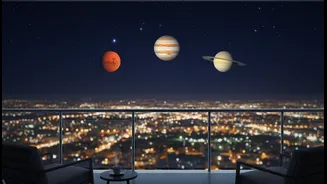
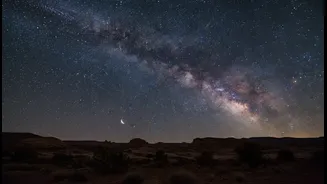
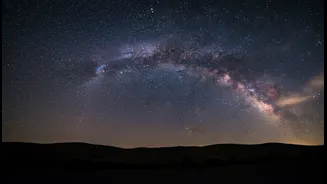
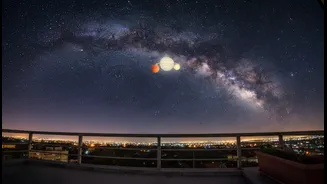
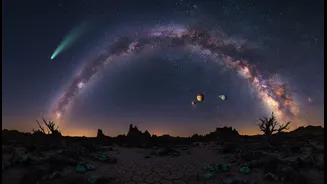
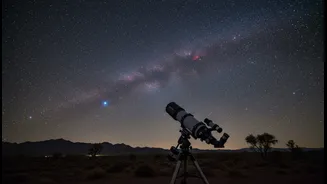
Forget faint, fuzzy nebulae. Urban stargazing is a different game. The glow from city lights, known as light pollution, washes out dimmer stars, but it can’t hide everything. Your balcony can still be a front-row seat for the brightest objects in the sky.
Think of the Moon in its various phases, brilliant planets like Venus and Jupiter, and even some major constellations. The key is to focus on these bright, accessible targets. You can easily track the Moon’s journey, watch planets appear as brilliant, steady “stars,” and even spot the International Space Station (ISS) gliding silently overhead. These aren't minor sights; they are the anchors of our solar system, visible to anyone willing to simply look up.
Celestial Events This July
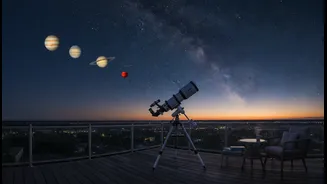
July 2026 is a fantastic month for urban skywatchers in India. On the morning of July 11, look east before sunrise to see a beautiful celestial triangle formed by the crescent Moon, the reddish planet Mars, and the sparkling Pleiades star cluster. Later in the month, on the evening of July 17, a slender crescent Moon will hang near the dazzlingly bright planet Venus in the western sky just after sunset. Venus is often called the “Evening Star” and is so bright it’s impossible to miss. These planetary and lunar meetups, or conjunctions, are the “rare lineups” that are perfectly visible from a city balcony. The month ends with the Full Buck Moon on July 29, which always looks spectacular as it rises over the cityscape.
Essential (and Free) Tools
Your most powerful tool is the smartphone in your pocket. Free apps like Stellarium, Star Walk 2, and SkyView Lite turn your phone into a portable planetarium. Simply point your device at the sky, and the app will use augmented reality (AR) and your phone’s GPS to identify exactly what you’re looking at in real time, from stars and planets to satellites. Many of these apps feature a red-light mode, which is crucial. White light from a phone screen ruins your night vision, but red light helps your eyes stay adapted to the dark, allowing you to see more. These apps can also send you notifications for upcoming events like the ISS pass or meteor showers, so you never miss an opportunity.
Your Step-by-Step Viewing Guide
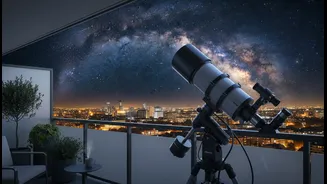
First, know what you’re looking for. Use a stargazing app to check which planets or conjunctions are visible tonight. Next, prepare your viewing spot. Turn off all the lights on your balcony and in the adjacent room to create the darkest possible environment. Give your eyes time to adjust to the darkness; it takes about 20-30 minutes for them to become fully sensitive to low light. This step is critical and often overlooked, but it dramatically increases how much you can see. Get comfortable. Bring out a chair, perhaps a reclining one, so you’re not straining your neck. If you have a pair of binoculars—any kind will do—they can be a great, low-cost enhancement. While not necessary, they will bring the craters of the Moon into focus and might even reveal Jupiter's four largest moons as tiny pinpricks of light beside the planet.
Beating the Urban Glow
While you can't turn off the whole city, you can minimise the light pollution affecting you directly. The most important step is blocking direct light sources. If a streetlight shines onto your balcony, try to position yourself in a shadow or use a screen to block its glare. The higher up you are, the better, as being on a higher floor can sometimes lift you above the worst of the immediate street-level glare. Even choosing the best time to look helps. The sky is often darkest and the air a little clearer in the pre-dawn hours, after many businesses have turned off their lights and traffic has subsided. The period around a New Moon also offers the darkest skies each month, as there is no bright moonlight to compete with the stars.