




The Goldilocks Zone Explained
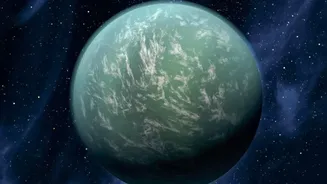
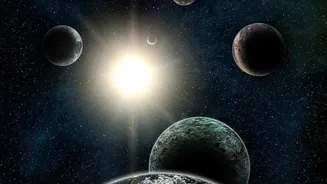
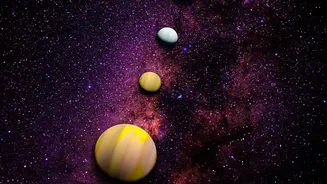
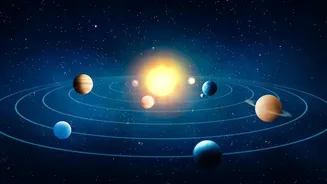
For decades, astronomers have used the concept of the habitable zone, nicknamed the 'Goldilocks Zone', to identify exoplanets that might host life. The definition is elegantly simple: it is the range of orbits around a star where a planet’s surface temperature
is theoretically right for liquid water to exist. Not too hot that water boils away, and not too cold that it freezes solid. Since life as we know it depends on liquid water, this became the primary tool for creating a shortlist of potentially interesting worlds from the thousands we have discovered. It gives scientists a crucial starting point, helping to narrow down the vast catalogue of exoplanets to those most worthy of further investigation.
Why Location Is Not Enough
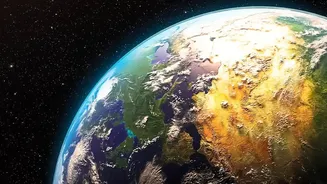
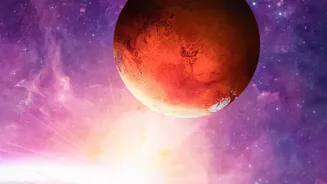
The problem is that a planet’s address in the habitable zone says nothing about the planet itself. Just as a plot of land in a temperate climate isn't automatically a lush garden, a planet in the Goldilocks Zone isn't automatically habitable. Our own solar system proves this. Venus, Mars, and even Earth's Moon are all within or very close to the Sun’s habitable zone, yet only Earth boasts oceans and abundant life. Venus is a scorching greenhouse hellscape with a crushing atmosphere, while Mars is a cold, barren desert with an atmosphere too thin to support liquid water on its surface. These examples show that distance is just one of many factors that determine if a world can truly support life.
The Critical Role of an Atmosphere
Perhaps the most important factor beyond location is a planet's atmosphere. To have liquid water, a planet needs sufficient atmospheric pressure to keep it from boiling or sublimating away into space. The composition of that atmosphere is equally critical. It needs the right blend of greenhouse gases to trap heat and keep the surface warm, but not so much that it triggers a runaway greenhouse effect like the one that turned Venus into an oven. An atmosphere also offers protection from harmful radiation. Without this gaseous shield, life on the surface would be exposed to sterilising cosmic rays and stellar flares.
A Volatile Star Can Ruin the Neighbourhood
The type of parent star also plays a huge role in a planet's potential for life. Many of the Earth-sized planets we’ve found in habitable zones orbit red dwarf stars, which are smaller and cooler than our Sun. While this means their habitable zones are much closer to the star, it also presents a major problem. Red dwarfs are notoriously volatile, especially in their youth, blasting out intense radiation and powerful stellar flares. A planet orbiting so close would be repeatedly sterilised by this activity, which could also strip away its atmosphere over time. This means even a perfectly placed planet might be uninhabitable due to its star's violent temperament.
Beyond Goldilocks: The Hunt for Biosignatures
This is why the cutting edge of astrobiology has moved beyond the simple habitable zone. With powerful instruments like the James Webb Space Telescope (JWST), scientists can now do something revolutionary: analyse the chemical makeup of an exoplanet's atmosphere. By studying the starlight that filters through a planet’s air, they can look for 'biosignatures' — specific gases or combinations of gases, like oxygen and methane, that are unlikely to exist without biological processes. Recent observations from JWST have been sobering, suggesting some of the most promising rocky exoplanets may lack atmospheres altogether. Yet this is still vital information. This new approach shifts the focus from a planet's location to its actual chemical environment, offering a much more direct way to hunt for signs of life.