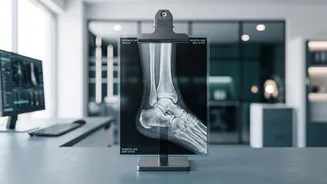







When It's More Than Just a Sprain
Pain, swelling, and bruising are common signs of many injuries, from a simple sprain to a serious break. While a physical examination is the first step, it’s not always possible for a doctor to tell the difference by sight and touch alone. Some fractures
are subtle and don't cause obvious deformity. These are often called hairline or stress fractures—tiny cracks in the bone that result from repetitive activity or a sudden injury. Initially, the pain from a hairline fracture might feel like a deep ache that worsens with activity, making it easy to mistake for a severe bruise or muscle strain. Trying to 'walk it off' or assuming it will heal on its own can be a risky gamble.
What the Naked Eye Can't See
An X-ray provides a clear, internal view that a physical exam cannot. It uses a small amount of radiation to create images where dense tissues like bone appear white, making breaks and cracks visible. This imaging is the gold standard for confirming a fracture. It reveals not only if a bone is broken, but also its exact location, type, and whether the broken pieces are properly aligned. Is it a clean break, or has the bone shattered into multiple fragments (a comminuted fracture)? Has the bone pierced the skin (a compound fracture)? Is a joint involved? Answering these questions is critical for determining the right treatment, whether that's a simple cast or complex surgery.
The Danger of an Undiagnosed Fracture
Ignoring a suspected fracture can lead to serious long-term complications. A hairline fracture that isn't allowed to rest can easily worsen and become a complete break, which involves a much longer and more complicated recovery. If a bone heals out of alignment, it can result in chronic pain, limited mobility, and a higher risk of developing arthritis in the affected joint later in life. In some cases, an untreated fracture may fail to heal altogether, a condition known as a non-union fracture, which can cause persistent pain and may eventually require surgery to correct. What seems like a minor inconvenience now could become a significant health issue down the road.
More Than Just Breaks
X-rays are not just for spotting fractures. This diagnostic tool can reveal a wealth of information about your musculoskeletal health. A doctor might order an X-ray to check for joint dislocations, where a bone has slipped out of its normal position. The scan can also identify signs of arthritis, such as narrowing joint space or bone spurs. In some instances, X-rays can help detect other underlying issues like bone infections, tumors, or even foreign objects lodged in the body after an accident. This makes it an invaluable tool for getting a comprehensive picture of what's happening beneath the skin.
Are X-Rays Safe?
It's natural to have concerns about radiation exposure. However, the amount of radiation used in a single diagnostic X-ray is extremely low and considered very safe. Medical professionals agree that when an X-ray is medically justified, its benefits far outweigh the minimal risks involved. To put it in perspective, the radiation exposure from an X-ray of a limb is roughly equivalent to the amount of natural background radiation you're exposed to over a few days. For most adults, this small, one-time dose has not been shown to cause harm. The risk of not diagnosing a fracture properly is significantly greater than the risk from the scan itself.