





Beyond Just Finding Planets
The hunt for exoplanets—planets outside our solar system—has exploded in recent decades. Thousands have been found, ranging from scorching gas giants to small, rocky worlds. Yet, simply knowing a planet exists tells you very little. As one expert noted,
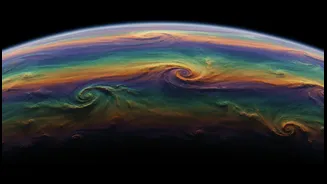
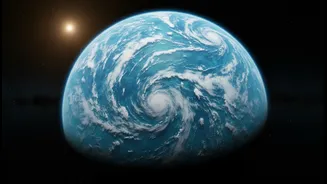
if you only measured the mass and size of Earth and Venus, you might think they're nearly identical. But their atmospheres make them entirely different worlds. That’s why the new frontier in astronomy isn't just counting planets; it's about characterising their atmospheres. These thin gaseous envelopes are the key to understanding a planet's climate, chemistry, and potential to host life.
The Breakthrough on a Distant World
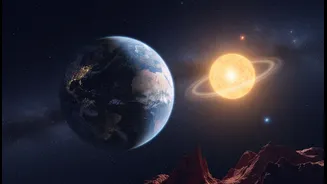
A recent major discovery has energised the field. For the first time, astronomers have confirmed an atmosphere around an Earth-like rocky planet that sits within its star's "habitable zone". The planet, named LHS 1140b, is about 48 light-years away. While atmospheres have been seen on gas giants before, finding one on a rocky world in the so-called "Goldilocks zone"—where temperatures could allow liquid water—is a landmark achievement. This discovery provides the strongest evidence to date that rocky planets like our own can hold onto their atmospheres, a critical ingredient for habitability.
How to Read Alien Air
Studying something so faint and far away is a monumental challenge. Scientists use a technique called transit spectroscopy. When an exoplanet passes in front of its host star from our perspective, a tiny amount of starlight filters through the planet's atmosphere. Powerful tools like the James Webb Space Telescope (JWST) can analyze this light, breaking it down into a spectrum, which is like a chemical fingerprint. Different molecules in the atmosphere absorb specific colours of light, revealing what the alien air is made of. This method recently allowed astronomers to accidentally discover a whole new planet, Beta Pictoris d, just by spotting the chemical signature of its atmosphere in their data.
The Search for Biosignatures
The ultimate goal of studying exoplanet atmospheres is to find biosignatures—gases that could indicate the presence of life. On Earth, for example, the large amount of oxygen is produced by living things. Scientists are looking for gases like oxygen, methane, or even more obscure compounds like dimethyl sulfide, which on our planet is only produced by life. Finding these gases wouldn't be definitive proof of aliens, as non-biological processes can sometimes produce them. However, detecting a combination of gases that are out of balance, like methane and oxygen together, would be a very strong hint that some form of life is at work.
A Mirror to Our Own World
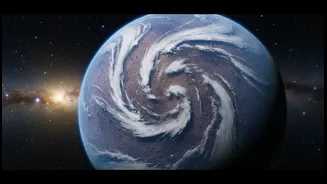
The study of exoplanet atmospheres isn't just about finding life; it's also about understanding ourselves. These distant worlds offer a stunning diversity of environments that help scientists test and refine their theories about how planets form and evolve. By observing planets with thick, runaway greenhouse atmospheres or those that have lost their air to space, we gain invaluable insights into the past and future of Earth's own climate. Each new atmosphere we study, whether on a rocky super-Earth or a hazy sub-Neptune, provides another piece of the puzzle, helping us understand the planetary processes that made Earth what it is today and the conditions that could lead to another habitable world.