








The Delivery Day Dilemma
It’s a scenario that plays out in homes across India. A beautiful new piece of furniture—a plush sofa, a stately bookshelf, or a solid wood dining table—arrives, only to be stopped at the threshold. The delivery team pivots, tilts, and strategises, but
the piece is just a few centimetres too wide or too tall to make it through a narrow doorway, a tight corner in a hallway, or up a winding staircase. This is especially common in older buildings and apartments in cities like Mumbai, Delhi, or Bengaluru, where entryways and passages can be unforgiving. The result is immediate disappointment. The centrepiece of your redecorating plan is stuck on the truck, and you’re left with an empty space and a significant problem to solve. What should have been a moment of joy becomes a logistical nightmare.
The Hidden Costs of Rejection
When furniture can’t be delivered, the consequences go beyond mere inconvenience. Many retailers have policies in place for failed deliveries, and they can be costly for the consumer. If the item is sent back, you may be charged a restocking fee, which is a percentage of the item's price. One Indian retailer, for instance, charges a 15% restocking fee if an order is cancelled after it has been dispatched for delivery. In addition, the original delivery fees are often non-refundable. You're not just back to square one in your furniture search; you're also out of pocket for an item you never got to use. For custom or special-order items, the situation can be even trickier, as some retailers may refuse a refund entirely, arguing that the piece was made specifically for you. This leaves the buyer in a difficult position, forced to negotiate or potentially forfeit a large sum of money.
The Unsung Hero: Removable Legs
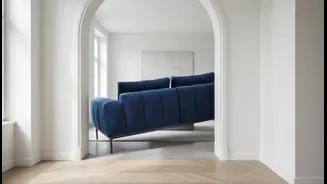
This is where a simple, often-overlooked feature comes to the rescue: removable legs. Many sofas, armchairs, and tables are designed with legs that can be easily unscrewed before delivery and reattached once the item is in the desired room. Removing the legs can reduce the overall height or depth of a piece by several crucial inches—often just enough to clear a tight doorway or navigate a tricky stairwell. Professional delivery teams know that angling and tilting furniture is key. The ability to remove legs provides vital extra manoeuvrability, turning a potential rejection into a successful delivery. When shopping, this feature should be as important as the colour or style, especially if you know your home has challenging access points. It’s a small detail that solves a very big problem.
Shop Smarter: Measure Twice, Buy Once
To avoid delivery day disasters, preparation is key. Before you even fall in love with a piece of furniture, take detailed measurements of its intended path. Using a metal tape measure, record the height and width of all doorways, hallways, and staircases. Don't forget to account for potential obstacles like light fixtures, radiators, or sharp turns between walls. Once you have your home's measurements, compare them to the furniture's dimensions, which are usually available on the retailer's website or in-store. Pay attention not just to the height, width, and depth, but also the 'diagonal depth'—the measurement from the top back corner to the bottom front corner. This number is critical because large items are almost always tilted to get them through doors. Your entryway must be wider than at least one of the furniture's key dimensions for it to fit.
Beyond the Legs: Other Smart Solutions
While removable legs are a game-changer, other design features can also help. Modular or sectional sofas, for instance, are delivered in smaller, separate pieces that are assembled inside the room. This completely bypasses the issue of a single large frame. Similarly, some larger items are designed for 'flat-pack' or unassembled delivery, allowing them to be easily carried into any space before being put together. When you’re in the showroom or browsing online, specifically ask the salesperson or check the product description for terms like “removable legs,” “modular design,” or “assembly required.” Making this a part of your checklist ensures you're not just buying a piece of furniture, but also a guarantee that it will actually make it into your home.