








From Government Outpost to Private Enterprise
For decades, low-Earth orbit (LEO) has been the domain of governments. The ISS, a marvel of international cooperation, has been a home for astronauts and a laboratory for science since 2000. But it is aging, and the cost of operation is immense. NASA's
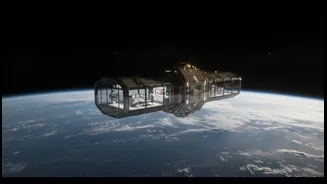
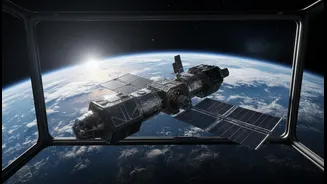
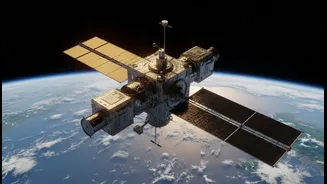
new strategy is to pivot from being an owner-operator to becoming a customer. Through its Commercial LEO Destinations (CLD) program, the agency is funding private companies to build new habitats. The plan is for NASA to rent space for its astronauts and research, becoming an anchor tenant that helps kickstart a new economy in orbit. This move is designed to save taxpayer money and allow NASA to focus on deep space missions to the Moon and Mars. However, after some uncertainty in early 2026, NASA has reaffirmed its commitment to supporting free-flying commercial stations, a crucial signal for the private sector.
The New Customer Constellation
A sustainable business in orbit cannot rely solely on NASA contracts. The real test for companies like Axiom Space, Vast, and the Starlab venture is whether they can attract a diverse clientele. This new market is expected to include several key segments. First are sovereign astronauts from nations without their own space programs; Axiom has already flown crews with members from Italy, Sweden, Turkey, and Saudi Arabia. Second are wealthy private individuals seeking the ultimate tourism experience, with a 10-day mission costing in the tens of millions of dollars. The most significant long-term markets, however, are in research and manufacturing. The unique microgravity environment allows for breakthroughs in pharmaceuticals, materials science, and biotechnology that are difficult or impossible on Earth. Companies are betting that producing high-purity semiconductor materials, growing flawless protein crystals for drug development, or 3D printing human organs will become a massive revenue stream.
The Race to Build Orbital Real Estate
Several key players are vying to become the first landlords in LEO. Axiom Space is a frontrunner, having already sent multiple private missions to the ISS. The company is building modules that will initially attach to the ISS before separating to form an independent station. Vast, a company founded by entrepreneur Jed McCaleb, is taking a different approach, planning to launch its single-module Haven-1 station as early as 2027. The Starlab joint venture, a global partnership including Voyager Space, Airbus, and Mitsubishi, is developing a large station focused on science and research, with partners like Hilton Hotels contributing to crew comfort design. These companies have attracted billions in private capital and are backed by extensive aerospace expertise, but they face a ticking clock. They must become operational before the ISS is deorbited to avoid a gap in America's human presence in LEO, especially as China's Tiangong station actively courts international partners.
The Challenge of Closing the Business Case
Despite the futuristic promise, significant hurdles remain. The fundamental challenge is economic viability. Can in-space manufacturing and research generate enough revenue to cover the monumental operating costs of a space station? Some analysts estimate the potential annual revenue for these stations could range from hundreds of millions to over a billion dollars, but this is still a forecast. Companies must prove that the demand from pharmaceutical firms, tech companies, and other commercial clients is real and sustainable, not just a handful of one-off experiments. The price point remains a major barrier. While falling launch costs have made these ventures possible, getting people and materials to orbit is still incredibly expensive. For a true market to emerge, the value of the products and research created in space must decisively outweigh the cost of getting there. The success of this new commercial frontier will hinge on innovators demonstrating not just what can be done in space, but why it's profitable to do it there.